
Last updated November 2, 2026
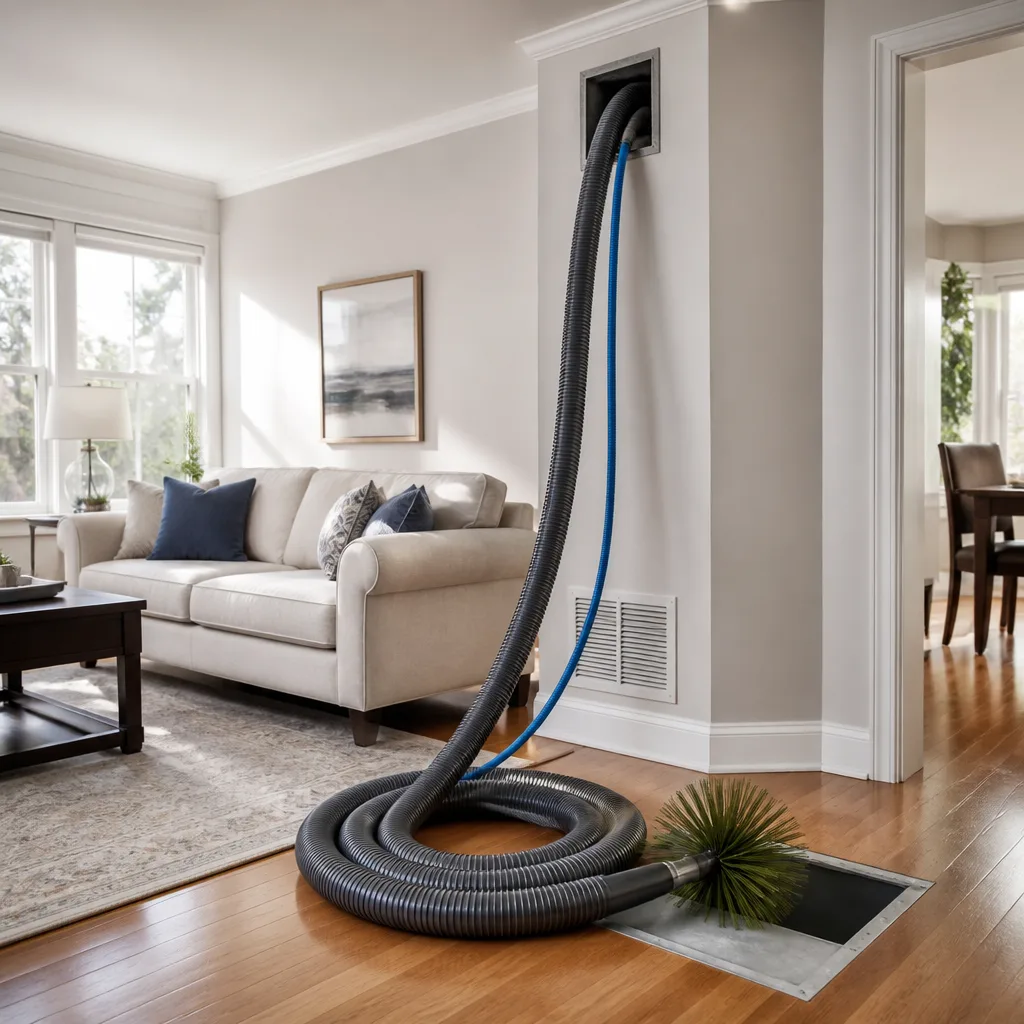 Whole-home duct cleaning
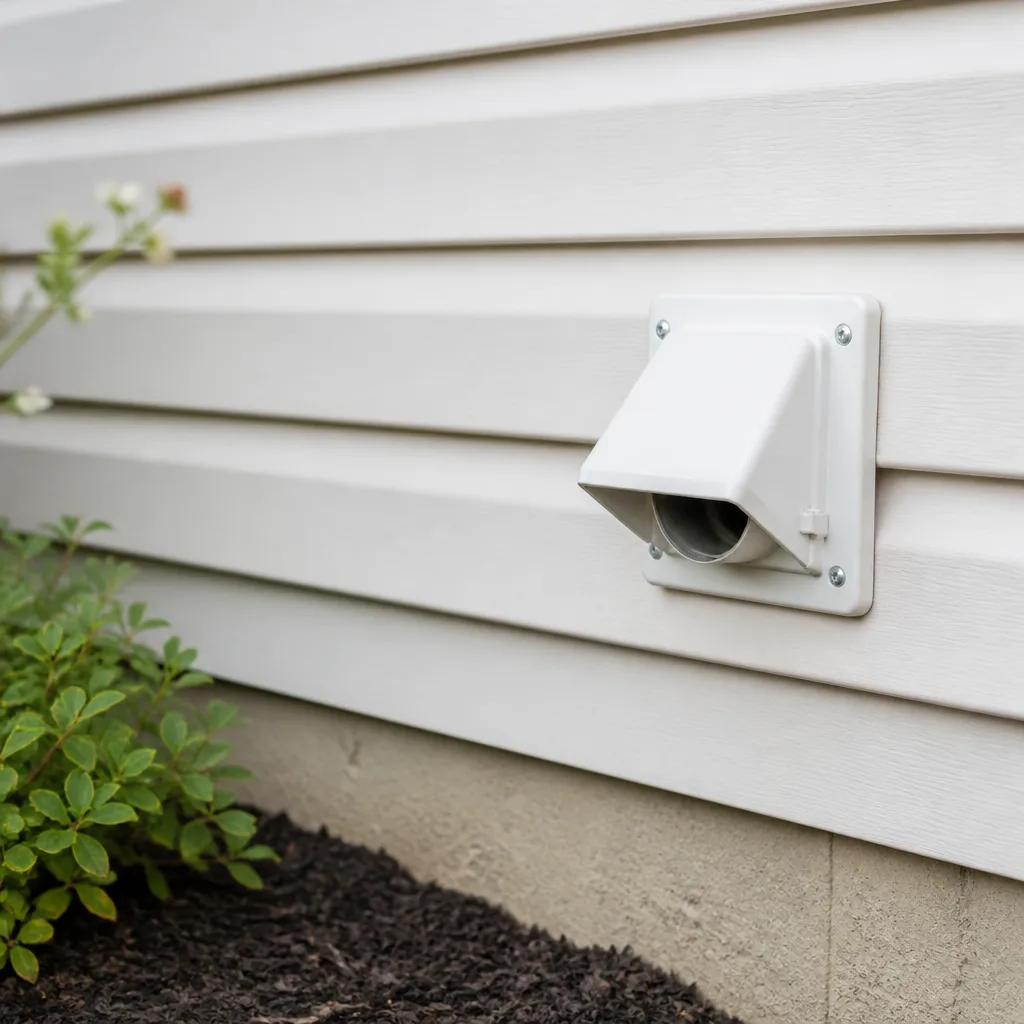 Dryer vent cleaning
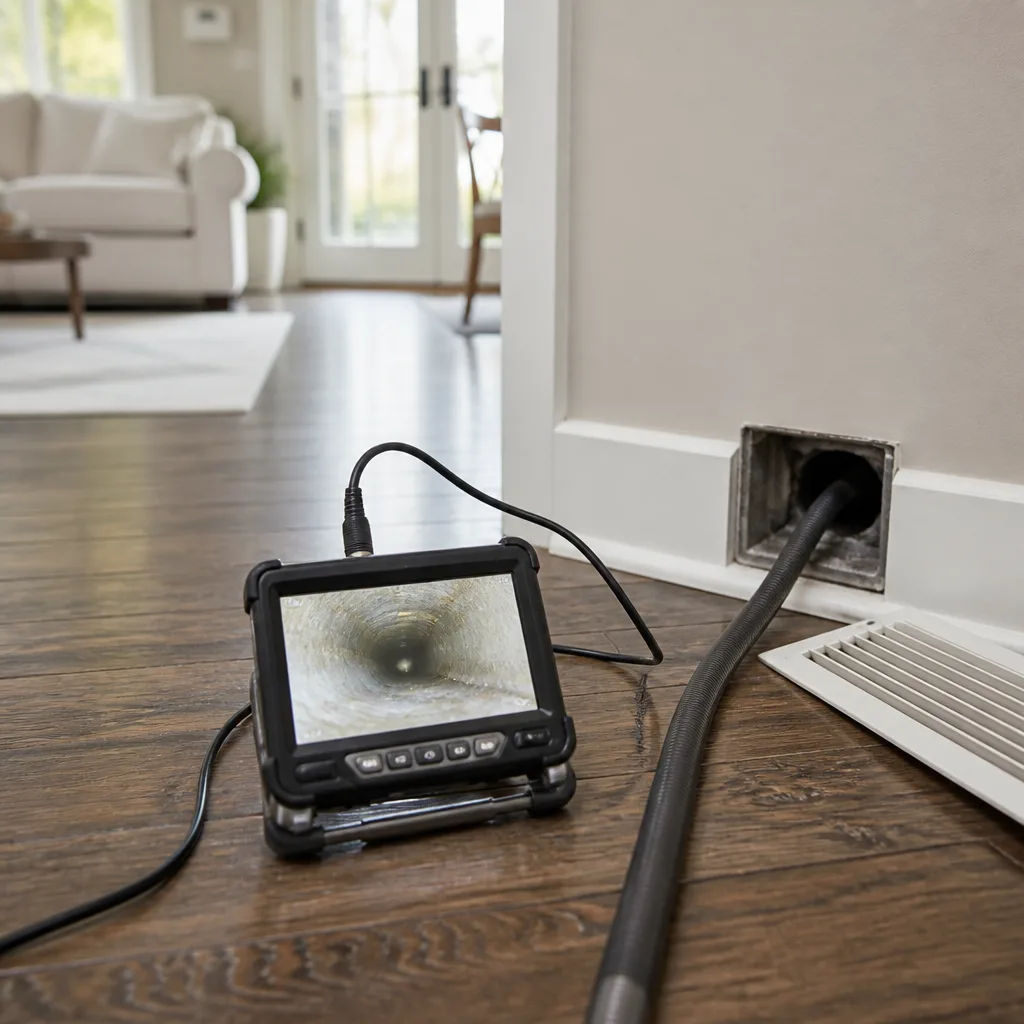 Camera inspection
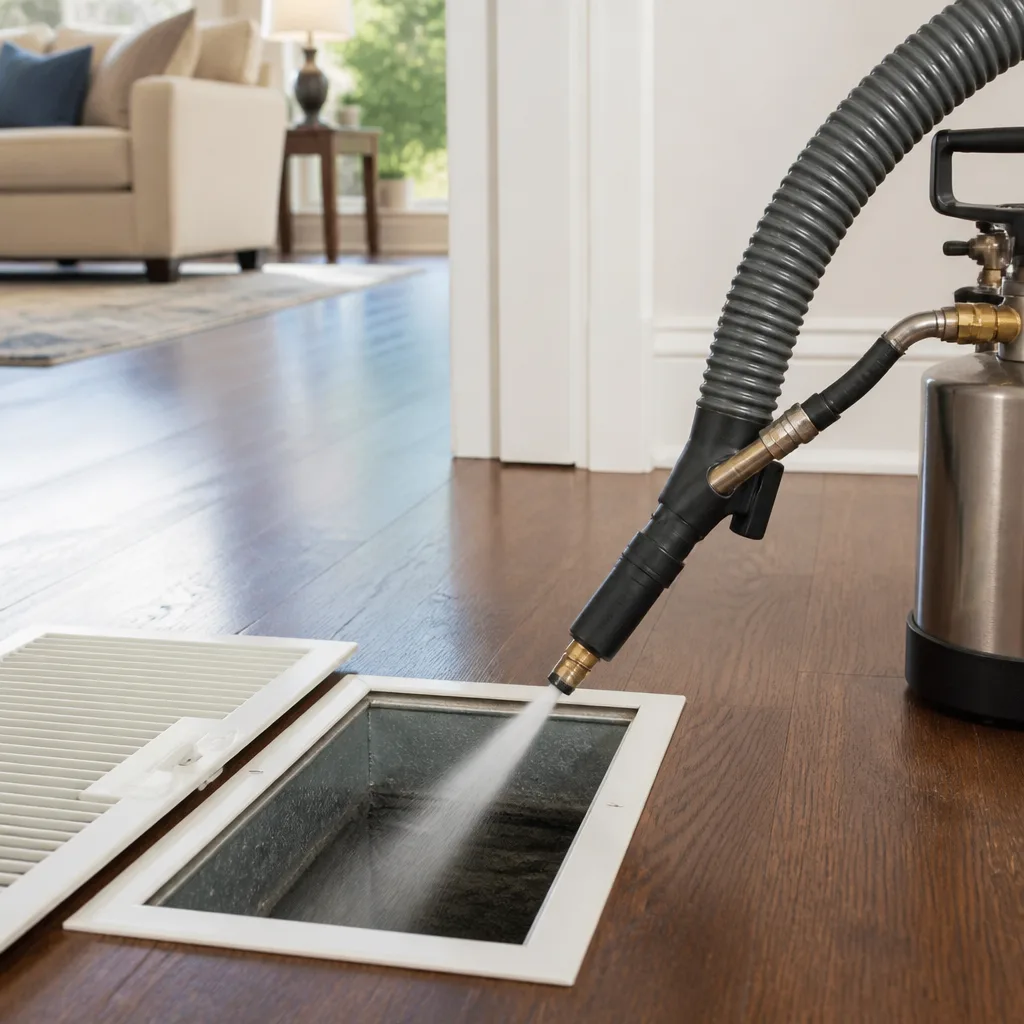 Sanitizing & deodorizing
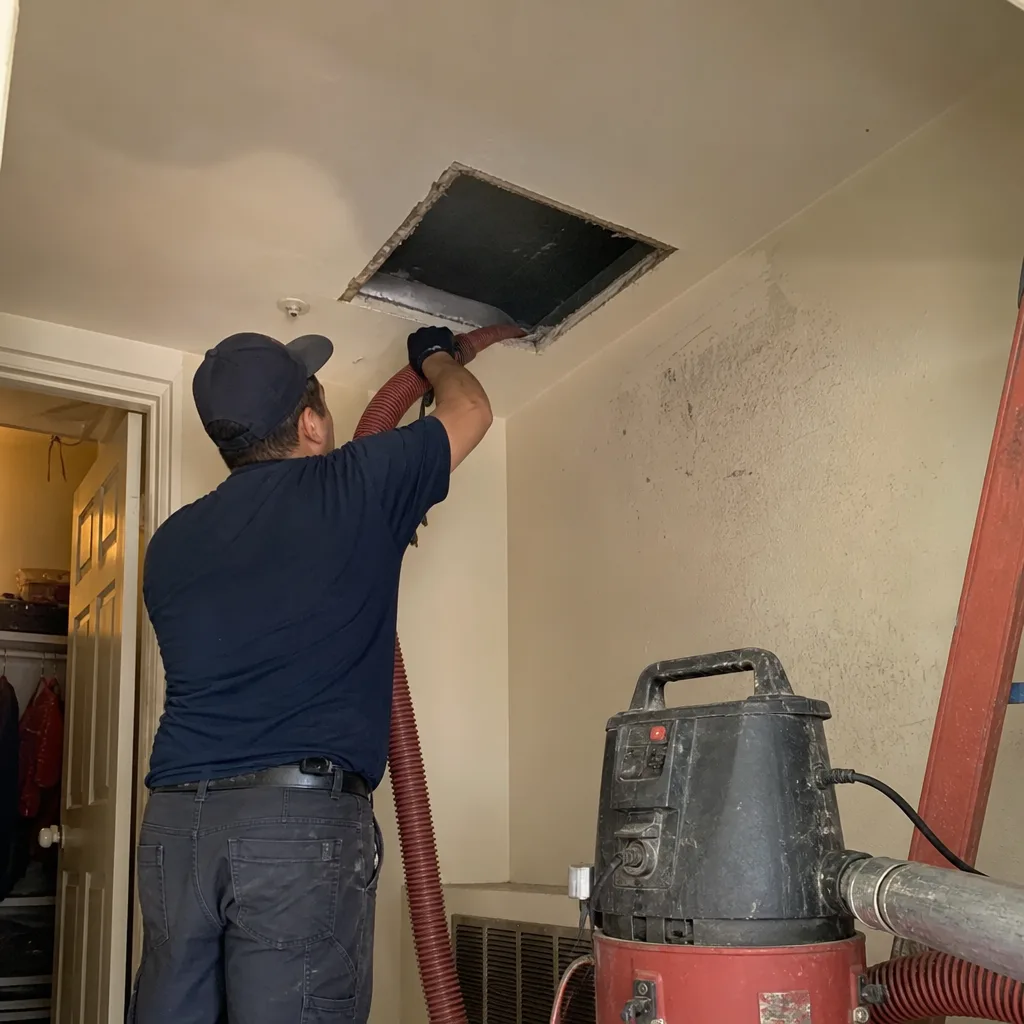
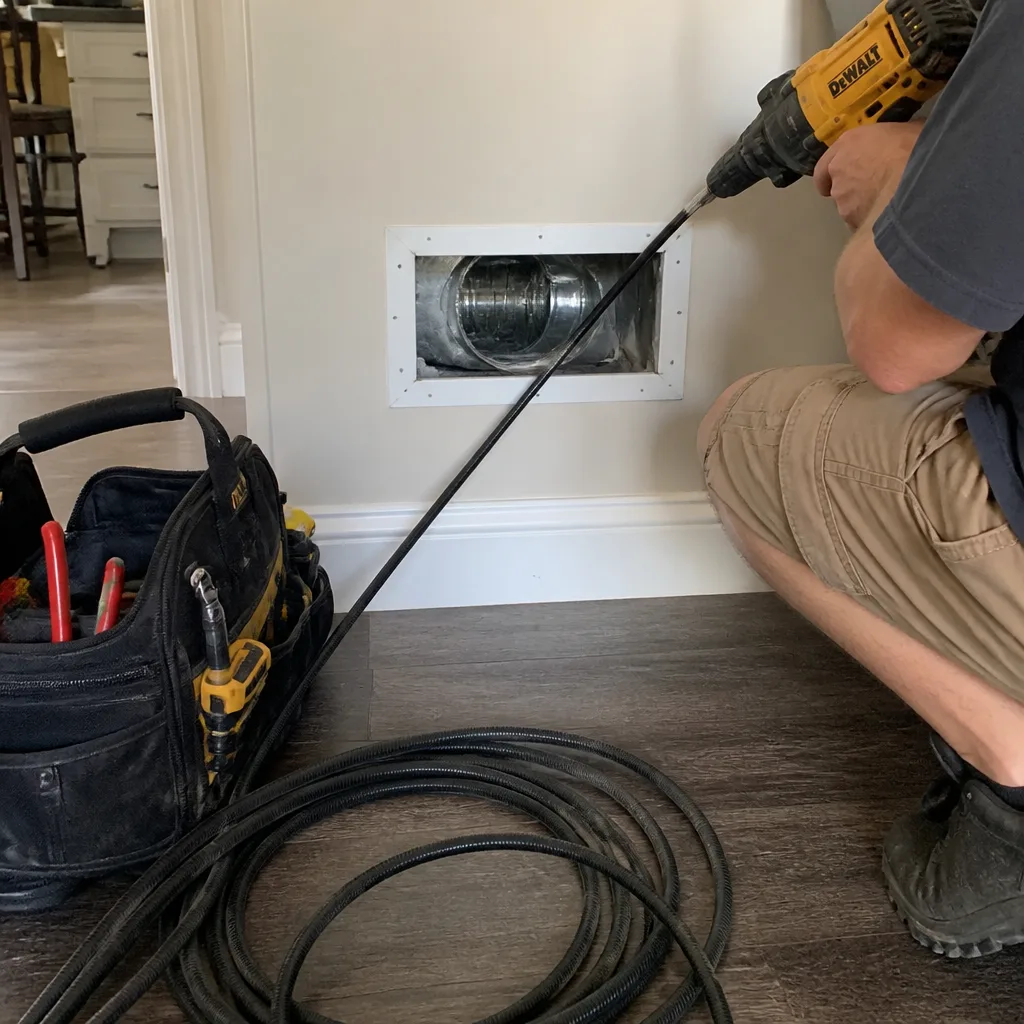
Whole-system duct and dryer vent check with before-and-after photos - you see exactly what came out of your vents
That "$99 whole-house special" is a bait ad - the real number appears once they are in your hallway, or the "clean" is a shop-vac at the register. We photograph the inside of your ducts before and after instead.
Air Duct Cleaning Emergency Preparedness Guide for Elk Grove Homes
Here’s a number most Elk Grove homeowners never think about until it’s too late: after a wildfire smoke event, the air inside your home can be two to five times more contaminated than the air outside. That’s because your HVAC system has been pulling smoke-laden air through the return vents, pushing it across the coil, and circulating it through rooms for days. The particulate load that settles inside your ductwork during a smoke event doesn’t just vanish when the sky clears. It sits there. It gets re-suspended every time the blower kicks on. And if you don’t address it within a specific window, it bakes onto surfaces and becomes a permanent odor source. This guide covers the two scenarios that most seriously threaten Elk Grove duct systems: wildfire smoke infiltration and moisture events after flooding or pipe failures. You’ll learn the timelines that matter, the assessment steps that catch problems early, and the difference between a system that can be cleaned and one that needs duct repair or replacement.
Quick Answer
Air duct cleaning emergency preparedness in Elk Grove means having a response protocol for two events: wildfire smoke (assess within 72 hours, don’t run the system until inspected) and water intrusion (begin drying within 48 – 72 hours to prevent microbial growth). The goal is to catch contamination in the window where professional Air Duct Cleaning resolves the issue, before particulate deposition or moisture damage requires structural repair. Preparation includes MERV-rating strategy during wildfire season, documentation for insurance, and knowing what a legitimate post-disaster assessment actually covers.
Styles & brands we work with
- Whole-home duct cleaning
- Dryer vent cleaning
- Camera inspection
- Sanitizing & deodorizing
Table of Contents
- The Wildfire Smoke Protocol: Why the 72-Hour Window Matters
- What a Legitimate Post-Smoke Duct Assessment Actually Looks For
- Flood and Moisture Events: The 48 – 72 Hour Microbial Growth Window
- The Correct Response Sequence After a Flood or Leak
- FEMA and Insurance Documentation: What Your Post-Disaster Report Must Contain
- Pre-Event Preparation: MERV Ratings and Wildfire Season Strategy
- The Science of Smoke Particulate Deposition in Duct Systems
- Cleaning vs. Replacement: How to Know Where You Stand
The Wildfire Smoke Protocol: Why the 72-Hour Window Matters
After a wildfire smoke event in Elk Grove, your HVAC system has been running an air pump through contaminated air for days. That’s not an exaggeration. The blower motor in a typical Sacramento-area home moves roughly 1,200 to 2,000 cubic feet of air per minute. During a smoke event, every one of those cubic feet carries fine particulate matter: carbon, ash, volatile organic compounds, and microscopic soot particles that measure between 0.4 and 0.7 microns. That’s small enough to bypass standard filters and penetrate deep into your duct system.
Here’s what most homeowners don’t realize: whether you run the system during this period matters more than anything else you do afterward. Here’s the sequence we see play out in Elk Grove neighborhoods like Laguna West, Sheldon, and East Franklin:
- Day 1-3 of smoke event: You run the HVAC system because it’s hot and you want filtered air. The filter captures some large particulates, but the fine stuff passes through and deposits on the blower wheel, the evaporator coil, and the interior walls of the supply and return ducts.
- Day 4-7: The smoke clears. You change the filter or leave it. The system cycles on and off. Each cycle re-suspends some of the deposited particulate and pushes it into your living spaces.
- Week 2 and beyond: If the particulate load was heavy, heat from the furnace or the coil bakes it onto surfaces. This is when smoke odor transitions from “it’s in the air” to “it’s in the walls, the ducts, the insulation.” At this point, standard duct cleaning may not resolve the odor. You’re now looking at possible liner replacement or duct repair.
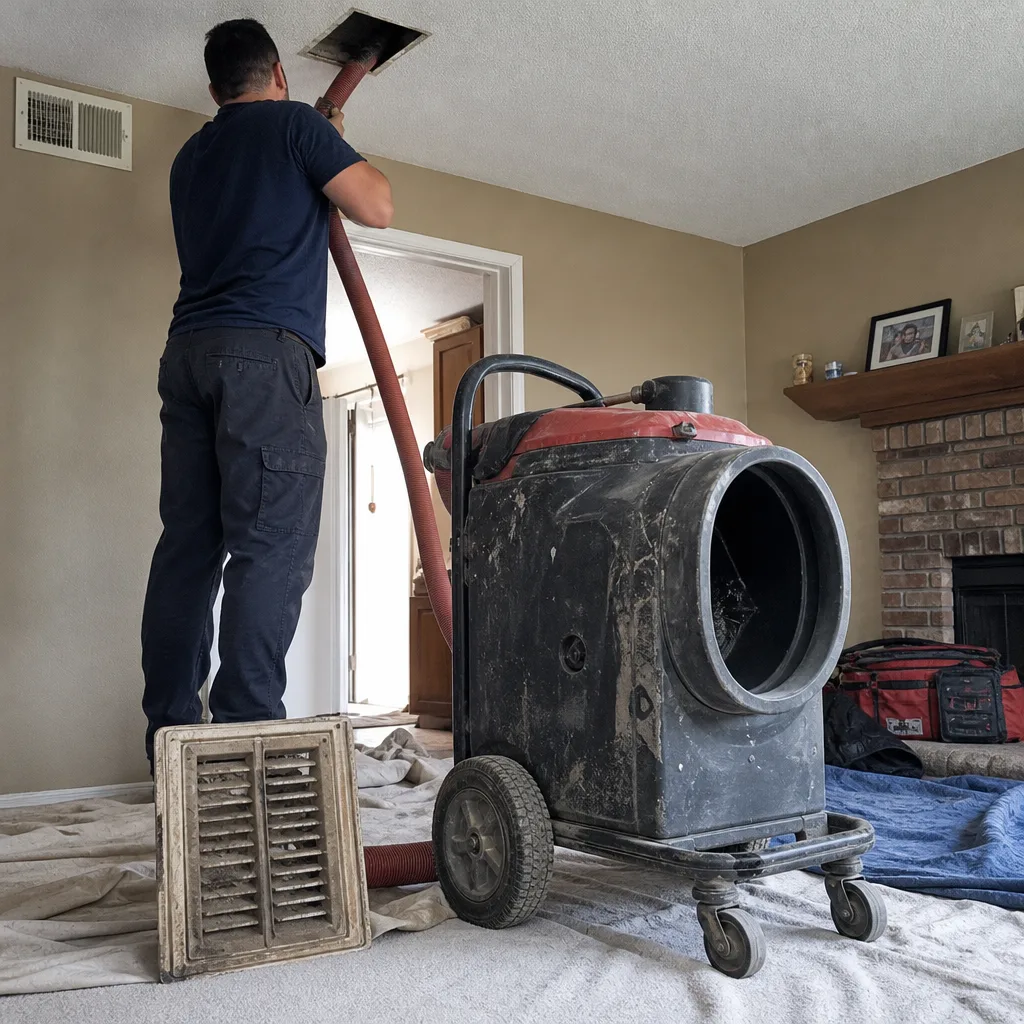
We use professional-grade equipment, including Nikro HEPA-filtration vacuums, to capture particulates at the source during every cleaning. The purpose of that equipment is exactly this scenario: removing deposited particulate before it bonds permanently to duct surfaces. The 72-hour window after a smoke event is when the material is still loose. It’s still removable. After that, time works against you.
If you’re in Elk Grove and the smoke has cleared but your system smells like a campfire every time it cycles, the first step is Air Duct Cleaning in Elk Grove with an assessment that covers the whole system, not just the visible vents. The second step is running the system intermittently to prevent re-deposition. The third is documenting everything for insurance, which we’ll cover below.
What a Legitimate Post-Smoke Duct Assessment Actually Looks For
A post-smoke duct assessment that only checks for odor is not an assessment. It’s a sniff test, and it tells you almost nothing useful. Smoke particulate settles in specific locations based on airflow patterns, and a legitimate inspection targets those locations systematically. Here’s what we look for when we assess a system after a smoke event:
Coil fin deposition. The evaporator coil is a particulate magnet. Its fins create turbulence that causes fine particles to drop out of the airstream and adhere to the wet coil surface. A coated coil reduces heat transfer efficiency by up to 30% and becomes a permanent odor source. We inspect the coil directly, not through guesswork.
Filter bypass evidence. Most residential systems have small gaps around the filter rack. During heavy smoke conditions, unfiltered air slips through these gaps and deposits particulate on the blower motor, the blower wheel, and the duct interior downstream. We look for streaking on these components, which indicates bypass.
Damper contamination. Volume dampers inside the ductwork are flat metal plates that sit perpendicular to airflow. They collect particulate on their leading edges. Contaminated dampers are a source of re-suspension every time the system runs. Most cleaning-only companies never touch them. We do.
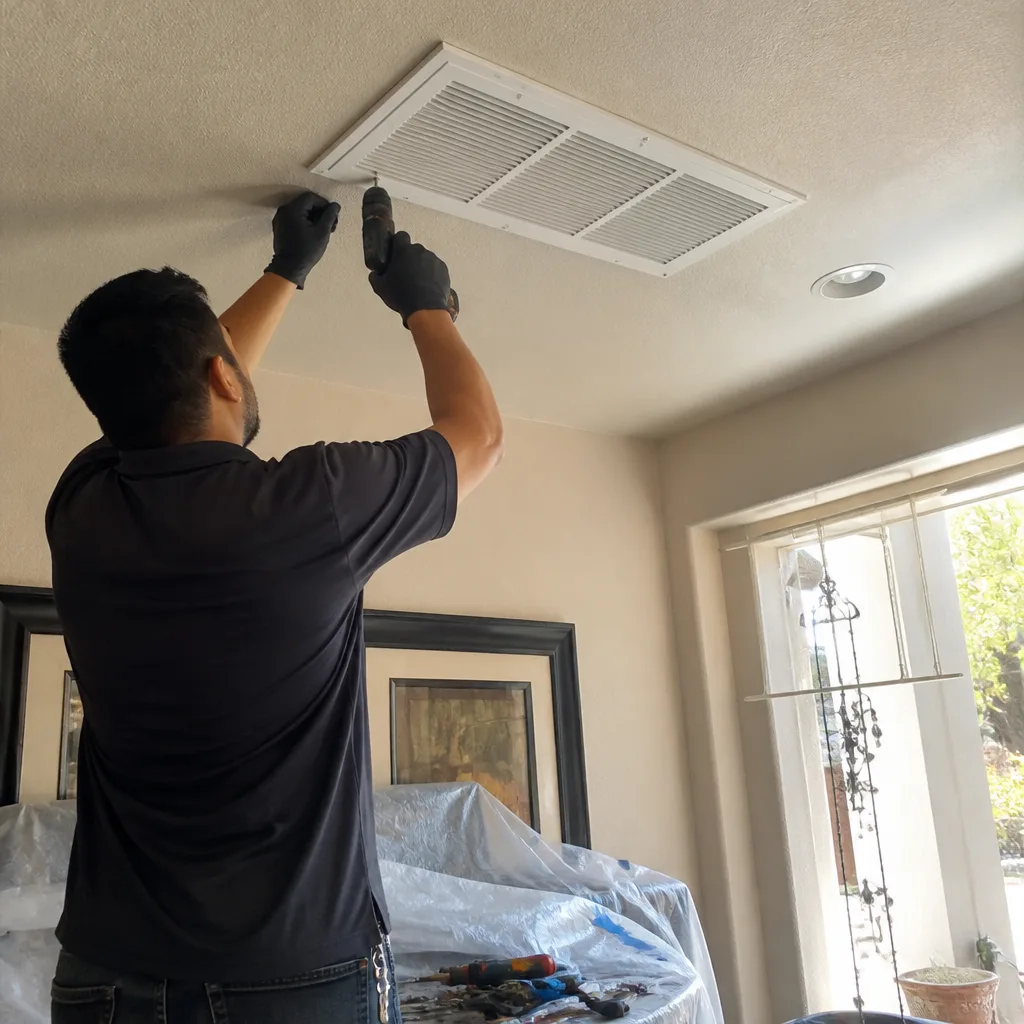
Supply register streaking. The interior of supply registers often shows black or brown streaking after a smoke event. This is visible evidence of particulate load, but it’s also an indicator of where deposition is heaviest in the system.
A professional assessment should also include documentation: photographs of the coil, the blower, the dampers, and the duct interior before and after cleaning. This documentation matters for insurance claims and for verifying that the work was done. We provide before-and-after photos of every system we clean. If a company won’t show you the inside of your own ducts after the job, that’s a red flag.
Flood and Moisture Events: The 48 – 72 Hour Microbial Growth Window
Elk Grove sits on flat, low-lying terrain with a high water table in many areas. The Cosumnes River to the south and the Laguna Creek watershed to the north create flood-risk zones that most homeowners understand on some level. But the bigger risk to your duct system is not a dramatic flood event. It’s the quiet moisture events: a pipe leak in the wall, a condensation drainage failure at the coil, a water heater release in a closet, a slab leak that saturates subfloor insulation near the return plenum.
Here’s the number that matters: microbial growth inside a duct system begins within 48 to 72 hours of a moisture event, given the right temperature conditions. In Elk Grove’s warm season, when attic temperatures regularly exceed 120°F, that window shortens. Warm, dark, moist duct interiors are an incubator. If you’ve had any water event that reached your ducts, you have roughly two to three days to begin the response sequence before you’re dealing with a biological contaminant problem, not just a drying problem.
What we see in practice: a supply duct that runs through a flooded crawlspace absorbs moisture through its exterior and develops interior condensation. Or a return duct that runs through a flooded garage pulls water vapor into the system every time it runs. Or a coil condensation pan that overflows into the supply plenum and saturates the duct liner. Each of these scenarios is recoverable in the first 48 to 72 hours with aggressive drying and professional inspection. After that window, the fix often involves duct section replacement, which is a different service entirely: Air Duct Repair in Elk Grove handles structural fixes that cleaning cannot address.
The Correct Response Sequence After a Flood or Leak
Order of operations matters after a moisture event. Homeowners who skip ahead to “call a duct cleaner” without doing the preliminary steps often waste money on a cleaning that can’t be done properly, because the source of moisture hasn’t been stopped. Here’s the sequence we recommend, and it’s the sequence we walk our Elk Grove customers through on the phone:
- Stop the water source. Shut off the water line if it’s a plumbing failure. If it’s flood water, wait for receding waters before entering the affected area. This is step one, always.
- Kill the HVAC system. Turn the system off at the thermostat and at the breaker. Do not run the blower. Running the system during a moisture event spreads water vapor through the entire duct network and accelerates the contamination timeline.
- Remove standing water and begin drying. Extract standing water with a pump or wet vacuum. Set up dehumidifiers and fans in the affected area. The goal is to reduce relative humidity below 60% in the affected space as quickly as possible.
- Inspect accessible duct sections. If you can see the exterior of your ducts (in a crawlspace, a basement, or an open attic), check for visible moisture, water staining, or sagging sections. Sagging ducts often hold water and need to be drained before they can be dried.
- Schedule a professional duct assessment. This should happen within 72 hours of the moisture event. The assessment will determine whether the interior of the duct system has been compromised and whether cleaning or repair is required.
- Document everything for insurance. Photograph the water event, the affected areas, any visible damage, and any equipment you used. Your assessment report will supplement this documentation.
One thing we tell every customer who calls us after a moisture event: if your ducts were saturated, the cleaning process has to include drying verification. We use Abatement Technologies negative-air equipment to contain contaminants inside the duct system throughout the job. This means that anything dislodged during cleaning is captured and exhausted, not redistributed through your home. That’s a difference we don’t compromise on, because in a post-moisture duct system, the material being removed is not just dust.
FEMA and Insurance Documentation: What Your Post-Disaster Report Must Contain
If you’re filing an insurance claim or applying for FEMA assistance after a wildfire or flood event, your duct system assessment is part of the claim. But not all assessments are equal in the eyes of an adjuster. Here’s what a report needs to contain to actually support your claim:
- Date and time of assessment. The report should be timestamped. Claims reviewers look for evidence that you acted within a reasonable window after the event.
- Photographic evidence. Interior photos of the duct system, the coil, the blower, and the registers. Exterior shots of the affected area. Before and after photos if cleaning was performed.
- Specific description of contamination. “Dirty ducts” is not sufficient. The report should describe the type of contamination (smoke particulate, water-saturated liner, visible microbial growth), the location (which duct runs, which plenum, which components), and the severity.
- Recommended action. The report should state clearly whether the system requires cleaning, repair, or replacement, and why. This recommendation is what triggers coverage decisions.
- Equipment used. A legitimate assessment will note the inspection method: camera inspection, visual access via register removal, HVAC system inspection. This tells the adjuster the assessment was not a guess.
We’ve worked with Elk Grove homeowners navigating both private insurance claims and FEMA assistance after regional events. The common thread in successful claims: documentation that was created at the time of the event, not reconstructed afterward. If you’re reading this before a disaster happens, you’re in a better position than most. Take photos of your system now: your coil, your blower (if accessible), your registers. A baseline makes a post-event assessment vastly more persuasive, because it demonstrates the condition of the system before the event.
For homeowners with whole-home air-quality systems from Honeywell or Aprilaire, the documentation standard is even more important. These systems are calibrated investments, and a contaminated duct network undermines their function. If your claim involves a system that was professionally cleaned and verified compatible with your existing IAQ equipment, the claim is stronger. We’re certified to work with and around Honeywell and Aprilaire systems, which means the cleaning won’t void warranties or compromise existing equipment.
Pre-Event Preparation: MERV Ratings and Wildfire Season Strategy
The best emergency response is the one you never have to use. For Elk Grove homeowners, that means thinking about duct system preparedness before wildfire season starts, which in this region means May through October, with peak risk in August, September, and October.
The most common question we hear: “What MERV filter should I run during smoke season?” The answer is more nuanced than most people expect. Higher is not always better.
Here’s the trade-off: a MERV 13 filter captures smoke particulate effectively (it removes particles down to 0.3 microns). But MERV 13 filters create significantly more airflow resistance than the MERV 8 filters most residential systems are designed around. If your system’s blower motor was not sized for high-resistance filtration, running a MERV 13 filter during extended smoke events can cause:
- Reduced airflow across the coil, which increases energy consumption and can cause coil freezing during cooling season
- Increased static pressure on the blower motor, which shortens motor life
- Filter bypass, where air is pulled around the filter through gaps, defeating the purpose of the high-MERV filter entirely
Our recommendation for Elk Grove homes during wildfire season: run the highest MERV filter your system can handle without excessive pressure drop, and verify that by checking the pressure drop with a professional or by monitoring system performance. For most homes, MERV 11 is a reasonable middle ground. For homes with high-end equipment or oversized blower motors, MERV 13 is viable. If you’re unsure, a technician can test static pressure in under an hour.
Beyond filters, here’s the Air Duct Cleaning Maintenance Checklist for Elk Grove Homeowners we recommend:
- Have your duct system professionally cleaned before wildfire season. Particulate deposits from previous seasons compound. A clean system starts the season with zero pre-existing load.
- Seal return leak points. Air pulled through an unsealed return plenum bypasses the filter entirely. In a smoke event, that’s unfiltered air entering your system directly.
- Check your condensate drainage. A clogged drain line during heavy smoke conditions can back up and flood the coil pan, creating the moisture scenario we covered in the flood section. A simple drain service prevents this.
- Document your baseline system. Photos of your coil, blower, registers, and filter installation, stored in a folder. This becomes the “before” in your post-event documentation.
- Know who you’ll call. When a smoke event happens, the window is 72 hours. Decide now who will assess your system. If you’re in Elk Grove, our entire service area is within a 20-minute drive, and our Duct Cleaning Elk Grove home page covers our process in detail.
Separate from HVAC ductwork, don’t overlook your dryer vent. During extended wildfire season, dryer vents pull in exterior air and particulate. A clogged vent is a fire hazard under normal conditions; add smoke particulate and lint compounding, and the risk increases. Dryer Vent Cleaning in Elk Grove is a discrete, safety-focused service that addresses this fire-risk hazard directly.
The Science of Smoke Particulate Deposition in Duct Systems
Understanding why smoke causes lasting duct contamination requires understanding how particulate behaves in an airstream. This is technical, but it’s the difference between knowing your system needs attention and guessing.
Smoke from wildfires contains three classes of particulate that concern a duct system:
- Coarse particulate (PM10, 10 microns and larger). Ash and char particles. These settle quickly and are captured by MERV 8+ filters. They’re the easiest to remove.
- Fine particulate (PM2.5, 2.5 microns and smaller). Soot and carbon particles. These remain suspended in the airstream for extended periods and penetrate deep into the duct system. They deposit on surfaces where airflow changes direction: elbows, junction boxes, register boots, coil fins.
- Volatile organic compounds (VOCs). Gases that adsorb onto surfaces. VOCs from smoke can absorb into fibrous duct liner, insulation, and even the plastic components of the system. These are the compounds responsible for persistent smoke odor after the particulate has been removed.
The key insight: PM2.5 deposition is concentrated at points of airflow turbulence, not evenly distributed. That’s why a system “looks fine” when you check the visible registers but still smells. The particulate settled where the airflow changed, not where you can easily see it.
Our Rotobrush rotary brush system is designed for exactly this situation: it agitates and extracts debris from the duct walls, including at turbulence points, rather than just vacuuming loose dust from the register areas. A shop-vac with a brush attachment, which is what many under-equipped operators use, simply cannot reach the deposition points where smoke particulate concentrates with enough agitation to dislodge bonded material. That’s not a marketing claim; it’s a matter of mechanical reach and brush contact pressure.
After cleaning, we verify with camera inspection. You should see the interior of your ducts after any cleaning, not just take someone’s word for it. That’s a baseline expectation we meet on every job.
Cleaning vs. Repair: How to Know Where You Stand
After a smoke or moisture event, every homeowner wants the same answer: can this be cleaned, or do I need to replace ductwork? Here’s the honest framework we use to evaluate Elk Grove homes.
Cleaning is viable when: particulate is loose or lightly adhered (the 72-hour smoke window, dry deposition), the duct liner is intact, there are no visible signs of moisture damage, the system is structurally sound, and the contamination is particulate-based rather than moisture-driven microbial growth.
Repair or section replacement is required when: duct liner is saturated, delaminated, or shows visible microbial growth; sections have collapsed or are structurally compromised; the contamination has penetrated fibrous insulation and cannot be effectively removed; or moisture exposure exceeded the 72-hour window and the system was saturated.
Here’s what most homeowners don’t realize: you don’t have to choose between a cleaning company and a repair company. Many companies only clean. They’ll clean a system that should have sections replaced, and you’ll get a temporarily better-looking system that still has structural problems. We clean and we repair. The same crew that identifies a damaged duct section during Air Duct Repair in Elk Grove can seal, reconnect, or patch that section in the same visit. That’s a one-call solution for compromised duct systems, not two vendors and a week of coordination.
In our experience in Elk Grove, the homes that end up needing repair after a disaster event are typically those where the response was delayed. The homeowner waited a week, or two weeks, or a month. By the time we assess, the liner has absorbed moisture and the damage is structural. The homes that call us within that 72-hour window are almost always cleanable. Time is the variable that determines the outcome, which is why this guide exists.
Common Mistakes to Avoid
- Running the HVAC system during a heavy smoke event, assuming the filter will handle it. Standard filters capture large particulate, not PM2.5. The fine material passes through and deposits inside your ducts. A high-MERV strategy only helps if your system can handle the pressure drop.
- Waiting to see if the smoke smell “goes away on its own.” It won’t. Volatile organic compounds adsorb onto duct liner and components. The longer they sit, the harder they are to remove. The 72-hour window is real.
- Using a shop-vac to clean ducts after a smoke event. Without the agitation force of a rotary brush system and HEPA filtration at the source, loose particulate gets redistributed through the home rather than removed. You’re making the problem worse, not better.
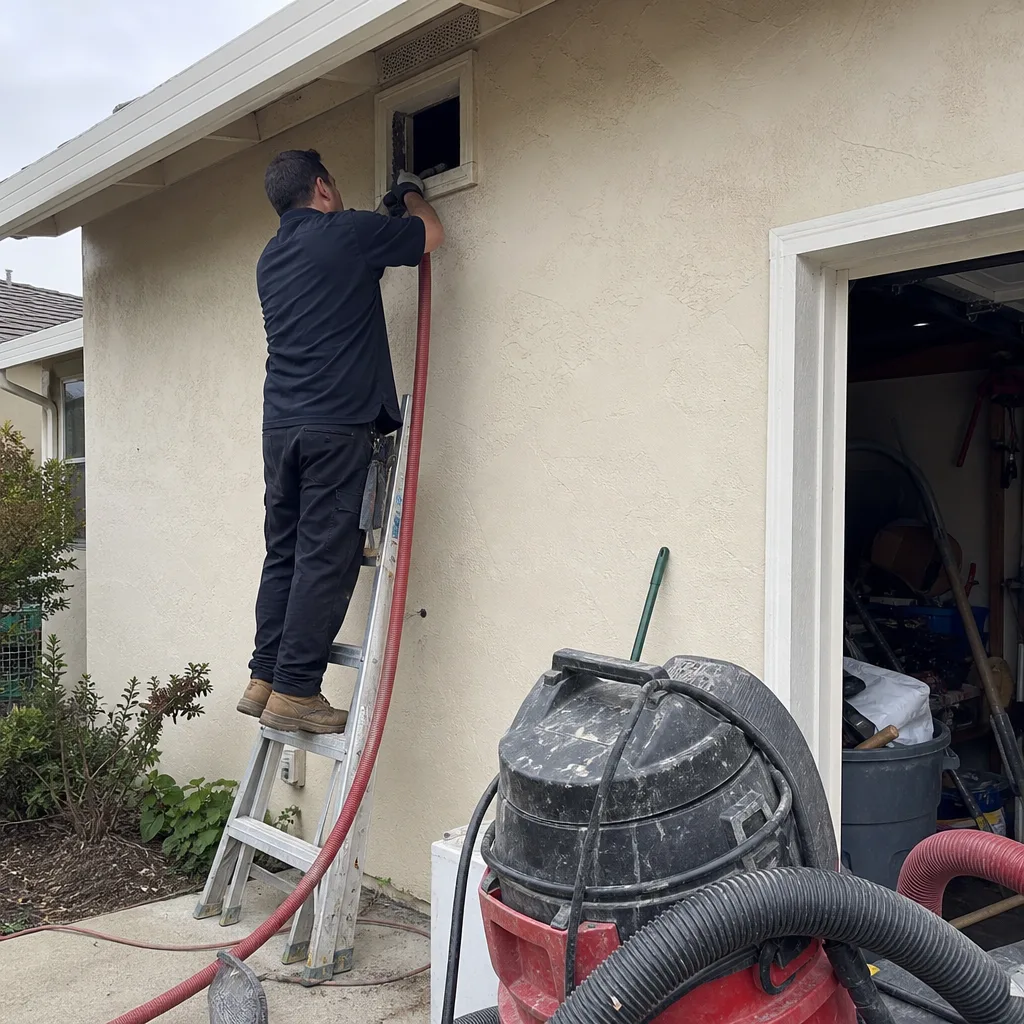
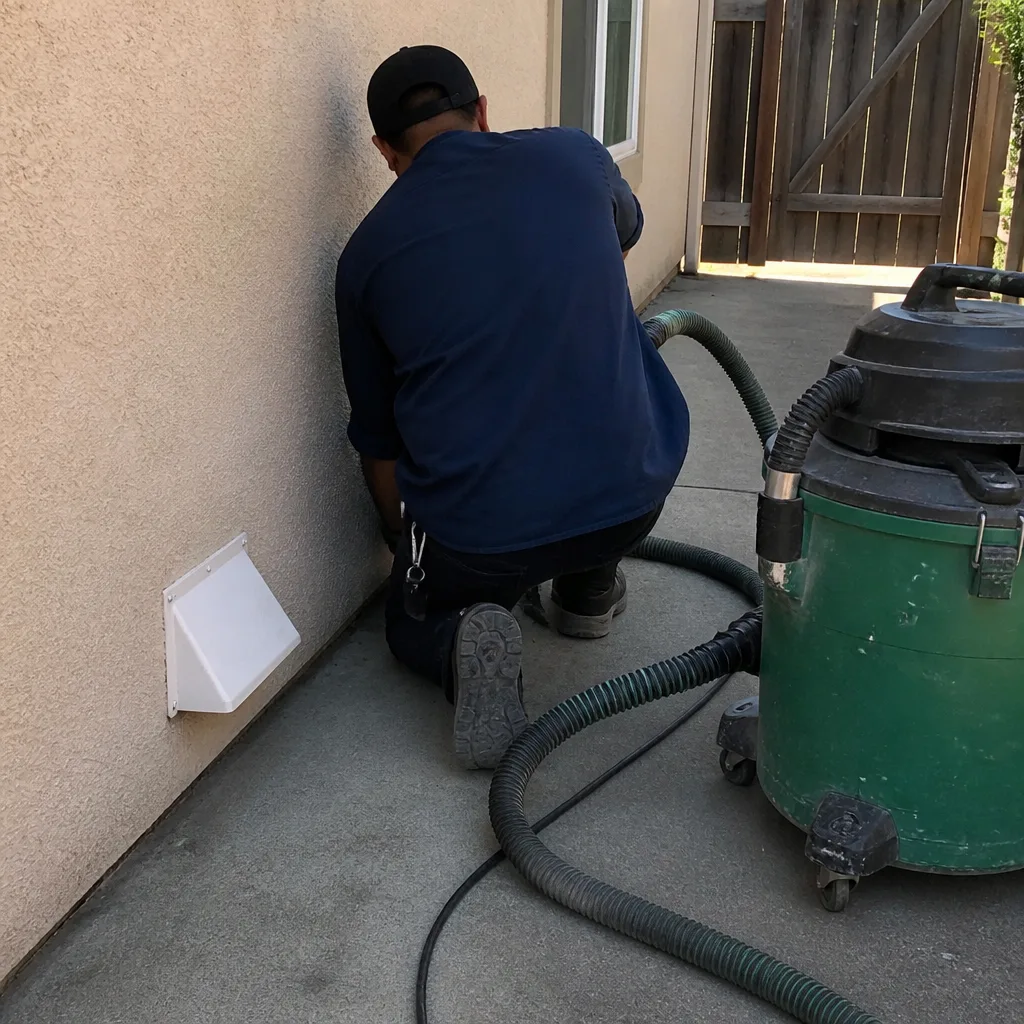
- Ignoring the dryer vent in your emergency plan. Dryer vents pull exterior air and accumulate particulate. After a smoke event, the vent is contaminated. It’s a separate service from HVAC duct cleaning and should be addressed separately.
- Failing to document your system before a disaster. Without baseline photos, post-event insurance claims become a battle of competing narratives. Baseline documentation takes 15 minutes and changes the trajectory of a claim.
- Assuming flood water that didn’t reach the main living space didn’t affect the ducts. Crawlspace flooding saturates duct exteriors. Condensation failure at the coil floods the supply plenum. The water doesn’t need to be visible in your living room to have compromised your system.
- Choosing a cleaning-only company for a system that needs repair. A company that can’t do structural work will clean around damage rather than fix it. You’ll pay twice: once for the cleaning, once for the repair you should have gotten first.
See the difference
 Before
 After
 Before
 After
 Before
 After
When to Call a Professional
Call a professional duct specialist when any of these applies: you’ve experienced a wildfire smoke event and your system has been running during it; you’ve had any water event that reached your crawlspace, attic, or the area around your HVAC equipment; you smell smoke or musty odors when your system cycles; your registers show visible streaking or discoloration; or you’re filing an insurance or FEMA claim that requires documentation of your duct system’s condition. In all of these cases, the assessment window is measured in days, not weeks. Duct Cleaning Elk Grove offers free estimates in Elk Grove; call (866) 705-7671 to schedule a post-disaster assessment or a pre-season baseline cleaning.
Frequently Asked Questions
You should have your system assessed within 72 hours of the smoke clearing, while particulate is still loose on duct surfaces and before heat cycles bond it permanently. After that window, cleaning becomes more difficult and may require more aggressive methods or section replacement. Call (866) 705-7671 for a post-smoke assessment in Elk Grove; estimates are free.
Yes. Smoke particulate coats the evaporator coil, reducing heat transfer efficiency by up to 30%, and VOC compounds from smoke can absorb into fibrous duct liner, creating a permanent odor source. The degree of permanence depends on how long the system ran during the event and how quickly it was addressed afterward.
A post-smoke cleaning targets specific deposition points: coil fins, blower wheel, damper edges, and register boots. It requires more aggressive agitation (rotary brush contact, not just vacuuming) and documented verification. A normal maintenance cleaning is about removing accumulated dust; a post-event cleaning is about removing bonded particulate before it becomes permanent.
In many cases, yes, if the damage is documented and tied to the event. The claim must include a professional assessment report with photographs, a specific description of contamination, and a recommended action. Without this documentation, adjusters typically deny duct-related claims. Your assessment should be timestamped and performed close to the event date.
Running the system re-suspends deposited particulate and pushes it into your living spaces. If you must run the system, use the highest-MERV filter your equipment can handle, and schedule an assessment as soon as possible. In our experience in Elk Grove, systems that keep running after heavy smoke events accumulate more damage than systems that are shut down until assessed.
If your duct liner is saturated, delaminated, or shows visible microbial growth, cleaning is not sufficient. If your ducts sag, hold water, or have visible exterior damage, those sections need repair or replacement. A professional assessment will determine the scope. We clean and repair in the same visit, which means one call addresses both possibilities.
The Bottom Line
Emergency preparedness for your Elk Grove duct system is not about buying products or upgrading equipment. It’s about having a response protocol locked in before the event: know the 72-hour smoke assessment window, know the 48 – 72 hour moisture response window, know the correct sequence of steps, and know who you’ll call. Homeowners who act within these windows overwhelmingly end up with a cleanable system. Those who delay end up with duct repair or replacement, which costs more and takes longer. The difference is measured in days and dollars. Plan ahead, document your baseline, and keep a professional’s number on hand. If you’re in Elk Grove, that number is (866) 705-7671.
Written by the team at Duct Cleaning Elk Grove, serving Elk Grove since 2013.