
Last updated November 2, 2026
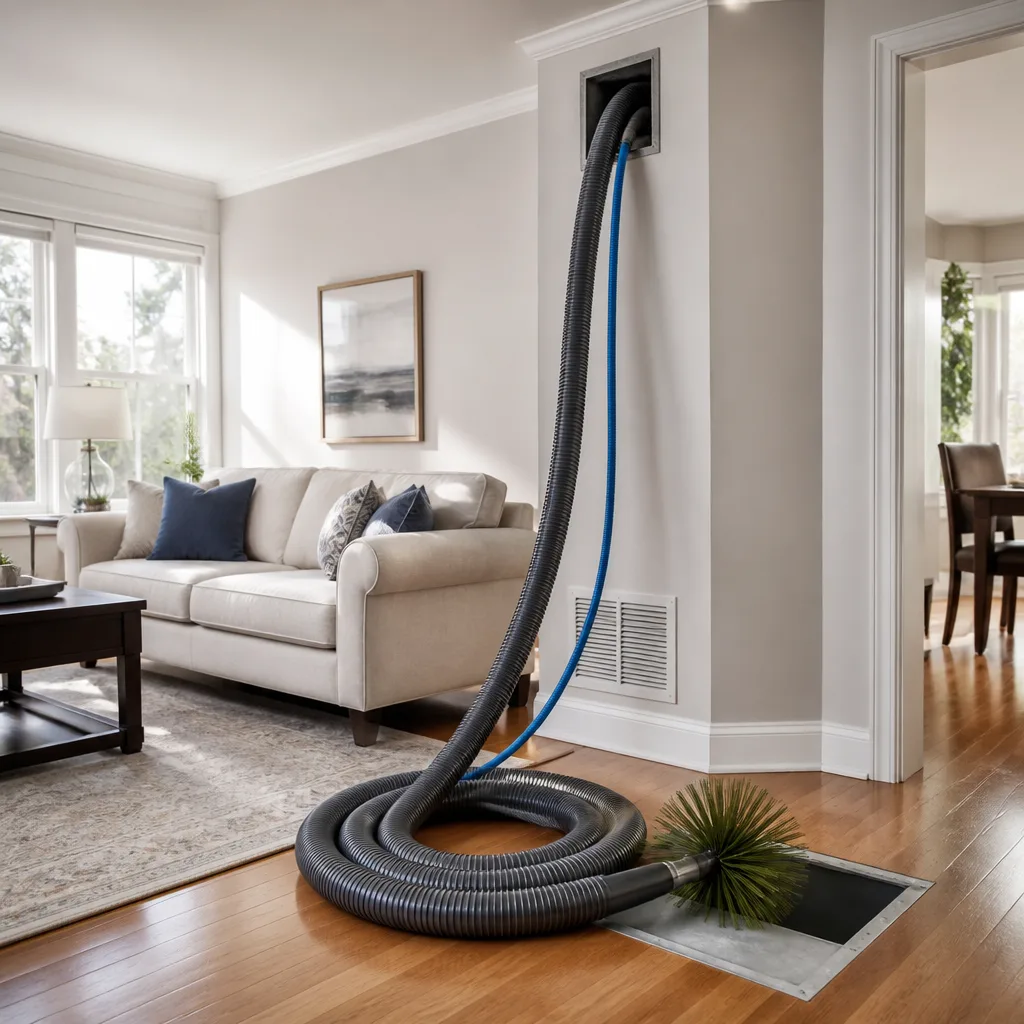 Whole-home duct cleaning
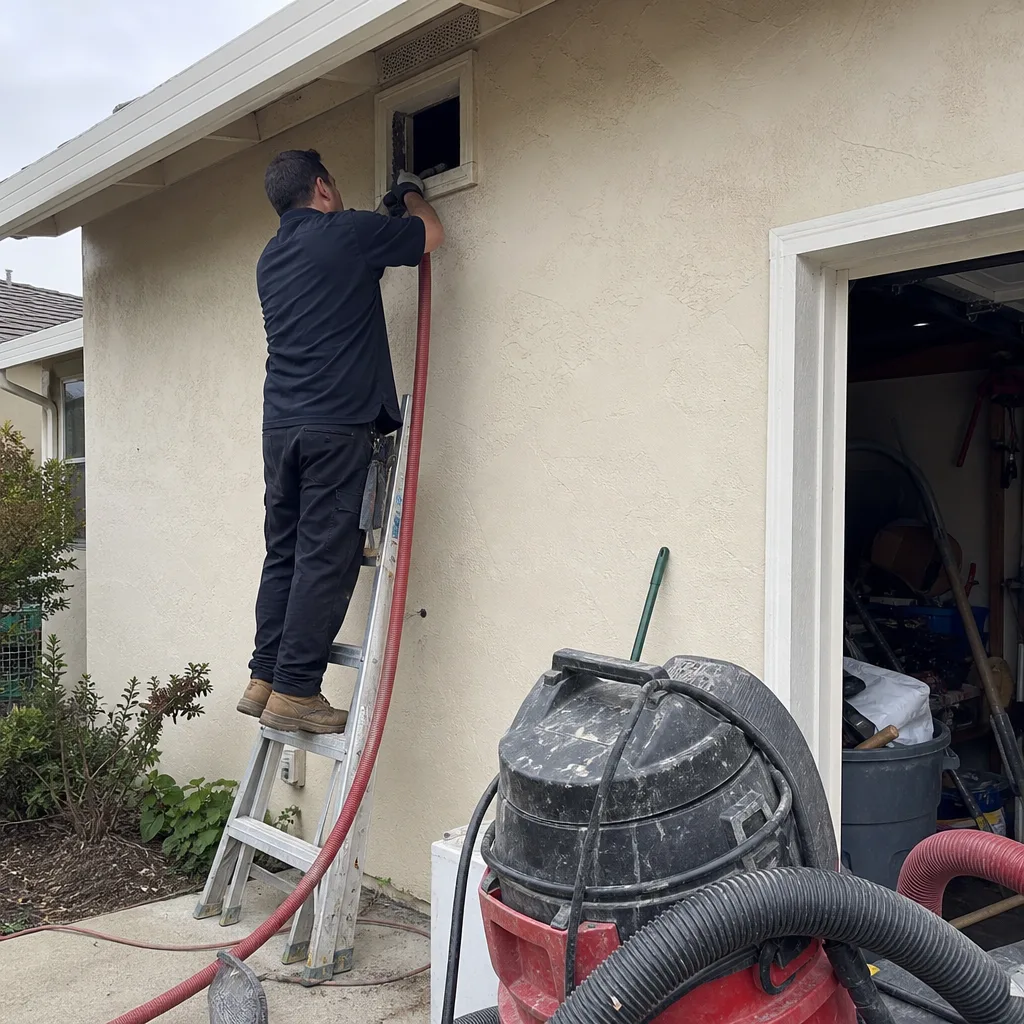
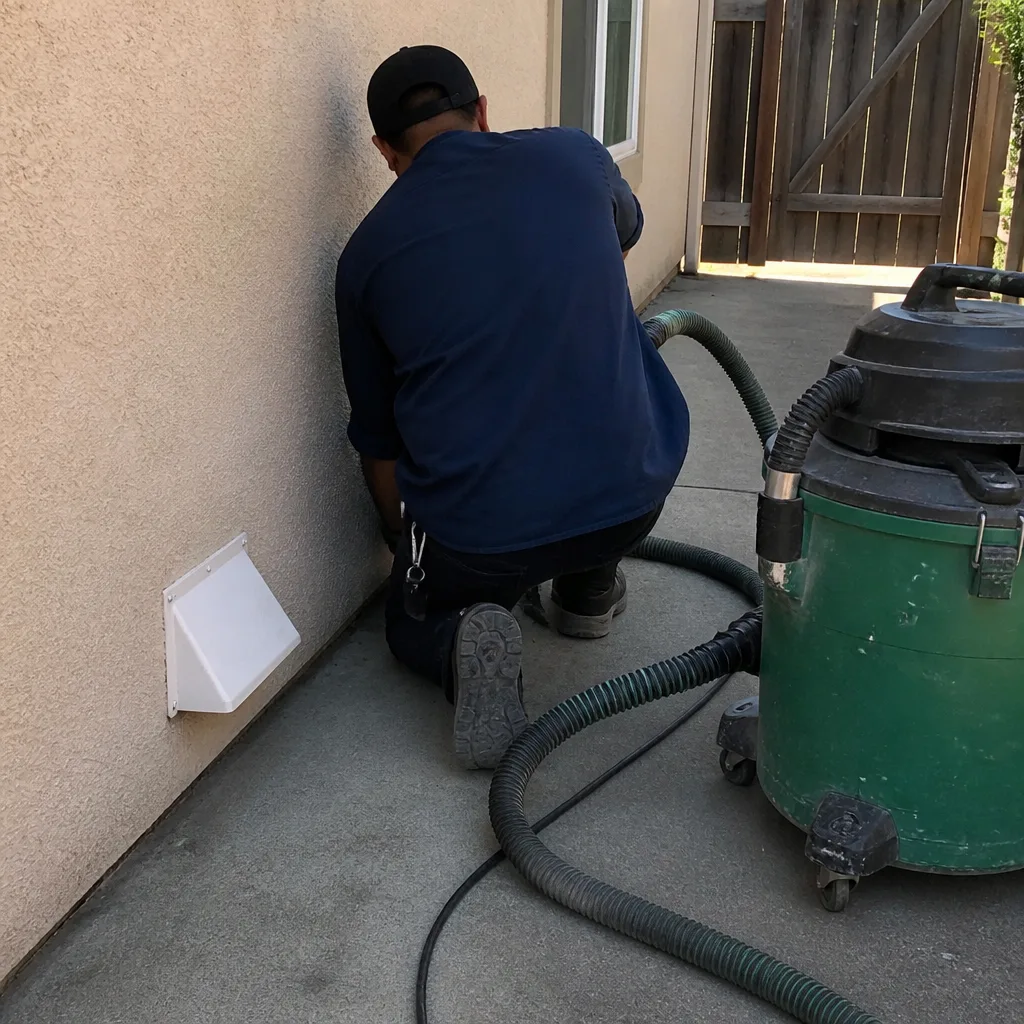
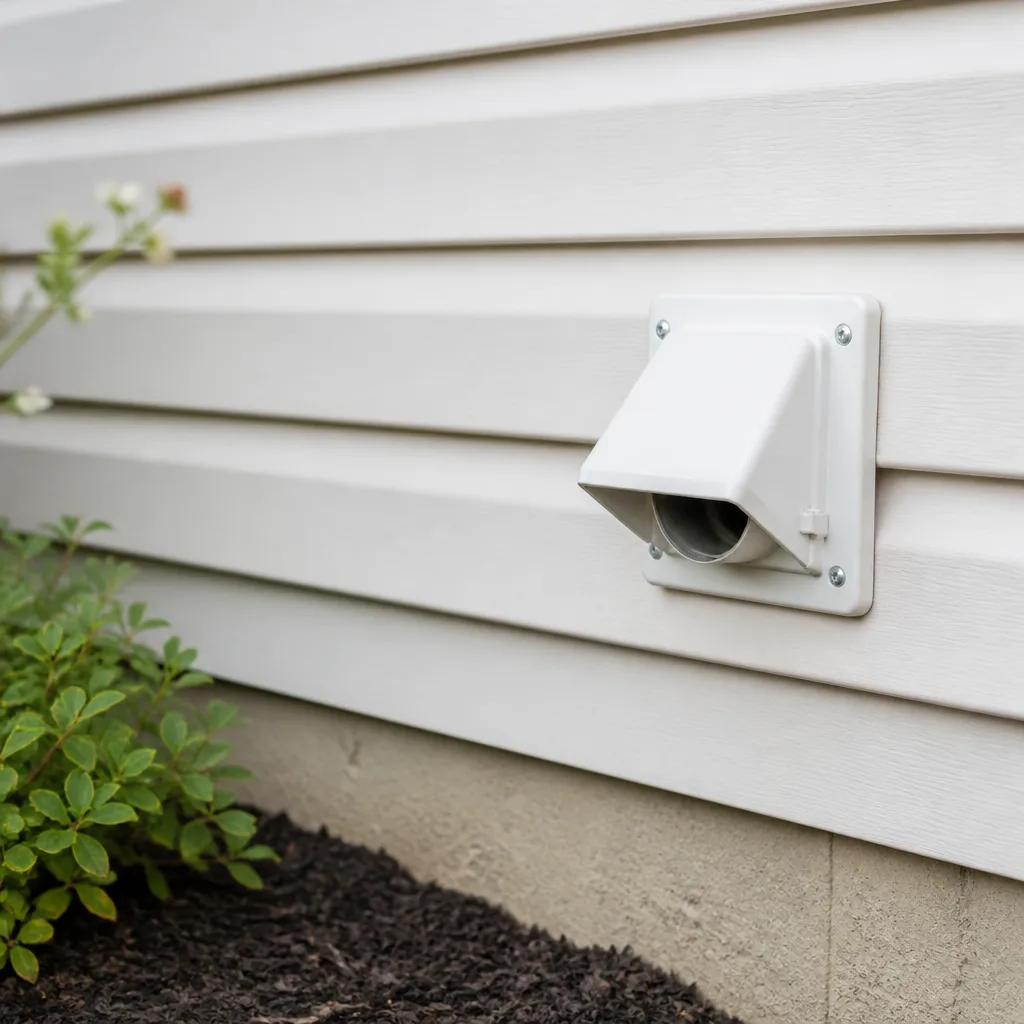 Dryer vent cleaning
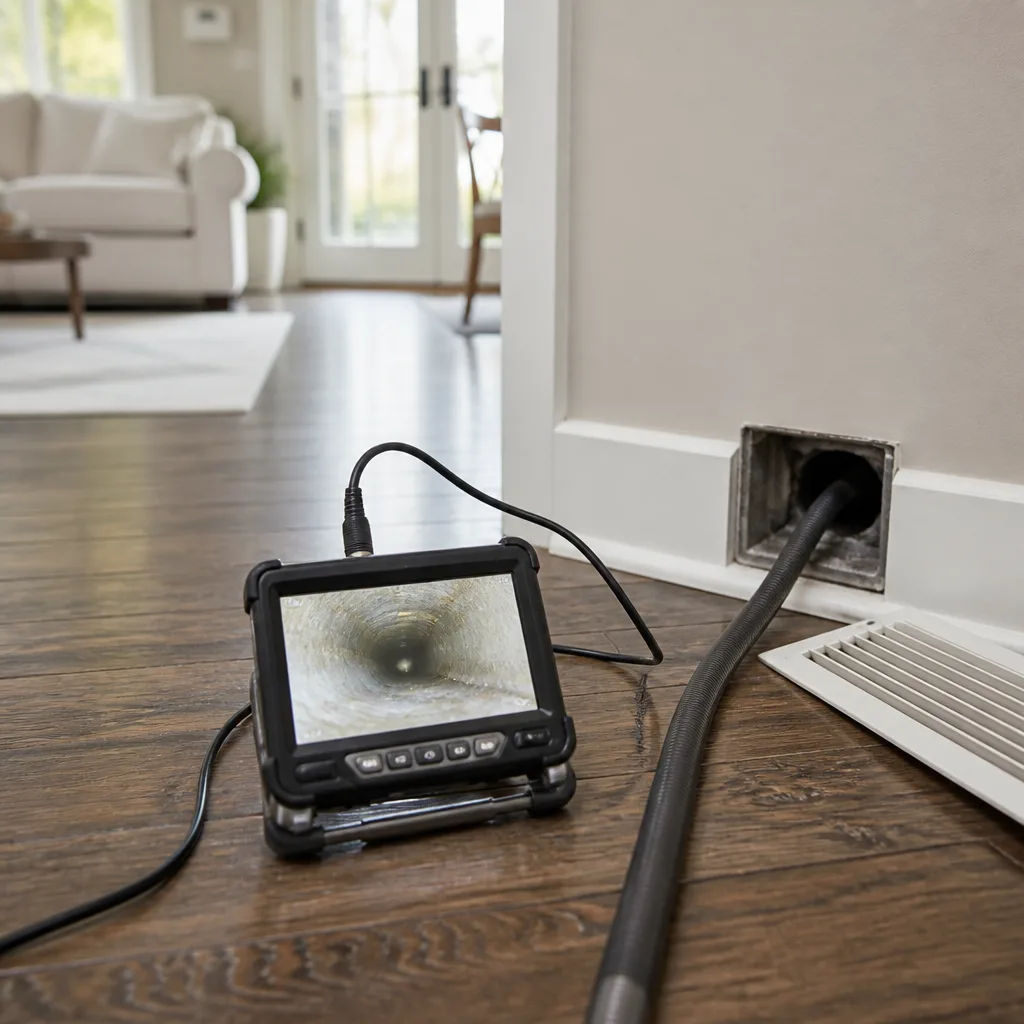 Camera inspection
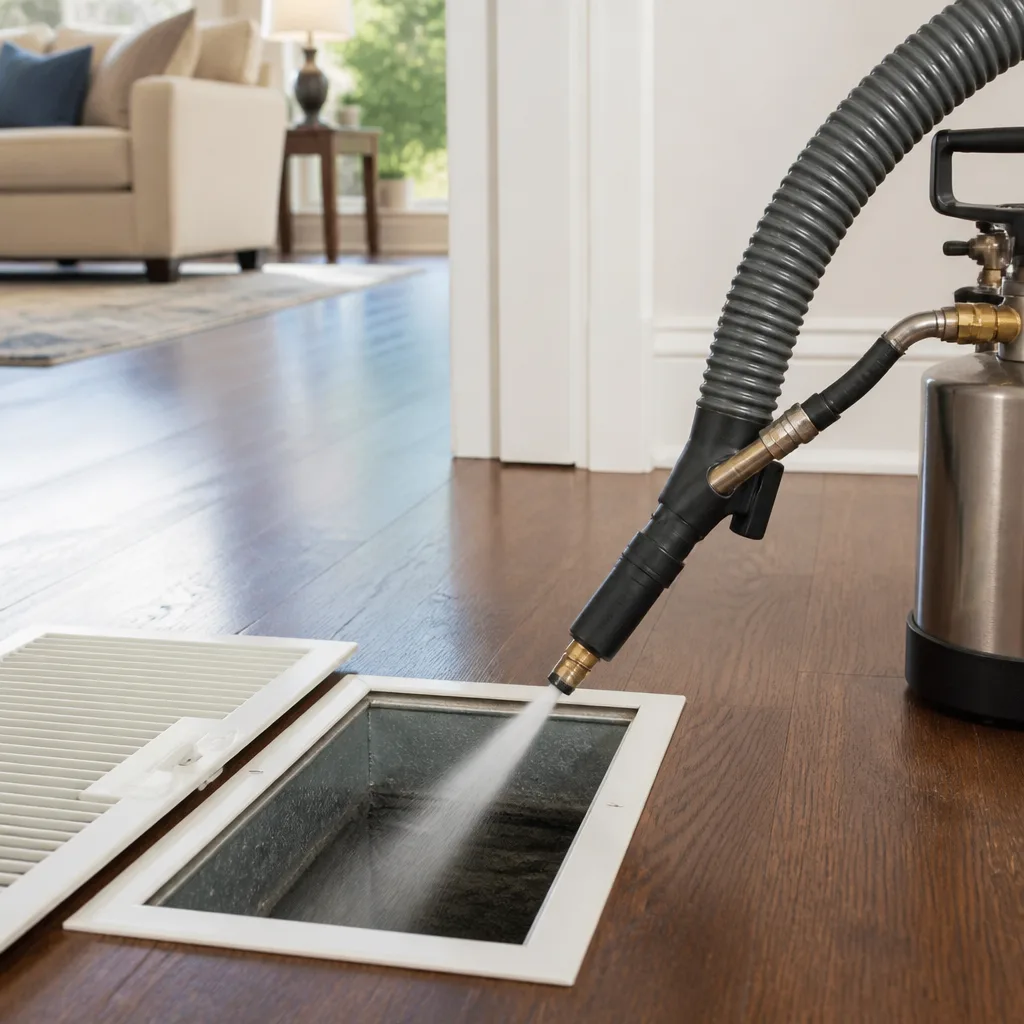 Sanitizing & deodorizing
Whole-system duct and dryer vent check with before-and-after photos - you see exactly what came out of your vents
That "$99 whole-house special" is a bait ad - the real number appears once they are in your hallway, or the "clean" is a shop-vac at the register. We photograph the inside of your ducts before and after instead.
The Complete Air Duct Cleaning Guide for Elk Grove Homeowners
Here’s something most guides won’t tell you: the EPA’s lukewarm stance on duct cleaning was written about low-grade service methods, not the negative-pressure extraction systems pulling 2,000+ CFM through sealed ductwork. When a contractor shows up with a shop-vac and a brush, the agency’s skepticism is well earned. When the job is done with a Rotobrush agitation system paired with a Nikro HEPA-filtered vacuum, you’re talking about a different procedure entirely. This guide exists because Elk Grove homeowners deserve to know the difference between a cleaning that moves dust around and one that actually removes it. We’ll explain what your ducts collect in this specific climate, how a verifiable cleaning is performed, and what to demand from any contractor before you hand over a key.
Styles & brands we work with
- Whole-home duct cleaning
- Dryer vent cleaning
- Camera inspection
- Sanitizing & deodorizing
Quick Answer
Air duct cleaning in Elk Grove should involve mechanical agitation of all interior duct surfaces combined with negative-pressure extraction to capture debris at the source. A thorough residential cleaning of a typical 2,000 – 2,500 sq ft home runs $450 – $900 for the full system, including supply and return plenums, trunk lines, and branch runs. The single most important verification isn’t a before-and-after photo – it’s whether the contractor seals registers, maintains negative pressure throughout the job, and documents the process with data, not just pictures.
Table of Contents
- Why Elk Grove’s Climate Makes Duct Contamination Worse Than Coastal California
- Contact Cleaning vs. Air-Sweep Methods: Why Equipment Type Determines Results
- What a Pre-Cleaning Inspection Must Document
- The Cleaning Process, Step by Step: What Actually Happens During a Professional Job
- Why Photos Aren’t Enough: Data Points That Confirm a Completed Cleaning
- The Homeowner’s Equipment Checklist: Verifying Contractor-Grade Tools On-Site
- When Cleaning Isn’t Enough: The Role of Air Duct Repair
- Common Mistakes to Avoid
- When to Call a Professional
- Frequently Asked Questions
- The Bottom Line
Why Elk Grove’s Climate Makes Duct Contamination Worse Than Coastal California
Elk Grove sits in the Sacramento Valley, where summer temperatures routinely cross 100°F and HVAC systems run hard from May through October. That extended runtime isn’t just an energy bill concern – it means your blower motor is pulling air through the ductwork for thousands of hours annually, and every one of those hours is an opportunity for particulates to accumulate. Coastal homes in places like Monterey or Santa Cruz deal with moisture and salt air. Elk Grove homes deal with something different: fine agricultural dust from surrounding farmland, wildfire smoke particulate that settles into return ducts during smoke events, and the constant shedding of skin cells, pet dander, and textile fibers from a tightly sealed modern home.
We’ve pulled apart return plenums in Elk Grove tract homes that looked like the inside of a vacuum bag, even in houses less than ten years old. The Central Valley’s dry, dusty air means particulates stay suspended longer and travel further through the duct system before settling. Add in construction debris from the rapid residential build-out across the 95757 and 95758 zip codes – drywall dust, sawdust, and trim scraps that get swept into floor registers during construction and never removed – and you have a contamination profile that’s genuinely different from what a San Francisco contractor typically encounters. This matters because your cleaning contractor needs to understand what they’re actually removing, not just run a brush through and call it done.
For a deeper look at how our specific process addresses Elk Grove’s particulate load, see our page on Air Duct Cleaning in Elk Grove.
Contact Cleaning vs. Air-Sweep Methods: Why Equipment Type Determines Results
There are two fundamentally different approaches to duct cleaning, and they produce fundamentally different results. The first is air-sweep cleaning, sometimes called “air washing.” A high-volume air stream is pushed through the ducts to dislodge loose debris, which is then pulled back toward a vacuum. This method can remove loose dust, but it does not remove debris that has adhered to duct surfaces – the oily film that binds dust to sheet metal, or the caked-on accumulation at elbows and transitions. Air-sweep is fast, which is why low-priced cleaning companies use it. It is also incomplete.
The second approach is contact cleaning. This is what professional-grade systems like the Rotobrush rotary brush system are built for. A rotating brush physically contacts the interior surfaces of the duct, agitating adhered debris loose from the metal or flex duct walls. Simultaneously, a high-CFM vacuum unit applies negative pressure to extract that loosened material at the source. When paired with Nikro HEPA-filtration vacuums, the extracted air is filtered before it’s exhausted, capturing particulates down to 0.3 microns. This is the standard used in commercial remediation work, applied to residential systems.
Why does this matter for Elk Grove tract homes specifically? Most post-1990 construction in Elk Grove uses flexible duct for branch runs, not rigid sheet metal. Flex duct has a corrugated interior liner that traps debris differently than smooth metal. A rotary brush can work through those corrugations without damaging the liner. An air-sweep method simply can’t. If you’re evaluating contractors, the question to ask isn’t “Do you clean ducts?” It’s “What method do you use, and what equipment supports it?” A company using a Rotobrush system or similar rotary agitation equipment is doing contact cleaning. A company showing up with a portable shop-vac and a long hose is not.
What a Pre-Cleaning Inspection Must Document
A professional duct cleaning begins before any equipment is turned on. The pre-cleaning inspection is where the scope of work is established, specific problem areas are identified, and the homeowner gets a clear picture of what will and won’t be addressed. If a contractor skips this step or treats it as a formality, you’re working with the wrong operator. Here’s what a legitimate inspection in Elk Grove should document:
- Static pressure readings. Your HVAC system is designed to operate within a specific static pressure range. Elevated pressure indicates airflow restriction – typically from a dirty coil, a clogged filter, or duct restrictions. A contractor who measures static pressure before and after cleaning is demonstrating that they understand the system as a whole, not just the ductwork.
- Visible contamination zones. Every duct system has specific areas where debris accumulates: return plenums, filter housings, supply trunks near the air handler, and elbows in branch runs. The inspection should map these zones so the cleaning targets them deliberately.
- Flex duct integrity. This is a big one in Elk Grove. Flex duct can develop tears, kinks, or disconnections, especially in attics where temperatures fluctuate between freezing winter nights and 140°F summer afternoons. A disconnected flex run means your air conditioner is conditioning your attic, not your living room. The inspection should note any compromised sections.
- Register condition. Floor registers collect debris from foot traffic, pet hair, and general household dust. The inspection should note which registers are damaged, painted shut, or missing entirely. These are part of the duct system’s overall condition.
- Filter housing and media type. The inspection should confirm what filter your system uses, whether it’s seated correctly, and whether bypass is occurring around the filter frame. A filter that doesn’t seal means unfiltered air is entering the system regardless of how clean the ducts are.
When we perform an air duct cleaning in Elk Grove, this documentation is part of the service, not an upsell. You should expect nothing less from any contractor you’re considering.
The Cleaning Process, Step by Step: What Actually Happens During a Professional Job
Understanding the sequence of a proper cleaning helps you evaluate whether a contractor is doing real work or going through the motions. Here is what a professional-grade residential duct cleaning looks like when it’s performed with proper equipment:
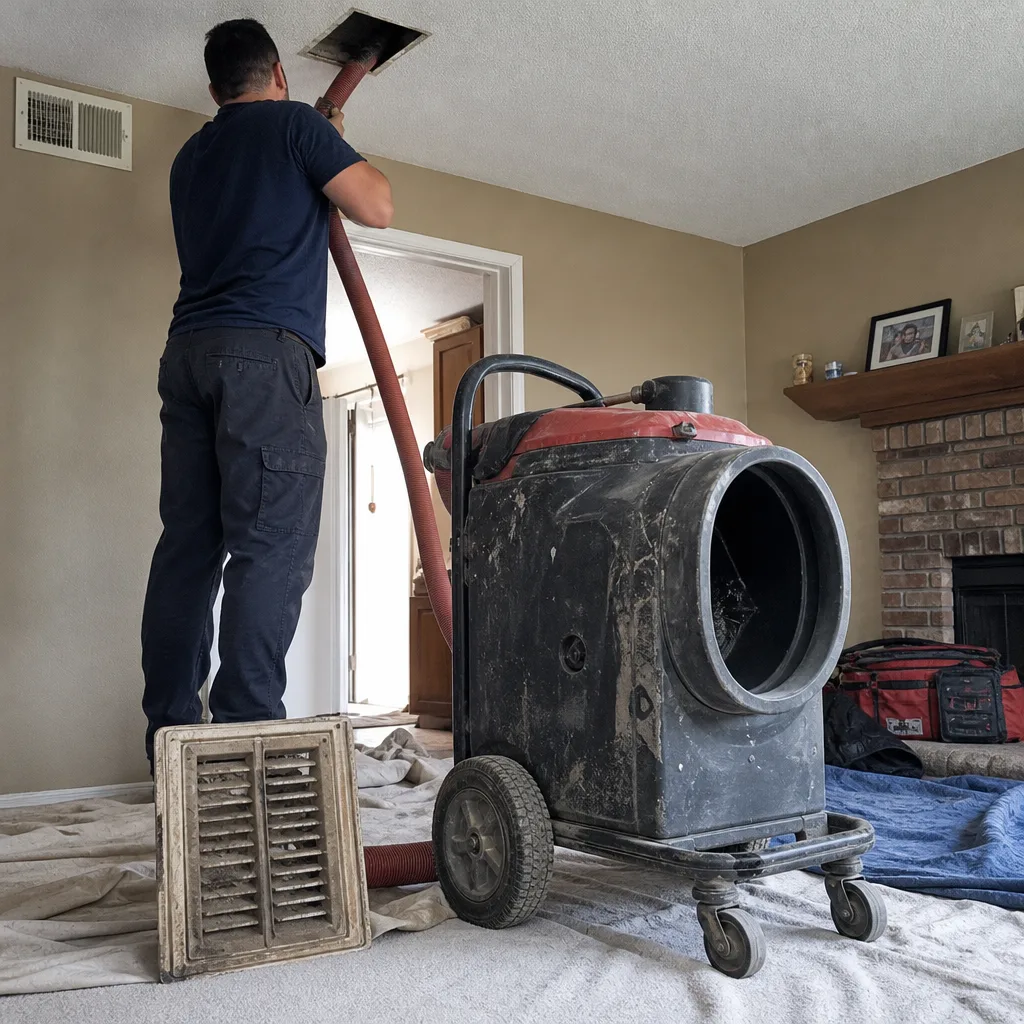
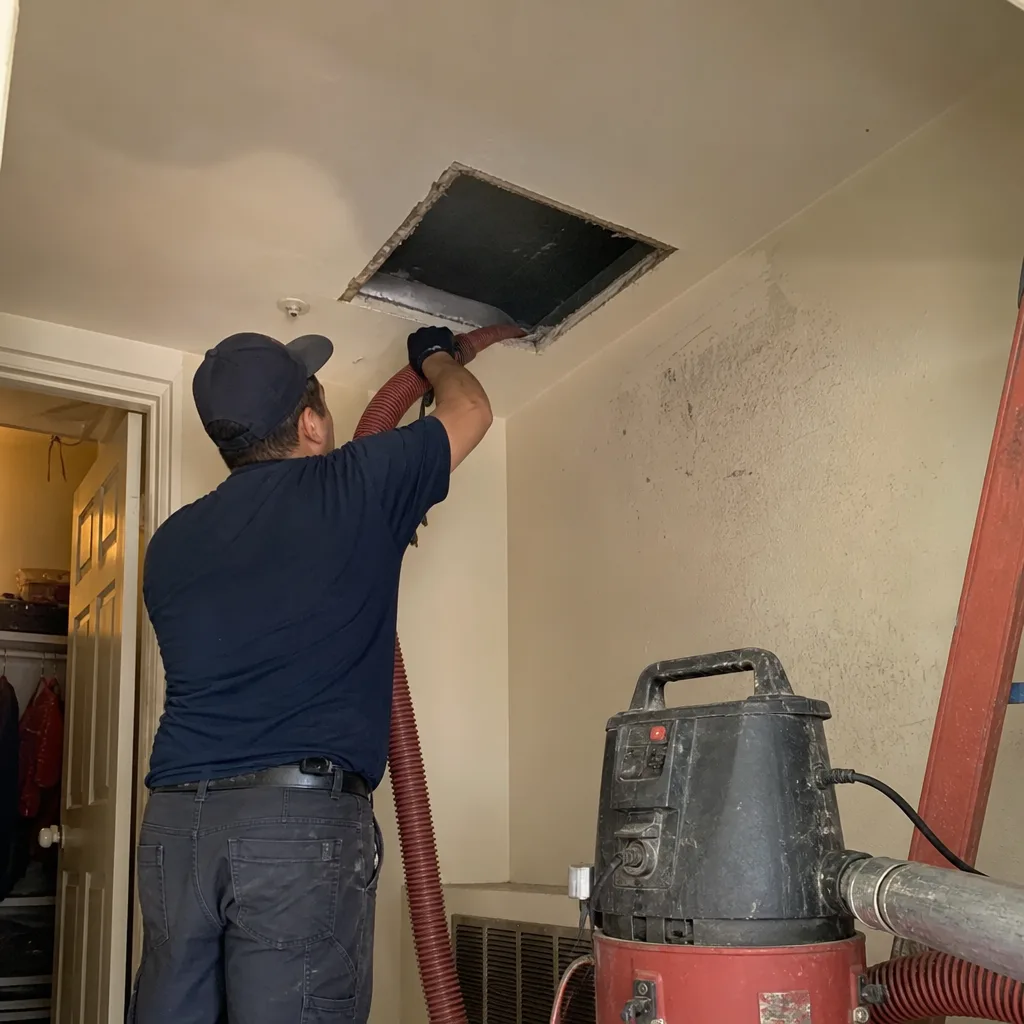
- System shutdown and sealing. The HVAC system is turned off. Supply and return registers throughout the home are sealed. This is critical – sealing registers maintains negative pressure inside the duct system so that dislodged debris is pulled toward the vacuum unit rather than blown into living spaces.
- Access point creation. A professional contractor cuts access ports in the supply and return plenums. This is standard practice. The access point allows the vacuum hose and agitation equipment to reach the main trunk lines. Access points are sealed with removable caps afterward, leaving the system accessible for future cleanings.
- Negative pressure establishment. A high-CFM vacuum unit – not a portable shop vac – is connected to the system. Units used by professional contractors typically pull 2,000 CFM or more. This creates continuous negative pressure throughout the ductwork for the duration of the cleaning.
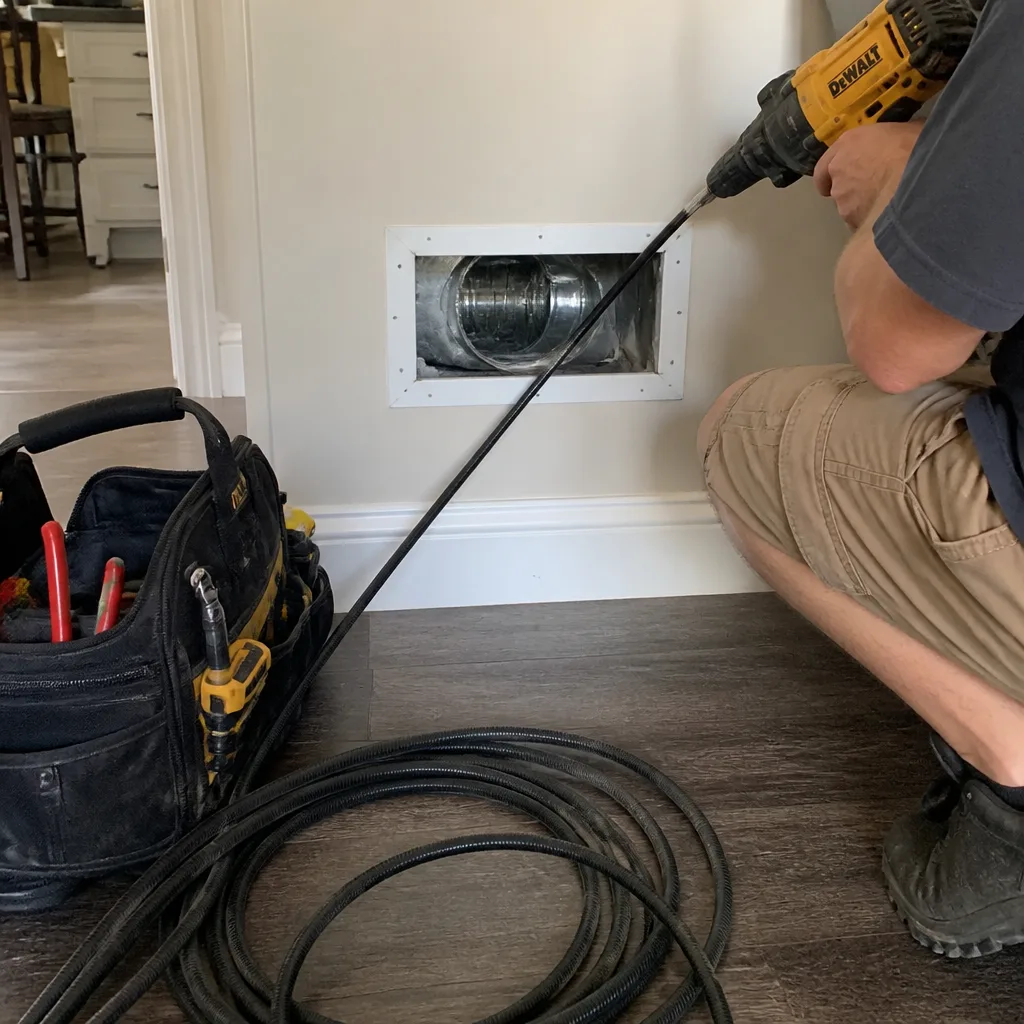
- Mechanical agitation. A rotary brush system, such as a Rotobrush, is inserted through each access point and run through every trunk line and branch run. The brush physically contacts duct surfaces, dislodging adhered debris that air movement alone cannot remove. For flex duct, this must be done with a brush designed for the material to avoid tearing the liner.
- Source capture and HEPA filtration. All dislodged debris is pulled by the negative pressure airflow directly to the vacuum unit. When a Nikro HEPA-filtered vacuum is used, the exhaust air is filtered before it returns to the environment. Using Abatement Technologies negative-air equipment, contaminants are contained inside the duct system and exhausted outside or through HEPA filtration, not redistributed through the home.
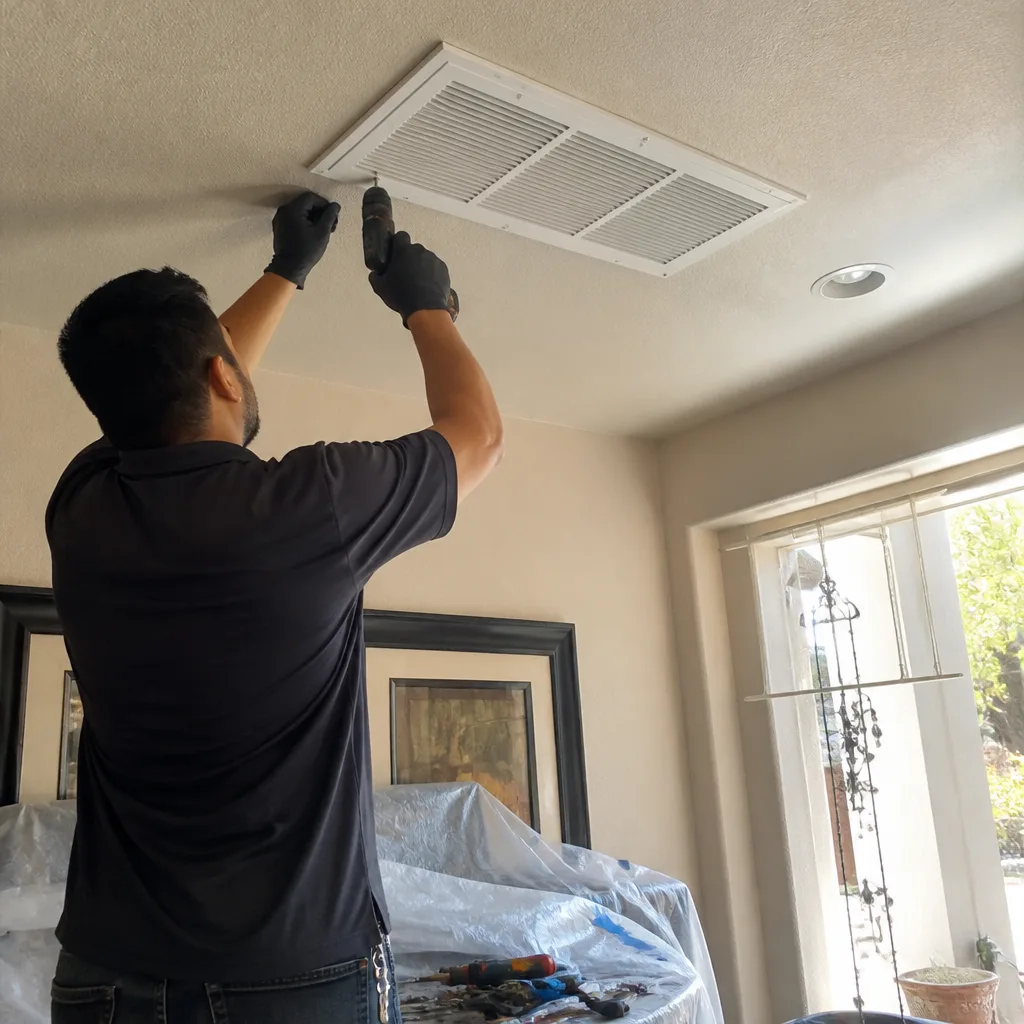
- Register and grille cleaning. After the ducts are cleaned, each register and return grille is cleaned and reinstalled. Registers that are damaged should be noted and replaced if requested.
- Final verification. The contractor should walk the system with you, showing the cleaned condition at the access points. Data points – before and after static pressure readings, air volume measurements, and visual documentation – confirm the work was completed.
This process typically takes 3 – 5 hours for a 2,000 – 2,500 sq ft home. If someone quotes you a 90-minute cleaning, they’re not performing this sequence.
Why Photos Aren’t Enough: Data Points That Confirm a Completed Cleaning
Before-and-after photos have become the standard “proof” offered by duct cleaning companies. They’re useful for showing visible contamination removal at the access point, but here’s the problem: a photo only shows what’s within a few feet of the camera. Your duct system is a network of branch runs that extends throughout the entire footprint of your home. A contractor can clean the main trunk, snap a convincing photo, and leave half the branch runs untouched. You’d never know from the picture.
What actually confirms a completed job? Measurable data. Specifically:
- Static pressure delta. If static pressure was elevated before cleaning due to duct restriction, it should decrease measurably after cleaning. This is a quantifiable improvement in airflow efficiency.
- Air volume readings. Measuring CFM at registers before and after cleaning confirms that airflow is improved at the point of delivery, not just at the air handler.
- Visual confirmation at access points. While photos are limited, you should be able to see with your own eyes that the interior surfaces of the plenums and accessible trunk sections are clean after the work is complete.
- Inspection scope documentation. A professional contractor documents what was accessed, what was cleaned, and what remains unaddressed. If the report says “cleaned all supply and return branches” but doesn’t list how many branches exist, how were they verified?
The point isn’t that photos are worthless. The point is that photos alone are insufficient. Your contractor should be able to provide both visual and numerical evidence that the system was cleaned. If they can’t, you don’t have verification – you have a photograph.
The Homeowner’s Equipment Checklist: Verifying Contractor-Grade Tools On-Site
Before the cleaning crew unloads anything, you can tell a lot about what kind of job you’re going to get. Here’s a homeowner’s checklist for verifying that the equipment on the truck matches the claims in the sales pitch. These are observable, physical characteristics – no expertise required:
- Vacuum hose diameter. Professional negative-pressure systems use hoses that are 8 – 12 inches in diameter. If the crew pulls out a 2.5-inch hose connected to a portable shop-vac, that’s not a duct cleaning system. That’s a vacuum cleaner on wheels. It cannot move enough air volume to extract debris from the far ends of branch runs.
- Vacuum unit CFM rating. Professional units should be rated at 2,000 CFM or higher. The CFM rating should be on the unit’s data plate. Ask to see it. If the contractor can’t tell you what CFM their equipment produces, that’s an answer in itself.
- Agitation tooling. Is there a rotary brush on the truck, or just hoses and a vacuum? Air-sweep-only cleaning, as discussed above, doesn’t remove adhered debris. Look for a brush system that’s purpose-built for ductwork – something like a Rotobrush unit.
- Register sealing during extraction. Watch what happens in the first ten minutes. Are registers being sealed before vacuuming begins? If the crew starts blowing air through the system without sealing registers, they’re pushing contaminants into your living space. Sealed registers and established negative pressure are non-negotiable.
- HEPA filtration on the exhaust side.Professional units include HEPA filtration on the exhaust air. Ask to see the filter bank. If the exhaust is unfiltered or the crew can’t identify the filtration, what’s being pulled out of your ducts is being blown into your yard or your home.
This checklist isn’t about being difficult with a contractor. It’s about confirming that the service you’re paying for is the service being delivered. Professional-grade equipment, not repurposed tools – that’s the standard. If the equipment on the truck doesn’t meet it, the cleaning won’t either.
When Cleaning Isn’t Enough: The Role of Air Duct Repair
Not every duct problem can be fixed with a brush and a vacuum. Elk Grove’s attic temperatures create specific failure modes in flex duct systems. The corrugated inner liner of flex duct can separate from the outer insulation jacket, creating a blockage. The duct can sag between supports, restricting airflow. A branch run can become disconnected entirely at a junction box, dumping conditioned air into the attic. In these cases, cleaning is only half the job – and a cleaning-only contractor can’t close the loop.
This is where the distinction between a cleaning company and a full-service duct contractor matters. When we encounter a disconnected or damaged duct section during a cleaning, we can address it. Our Air Duct Repair in Elk Grove service covers sealing, reconnecting, and patching damaged duct sections. That’s a structural fix most cleaning-only companies simply can’t perform. They’ll note the problem on the invoice and move on. A disconnected flex run means your HVAC system is working to condition the attic, not your home. Getting the ducts cleaned won’t fix that. Repair what others only vacuum around – that’s the difference between a cleaning and a correction.
For homeowners with Honeywell or Aprilaire whole-home air-quality systems, this is particularly relevant. Those systems are investments in your home’s air quality. Cleaning the ductwork without addressing structural problems means that investment isn’t performing. A clean duct system is what your HVAC equipment was designed to run with – and your IAQ equipment too.
Common Mistakes to Avoid
- Hiring based on price alone. A $199 whole-house special sounds good until you realize you’ve paid $199 to have air blown through your ducts without any contact cleaning. Elk Grove has no shortage of low-priced duct cleaning offers, and the work quality follows the price.
- Accepting before/after photos as proof. As discussed above, photos show a few feet of accessible duct. A full system cleaning requires verification that all branch runs were accessed and cleaned.
- Skipping the pre-inspection. If a contractor gives you a quote over the phone without seeing your system, they’re not doing a real scope of work. Every home in Elk Grove has a different contamination profile based on age, construction, pets, and filter history.
- Ignoring disconnected or damaged ducts. A cleaning will make your system cleaner. It will not make a disconnected flex run reconnect itself. If your contractor notes structural problems, addressing them is not an upsell – it’s the actual fix.
- Forgetting the dryer vent. Your dryer vent is a separate system from your HVAC ductwork, and it needs separate attention. Lint accumulation is a documented fire hazard. Dryer Vent Cleaning in Elk Grove is a discrete safety service that addresses this specific risk.
- Not documenting static pressure. If your system has airflow problems, cleaning may help – but only if you have before and after measurements that show improvement. Fly-by-night contractors skip measurement because it takes time and exposes incomplete work.
- Assuming all duct cleaning is equivalent. A shop-vac and a professional negative-pressure system are not the same thing. The method determines the result, and the equipment determines the method. If you can’t verify how a company cleans, you can’t evaluate whether it worked.
When to Call a Professional
Some duct problems are visible enough that they don’t require a professional opinion. If you see dust collecting on registers within days of cleaning, if you notice airflow from some registers is noticeably weaker than others, or if you can see debris accumulating at the return grille, those are signs your system needs attention. Other indicators are less obvious: rising energy bills during cooling season without a corresponding change in usage, musty odors that appear only when the blower runs, or family members with allergy symptoms that improve when they leave the house. If you’ve never had your ducts inspected since moving in, and your Elk Grove home is more than five years old, an inspection is a reasonable step regardless of symptoms. Duct Cleaning Elk Grove offers free estimates in Elk Grove – call (866) 705-7671 to schedule one. Our team services the entire Elk Grove area, from Laguna to Sheldon to the 95757 corridor.
Frequently Asked Questions
For a typical 2,000 – 2,500 sq ft Elk Grove home, expect to pay $450 – $900 for a professional cleaning of the complete duct system, including both supply and return sides. Larger homes or systems with significant contamination will run higher. Call (866) 705-7671 for an exact quote on your home – estimates are free.
Most Elk Grove homes benefit from a professional duct cleaning every 3 – 5 years, though homes with pets, recent construction or renovation work, or occupants with asthma or allergies may need more frequent attention. The Central Valley’s agricultural dust and wildfire smoke particulate can accelerate buildup compared to coastal environments. If you’re unsure whether your system is due, an inspection is a reasonable first step.
The difference is the method and the equipment. A $99 cleaning is almost always an air-sweep job using portable equipment that cannot achieve contact cleaning or full-branch extraction. A $600 cleaning should include mechanical agitation with a professional rotary brush, negative-pressure extraction at 2,000+ CFM, HEPA filtration, and documentation of the work performed. If a price seems too low to support a 3 – 5 hour job with professional equipment, it’s because that job isn’t being performed.
Duct cleaning removes accumulated dust, pet dander, pollen, and other particulate matter from the duct system so they stop recirculating through the home. For allergy sufferers in Elk Grove, where seasonal allergens and agricultural dust are common, this reduction in circulating particulates can be meaningful. It will not eliminate all allergens from the home, but it removes a consistent reservoir of them.
Yes. Our equipment and process are compatible with homes that have Honeywell and Aprilaire whole-home air-quality systems. Proper duct cleaning should protect and preserve your existing IAQ investment, not interfere with it. Call (866) 705-7671 to discuss your specific system.
It’s a good idea to have both systems addressed in the same visit if it’s been more than a year since your dryer vent was cleaned. The dryer vent is a separate system from your HVAC ductwork and accumulates lint, which is a fire hazard. A dryer vent cleaning in Elk Grove addresses a specific safety risk that HVAC duct cleaning does not. We offer both services and can schedule them together for convenience.
The Bottom Line
Air duct cleaning in Elk Grove isn’t a commodity service, and it shouldn’t be priced or evaluated like one. The difference between a thorough cleaning and a performative one is measurable: equipment type, CFM rating, filter standard, and process sequence. If a contractor can’t tell you these specifics, you can’t evaluate whether the work was done. If they can, and the equipment matches the claims, you’re working with an operator who treats this as a precision trade. Elk Grove’s climate and housing stock make duct maintenance a legitimate concern for homeowners here. The right contractor will show you what’s in your ducts, clean it with professional-grade equipment, capture it at the source, and document the work with data you can verify. That’s the standard. Anything less is just moving air around.
Written by the team at Duct Cleaning Elk Grove, serving Elk Grove since 2013.
Ready to get your ducts evaluated? Duct Cleaning Elk Grove home services are available throughout the Elk Grove area. Call (866) 705-7671 for a free estimate today.
See the difference
 Before
 After
 Before
 After
 Before
 After