
Last updated November 2, 2026
 Whole-home duct cleaning
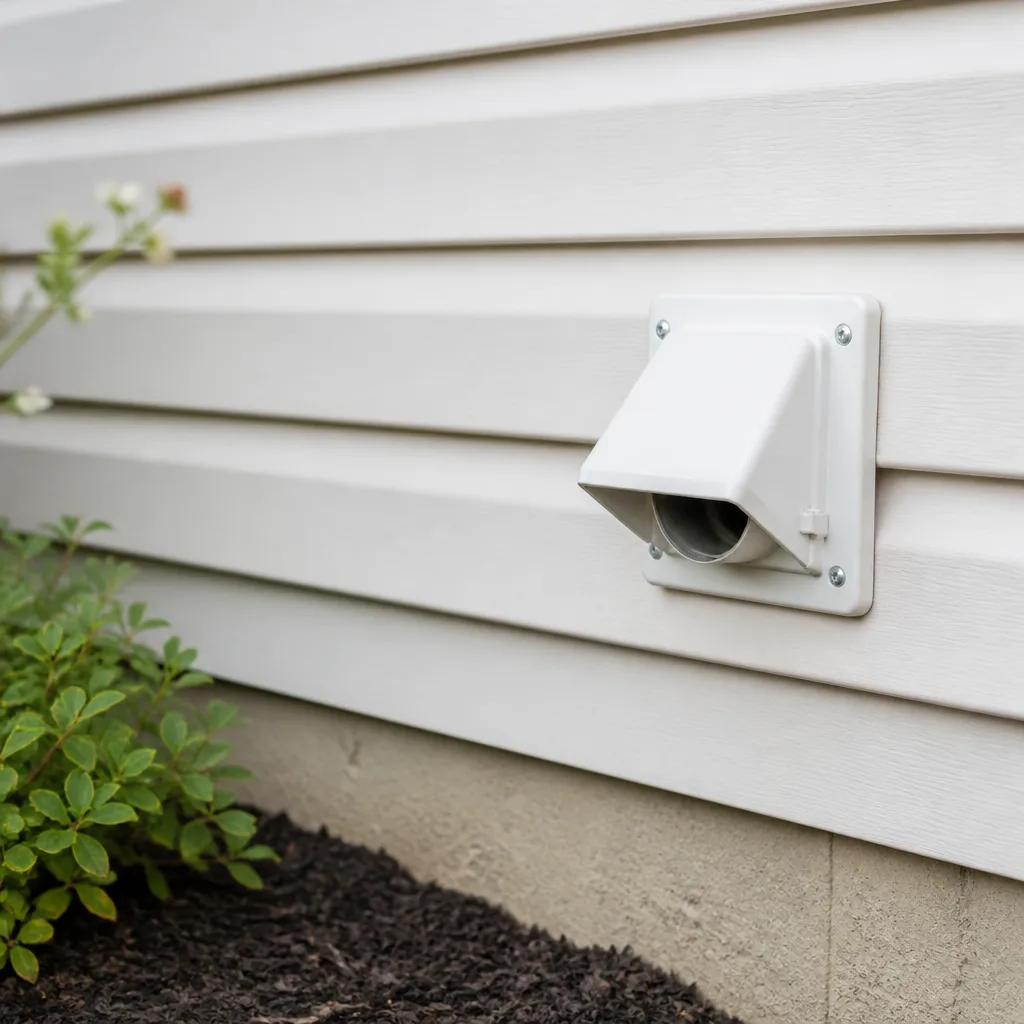 Dryer vent cleaning
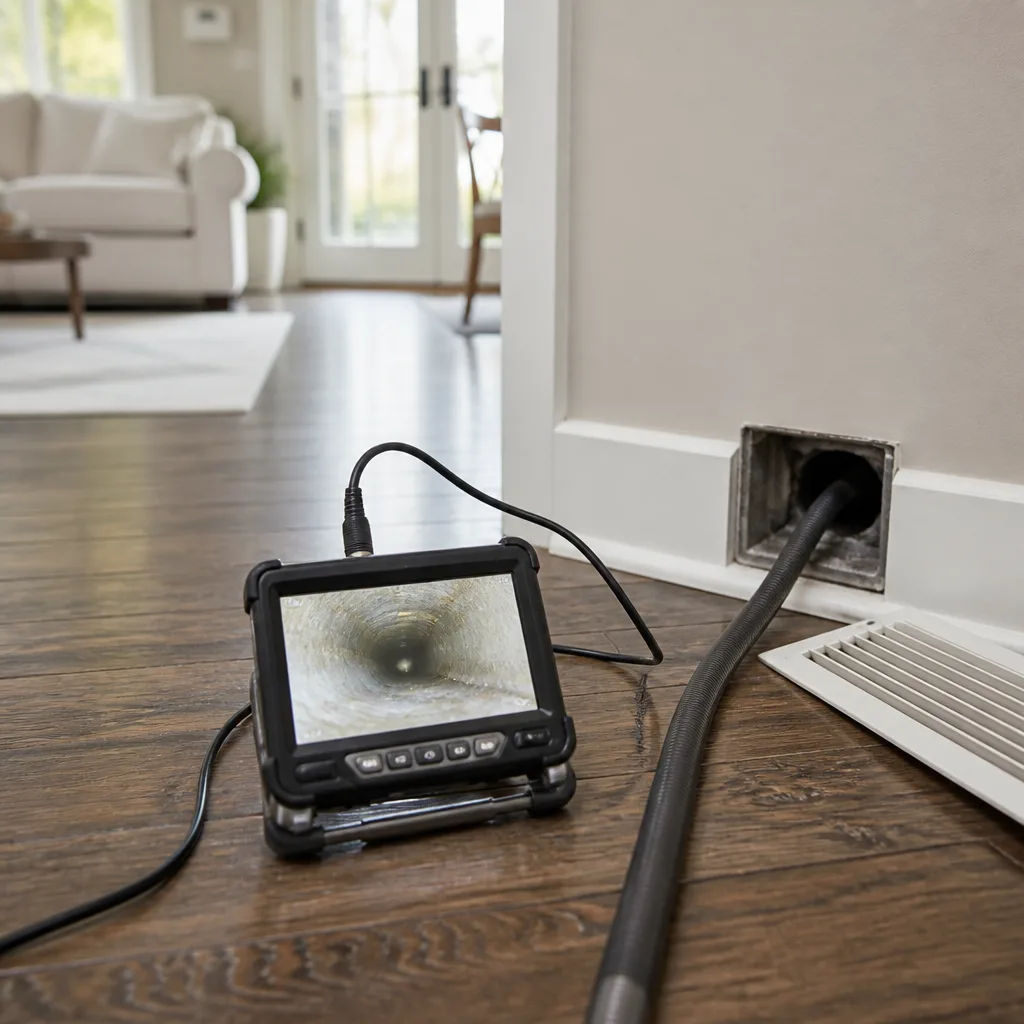 Camera inspection
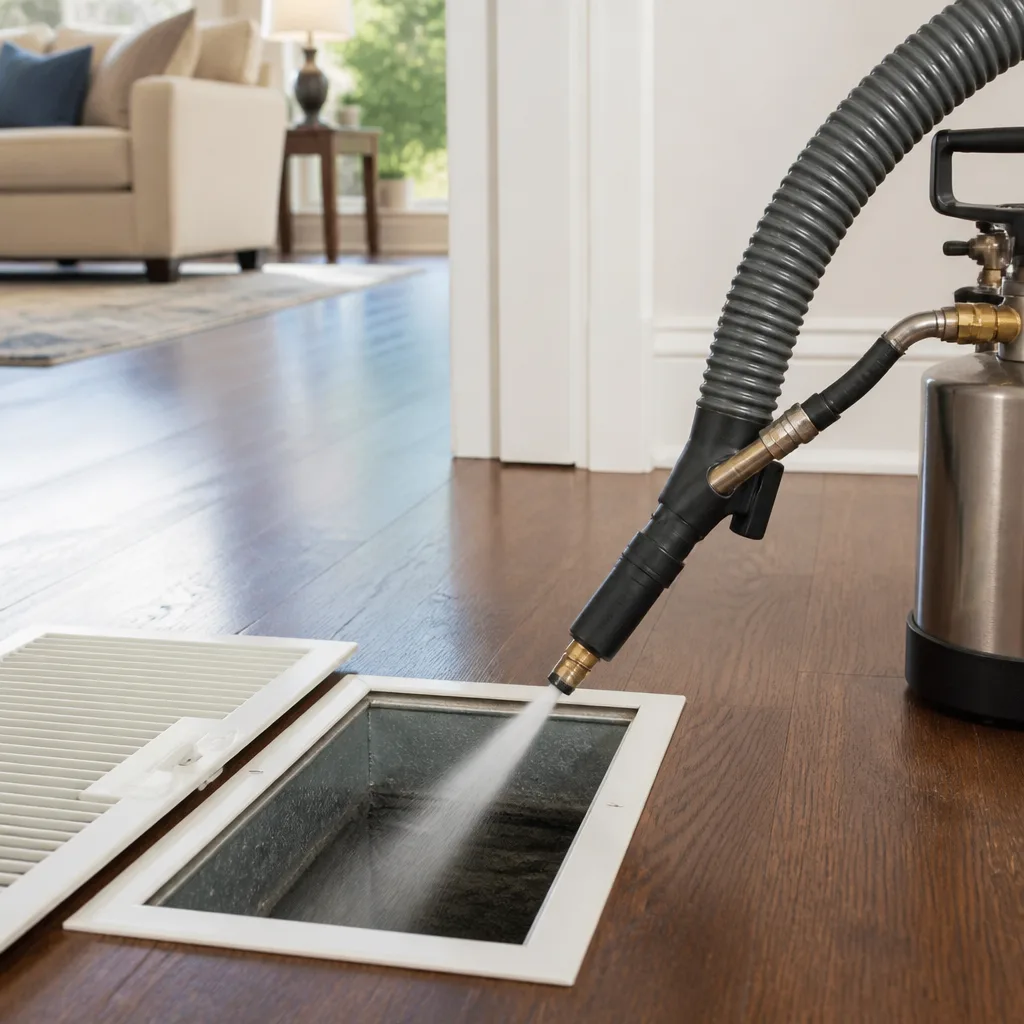 Sanitizing & deodorizing
Whole-system duct and dryer vent check with before-and-after photos - you see exactly what came out of your vents
That "$99 whole-house special" is a bait ad - the real number appears once they are in your hallway, or the "clean" is a shop-vac at the register. We photograph the inside of your ducts before and after instead.
Air Duct Cleaning Warning Signs: An Elk Grove Homeowner’s Reference Guide
Dust blowing from your vents is not the first warning sign of a contaminated duct system. By the time you see visible debris exiting a supply register, that material has already been circulating through your living space for months, settling into carpet fibers, collecting on ceiling fan blades, and passing through the air your family breathes every day. The real indicators of a duct system in trouble are subtler and far more diagnostic. This guide covers what actually shows up first, how to read those signals correctly, and what Elk Grove homeowners should know about the specific conditions in our area that accelerate duct contamination.
Styles & brands we work with
- Whole-home duct cleaning
- Dryer vent cleaning
- Camera inspection
- Sanitizing & deodorizing
Quick Answer
The earliest reliable warning signs of dirty air ducts in Elk Grove are a furnace filter loading noticeably faster than its normal cycle, a distinct smell during the first few minutes of heating or cooling cycles, and airflow that varies noticeably from room to room. Visible dust at the supply registers is a late-stage indicator, meaning the system has already been redistributing debris through the home for some time. If you’re noticing any of these patterns, a professional inspection with camera-scoped ductwork will confirm what’s actually inside the system.
Table of Contents
- Filter Loading Rate: The Earliest Quantifiable Signal
- The Smell Diagnostic: Reading What Your Ducts Are Telling You
- Uneven Room Temperatures: A Duct Integrity Signal
- Post-Renovation Duct Contamination: A Different Animal
- The Return Boot Inspection: What Your Phone’s Flashlight Reveals
- Elk Grove-Specific Factors That Accelerate Duct Contamination
- Common Mistakes to Avoid
- When to Call a Professional
- Frequently Asked Questions
- The Bottom Line
Filter Loading Rate: The Earliest Quantifiable Signal
Your furnace filter is the first line of defense against airborne particulates, and its loading rate is the single most useful data point a homeowner can track. Most Elk Grove households with a standard 1-inch filter see a reasonable service life of 60 to 90 days. When a duct system carries a significant particulate load, that timeline compresses noticeably.
What does “faster than normal” actually mean in practical terms? If you’re replacing a filter at the 30-day mark and it’s visibly darkened across the entire surface, not just a few patches, that’s not normal loading. It means the system is pulling debris from somewhere. In our experience across Elk Grove, a filter that goes from clean to heavily loaded in three to four weeks during mild weather months, when windows are closed and the system runs intermittently, points directly to debris accumulation inside the return-side ductwork.
Here’s the diagnostic sequence worth following:
- Establish your baseline. Note the date you install a new filter and check it at day 30 in a normal season. A healthy system in Elk Grove typically shows light to moderate loading at that point.
- Track loading in weeks, not vague impressions. Write down when the filter moves from “light gray” to “noticeably darkened across most of the surface.” That date is your data point.
- Compare against system runtime. During peak Elk Grove summer cooling months, a filter will load faster simply because the system runs more. That’s expected. The diagnostic value comes from loading speed during shoulder seasons, when runtime is lower.
- Look at what’s on the filter. Fine gray dust suggests general household dust being recirculated. Drywall dust from a past renovation looks white and chalky. Fibrous material suggests insulation or carpet fibers entering the return path. Each tells a different story about what’s happening inside the duct system.
Filters that load rapidly and repeatedly are the earliest quantifiable signal that something in the duct system needs attention. Before visible dust appears at the registers, before anyone in the household notices symptoms, the filter is already telling you. It’s the canary in the return plenum.
The Smell Diagnostic: Reading What Your Ducts Are Telling You
Smell is the most informative and most frequently misread warning sign in a duct system. The first few minutes of any heating or cooling cycle purges air that has been sitting in the ductwork since the last cycle. What you smell during those first minutes tells you exactly where in the system a problem lives.
A musty or damp smell that appears only during cooling cycles and fades after a few minutes points to moisture-related microbial activity, typically near the evaporator coil. In Elk Grove, where summer humidity combines with extended cooling seasons, this coil area stays damp for months at a time. Organic material that collects on the coil surface and in the adjacent duct sections becomes a breeding ground for exactly the kind of biological growth that produces that characteristic odor. This is different from a cleaning-only solution in some cases, though a thorough duct cleaning that addresses the coil-adjacent sections often reduces the odor source significantly.
A dusty or acrid smell during the first minutes of heating cycles points to something different entirely. Dust settles in the heat exchanger zone of the furnace during the long Elk Grove cooling season, when that component sits idle. When heating season arrives and the exchanger reaches full temperature, that accumulated dust burns off. It smells like burning dust, because that’s exactly what it is. One brief burn-off smell at the very start of heating season is common. If the smell recurs every cycle for more than a day or two, the amount of accumulated dust is beyond what a normal burn-off clears.
A chemical or fiberglass-like odor is the least common and most serious indicator. Duct liner degradation, where the internal insulation material inside older duct sections breaks down, releases both particulate and gaseous compounds into the airstream. In older Elk Grove homes with internally lined ductwork, this degradation accelerates with temperature cycling and age. This is a duct repair situation more than a cleaning situation, which is why Air Duct Repair in Elk Grove is a distinct service category rather than an add-on.
Three different smells, three different locations in the system, three different responses. Learning to distinguish them tells you whether to schedule a cleaning, investigate the coil area, or consider a repair-focused evaluation.
Uneven Room Temperatures: A Duct Integrity Signal
Uneven temperatures across rooms are usually attributed to thermostat placement, window orientation, or poor insulation. Those factors absolutely matter. But when a home that previously maintained consistent temperatures develops a persistent difference, the duct system itself deserves scrutiny before you add insulation or replace windows.
Elk Grove’s summer heat creates a demanding test environment for duct integrity. Attic temperatures in our area regularly exceed 140 degrees during peak cooling months. Duct sections running through that heat load expand, flex, and stress their connections. Joints that were sealed properly at installation can separate. Flex duct sections can sag, kink, or develop leaks. The result is conditioned air escaping into the attic before it ever reaches the intended room.
The diagnostic pattern looks like this: one or two rooms that consistently run warmer than the rest of the house in summer, or cooler in winter, even though the register is fully open and airflow feels weaker than at other registers. Run your hand over the register in the affected room, then do the same at a register in a room that behaves normally. A noticeable airflow difference is meaningful.
Here’s an Elk Grove-specific detail. Homes built during the rapid expansion periods in neighborhoods like Laguna, Sheldon, and East Elk Grove saw high construction volume with varying attention to duct sealing standards. We’ve seen systems where duct leakage accounts for 20 to 30 percent of total airflow loss. That’s not a cleaning problem; it’s an integrity problem. Cleaning can restore a system to its baseline, but it cannot fix a separation at a boot connection or a crushed section under attic insulation. That’s why the distinction between Air Duct Cleaning in Elk Grove and duct repair matters when uneven temperatures are the symptom you’re tracking.
Post-Renovation Duct Contamination: A Different Animal
If you’ve completed a renovation in Elk Grove, whether a kitchen remodel in a Sheldon ranch or a bathroom redo in a Laguna Creek two-story, your duct system received a contaminant load that is fundamentally different from the slow accumulation of household dust. Understanding that difference determines the correct response.
Renovation debris enters the duct system in two ways. First, if the system ran during construction, returns actively pulled drywall dust, sawdust, and demolition particulate into the ductwork. Second, even with the system off, open duct openings during framing, drywall, and flooring work become passive collection points for whatever the jobsite produces. Drywall dust is particularly problematic because it’s fine enough to remain suspended in the duct airstream for months and abrasive enough to affect blower motor components over time.
What you might notice: filter loading that goes from normal to severe within days of the project, white dust appearing on surfaces throughout the home, and that characteristic chalky smell during system cycles. What we see on camera inspections after renovations is distinctive, a layer of fine white powder coating the entire interior surface of the duct system rather than the gray-brown accumulation typical of household dust.
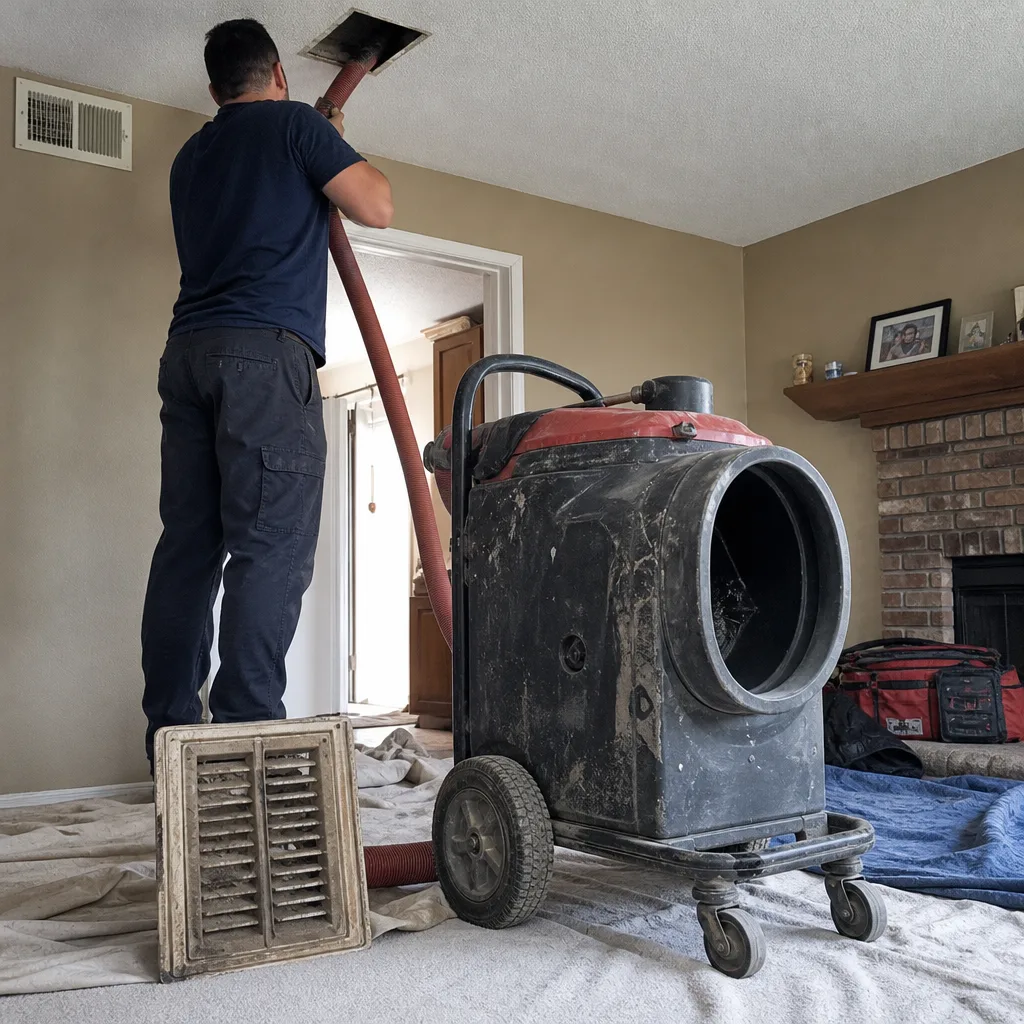
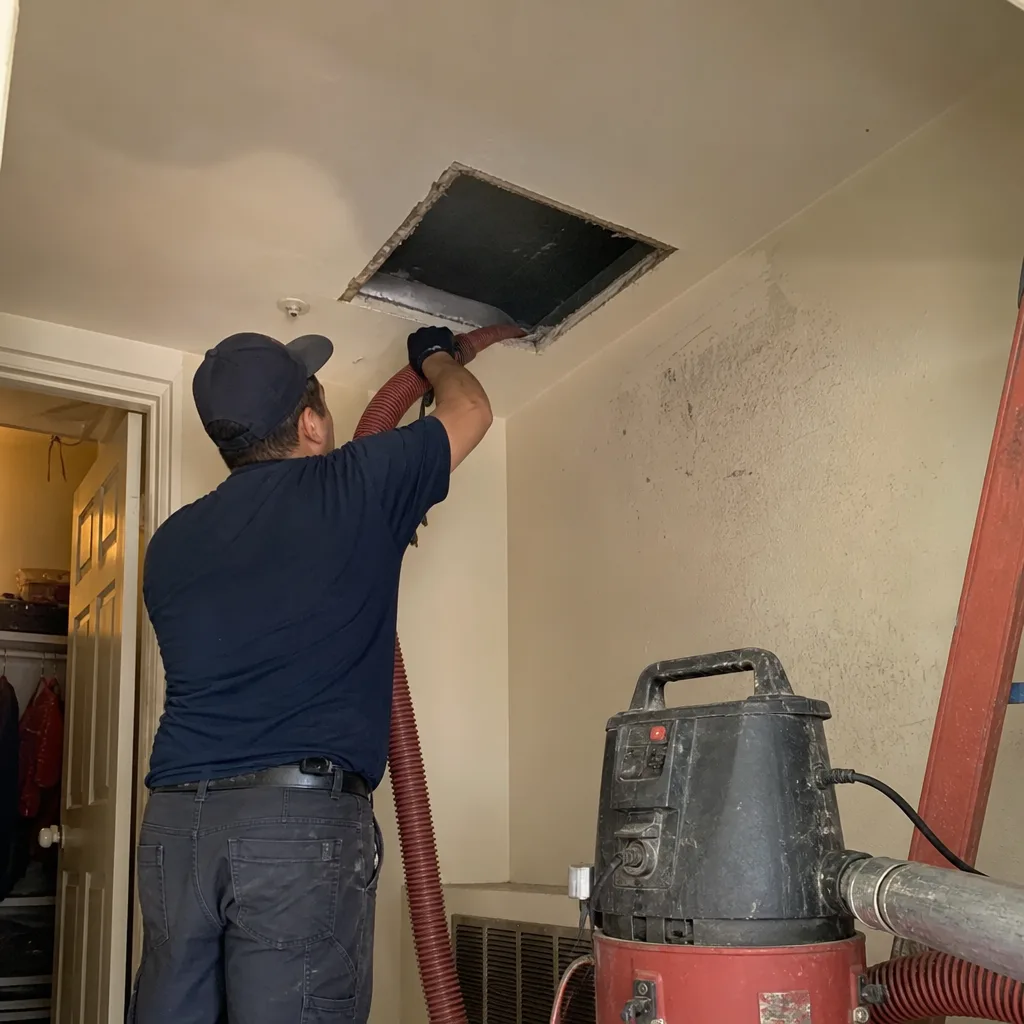
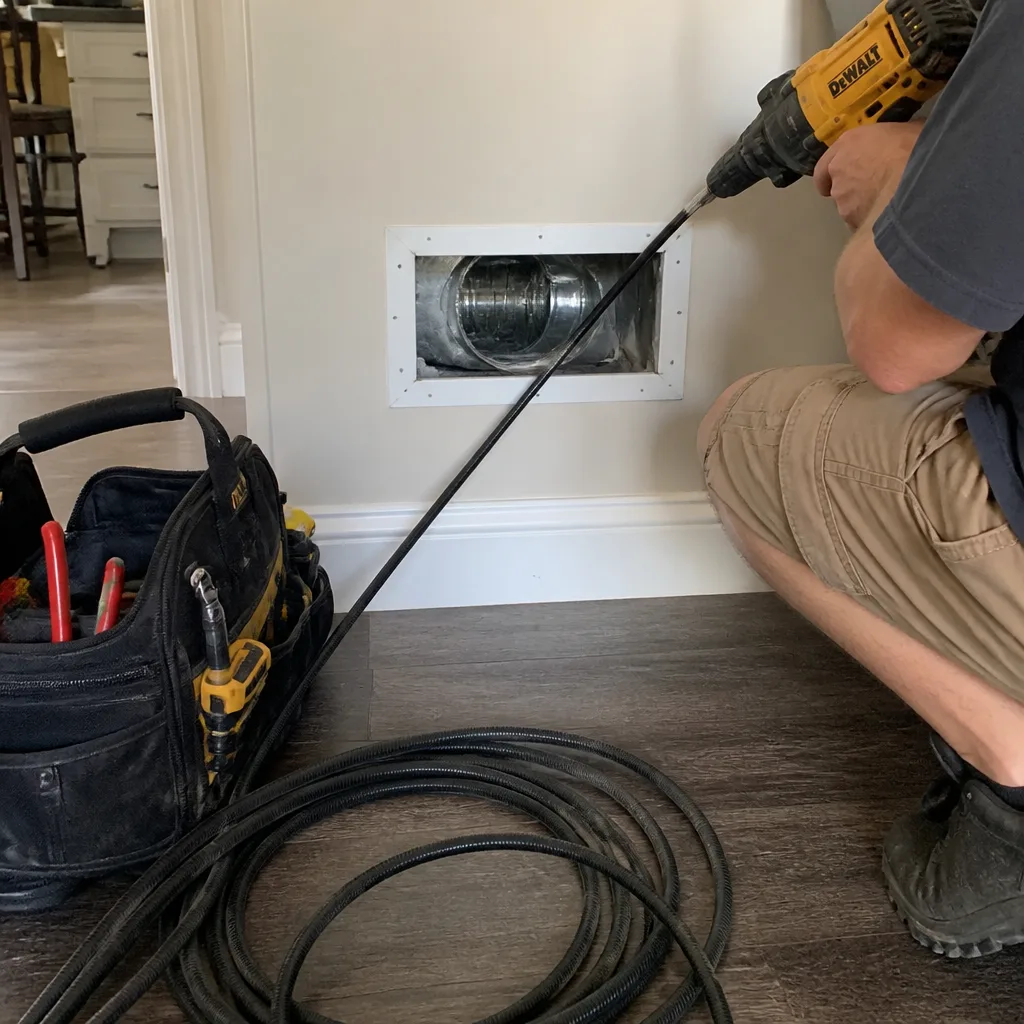
The response matters. Long-term household dust accumulation typically responds well to a professional duct cleaning using rotary brush agitation and HEPA-filtered extraction, the kind of approach that uses equipment like a Rotobrush system to dislodge and capture debris rather than redirect it. Post-renovation drywall dust is the same process, but with higher stakes: that dust is fine enough that improper containment during cleaning pushes it through the home. Professional-grade source-capture equipment, the kind Abatement Technologies systems provide, keeps that particulate contained inside the ductwork during extraction. If you’ve renovated, tell the company before they arrive. It changes the containment approach.
The Return Boot Inspection: What Your Phone’s Flashlight Reveals
You don’t need specialized equipment to get a preliminary read on your duct system’s condition. Your phone’s flashlight and two minutes at a return register will tell you more than most homeowners realize. Here’s the process.
- Turn the system off. You want still air so debris isn’t moving and you can see what’s actually accumulated on surfaces.
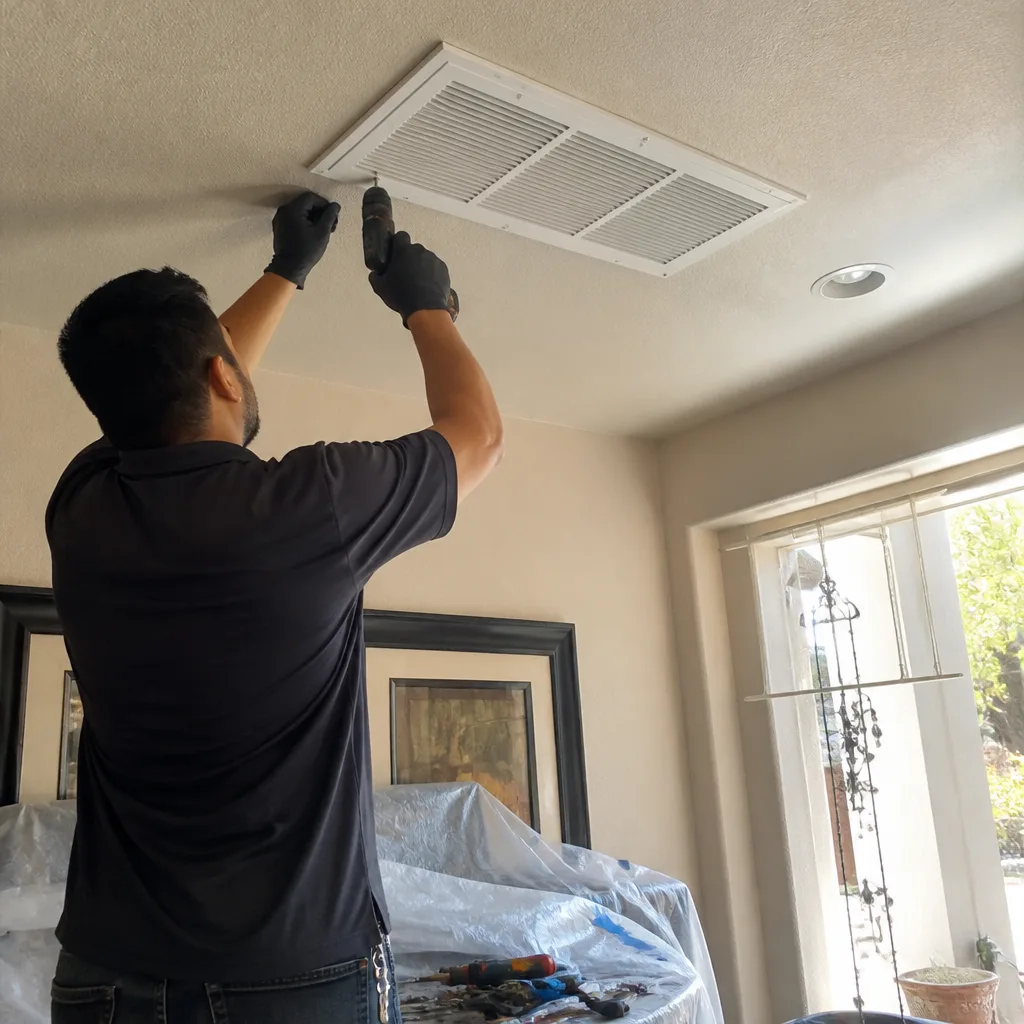
- Remove the return grille. Most Elk Grove homes have a simple hinged or screw-mounted grille over each return opening. A screwdriver handles the screw-mounted types in under a minute.
- Position your phone’s light to rake across the surface. Direct light straight down shows less than light held at a shallow angle. Raking light casts shadows that reveal texture and accumulation you’d otherwise miss.
- Look at the interior surfaces of the return boot, the transition section between the grille and the main return duct. This is a natural collection point because return air accelerates through this section, and debris larger than fine dust drops out of the airstream here.
- Differentiate surface dust from embedded accumulation. A light dusting that wipes away with a finger is normal in any Elk Grove home. Accumulation that has thickness, that appears as a mat, or that contains visible debris like pet hair clumps, drywall chunks, or fibrous material is not normal.
What you’re looking for beyond surface dust is a simple question: does this surface look like it’s been accumulating for years or just since the last time the home was thoroughly cleaned? Return boots in Elk Grove homes that haven’t had professional duct cleaning in a decade or more often show a visible mat of gray material with embedded debris. The same surface in a home cleaned two years ago shows little more than a light film.
This inspection is diagnostic, not conclusive. The return boot is one accessible point in a system that extends through walls and attics. But it’s a legitimate early warning signal. If your return boot shows significant accumulation, the rest of the system carries the same load, and the duct sections upstream are likely worse because return air slows in the main trunk, dropping additional debris there.
Elk Grove-Specific Factors That Accelerate Duct Contamination
Elk Grove sits in a unique position within the Sacramento Valley. We get the Valley’s heat, some Delta influence in the western neighborhoods, and an agricultural perimeter that produces airborne particulate unlike what you’d see in a purely urban setting. Those factors matter for how quickly a duct system loads and what it loads with.
The first factor is agricultural dust. Homes in Elk Grove’s eastern and southern edges, near the vineyards and field operations that border the city, see seasonal particulate from agricultural activity. Fine soil dust from tilling, harvesting, and general field work becomes airborne and finds its way into return air intakes. This dust is finer and denser than typical household dust, which means it penetrates deeper into the duct system and loads filters faster.
The second factor is the extended cooling season. Elk Grove runs air conditioning from late spring through early fall, with peak demand through July and August. That long runtime means the system processes more total air volume annually than a coastal home, which means more particulate passes through the ductwork. More cycles, more debris, faster loading. It’s simple arithmetic.
The third factor is attic heat. As noted earlier, Elk Grove attic temperatures stress duct materials and connections. But high attic temperatures also bake accumulated debris inside duct sections, causing organic material to desiccate and become more easily entrained in the airstream. Debris that would otherwise stay put becomes airborne dust during each cooling cycle.
For homeowners, these factors translate into a practical recommendation: Elk Grove duct systems benefit from more frequent professional attention than the national average. The industry-standard suggestion of every three to five years is a useful starting point, but in our experience with Elk Grove homes, systems in agricultural-adjacent neighborhoods or with heavy cooling-season runtime often warrant evaluation closer to the three-year mark. A comprehensive Duct Cleaning Elk Grove home evaluation includes a camera inspection that tells you definitively whether the system is at the point where cleaning provides real benefit.
Compatibility with whole-home air quality equipment matters here too. If you’ve invested in a Honeywell or Aprilaire filtration or air-quality system, duct cleaning should protect that investment, not compromise it. Professional cleaning that captures debris at the source, rather than redistributing it through the home, keeps that downstream equipment operating as designed.
Common Mistakes to Avoid
- Waiting for visible vent dust before acting. By the time dust is visible at supply registers, the system has been redistributing that material for months. The filter loading signal and the return boot inspection give you earlier warning.
- Assuming a fast-loading filter means you need a better filter. A high-MERV filter installed on a contaminated system masks the symptom by trapping more particulate, but the debris remains in the ductwork. Address the source first, then consider filtration upgrades.
- Ignoring a recurring first-minute smell because it “goes away.” That smell is the only time the system tells you what’s inside the ductwork. Waiting until the smell persists throughout the cycle means the problem has grown.
- Treating every duct problem as a cleaning problem. Separated duct sections, crushed flex runs, and degraded liners require repair, not cleaning. Elk Grove’s attic temperatures make thermal stress on duct connections a routine issue that cleaning alone cannot address.
- Scheduling post-renovation cleaning with a generalist using repurposed equipment. Drywall dust demands source-capture containment during extraction. A shop-vac and brush approach pushes fine particulate through the home. Confirm the company uses contractor-grade containment equipment like Abatement Technologies systems.
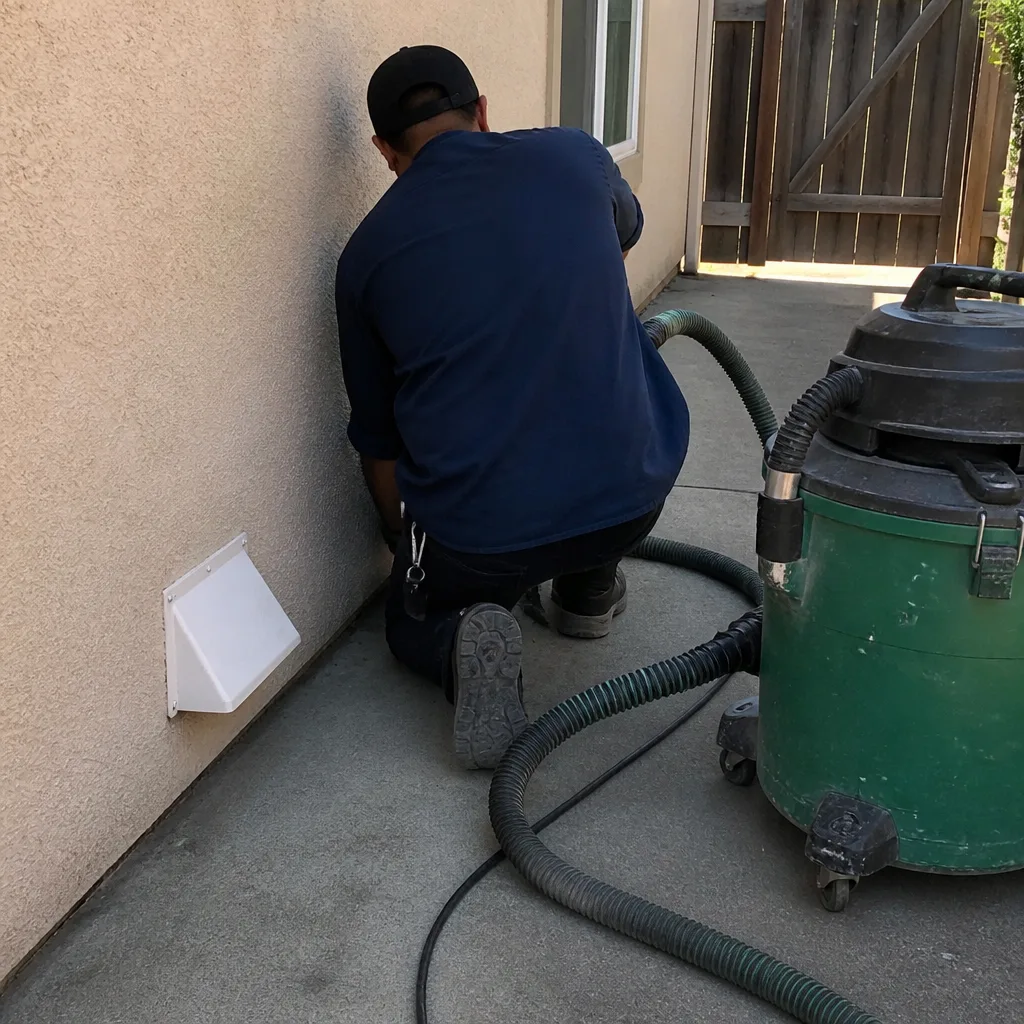
- Forgetting the dryer vent while addressing the duct system. A clogged dryer vent is a separate fire-risk issue with its own warning signs: longer drying times, a hot exterior dryer surface, and a burning smell during operation. Dryer Vent Cleaning in Elk Grove is a distinct service with a different risk profile than HVAC ductwork.
- Using the cheapest available quote as a comparison point. Elk Grove’s market includes operators with a van and a vacuum hose. The equipment used matters to the outcome. Professional rotary brush systems like Rotobrush and HEPA source-capture vacuums like Nikro produce different results than adapted shop equipment.
When to Call a Professional
Some situations are conclusive enough that further self-diagnosis isn’t the right use of your time. If your filter goes from clean to heavily loaded in under a month during shoulder-season months, schedule an inspection. If you smell a recurring musty odor during cooling cycles or a persistent dusty burn-off smell during heating cycles that lasts beyond the first day of the season, schedule an inspection. If post-renovation dust appeared in your home during and after construction and the system ran during any part of the project, schedule an inspection. If you’ve noticed a room that used to heat or cool properly and no longer does, with weak airflow at that register, the issue may be duct repair rather than cleaning, and a camera inspection is the only way to know for certain. Duct Cleaning Elk Grove offers free estimates in Elk Grove. Call (866) 705-7671 to schedule an evaluation with camera-scoped inspection of your duct system.
Frequently Asked Questions
The earliest reliable indicators are a furnace filter that loads noticeably faster than its normal 60-to-90-day cycle, a recurring musty or dusty smell during the first minutes of system operation, and visible accumulation in the return boot that appears as a mat rather than a light film. Visible dust at supply registers is a late-stage sign. Call (866) 705-7671 for a camera inspection that confirms what’s actually inside your duct system.
It depends on where the problem lives. Musty or damp smells during cooling cycles point to moisture-related contamination near the evaporator coil. A dusty or acrid burning smell during heating cycles comes from accumulated dust burning off the heat exchanger. A chemical or fiberglass-like odor suggests duct liner degradation, which is a repair issue rather than a cleaning issue. Each smell points to a different location and a different response.
Dirty ducts alone rarely cause significant temperature differences. But the conditions that accompany dirty ducts, specifically separated connections, crushed sections, and leaking joints, absolutely cause uneven temperatures. Elk Grove’s attic heat stresses duct materials and connections, which means airflow loss to attics is a common cause of rooms that won’t hold temperature. A camera inspection distinguishes accumulation from integrity problems.
The national guideline of every three to five years is a reasonable starting point, but Elk Grove’s specific conditions, including extended cooling seasons, agricultural dust in eastern and southern neighborhoods, and high attic temperatures, push many homes toward the three-year end of that range. Homes with pets, recent renovations, or household members with respiratory sensitivity may benefit from more frequent evaluation. A camera inspection tells you whether cleaning is warranted now or can wait.
The difference is almost always equipment and containment. A low quote typically comes from an operator using a shop-vac and brush, equipment not designed for HVAC ductwork, and often no containment at all. Professional-grade systems like Rotobrush rotary brushes and Nikro HEPA source-capture vacuums represent real equipment investment, and Abatement Technologies negative-air containment keeps debris inside the duct system during extraction. The cheap quote addresses a different scope of work with different equipment. Ask what equipment a company uses before comparing prices.
A professional operation provides before-and-after photo documentation from inside your actual duct system, not stock images. Ask for camera footage or stills of the return boot, the supply trunk, and the plenum before work begins, then request the same views after extraction. The difference should be visible. Companies using proper source-capture equipment also leave no dust film on your furniture after the job. If you’re considering duct cleaning in Elk Grove, call (866) 705-7671 for a free estimate and ask about photo documentation during the evaluation.
The Bottom Line
Your duct system gives you early warning signs long before visible dust appears at the registers. A filter that loads in weeks instead of months, a smell that appears during the first minute of every cycle, a return boot with matted accumulation, and a room that stopped holding temperature are all diagnostic signals worth acting on. Elk Grove’s agricultural dust, extended cooling season, and brutal attic temperatures accelerate every one of these signals. The response that makes sense depends on what the camera inspection reveals, which is why evaluation comes before cleaning, and why cleaning and repair are separate conversations. Watch the filter, read the smells, check the return boot, and call (866) 705-7671 when the signals line up.
Written by the team at Duct Cleaning Elk Grove, serving Elk Grove since 2013.
See the difference
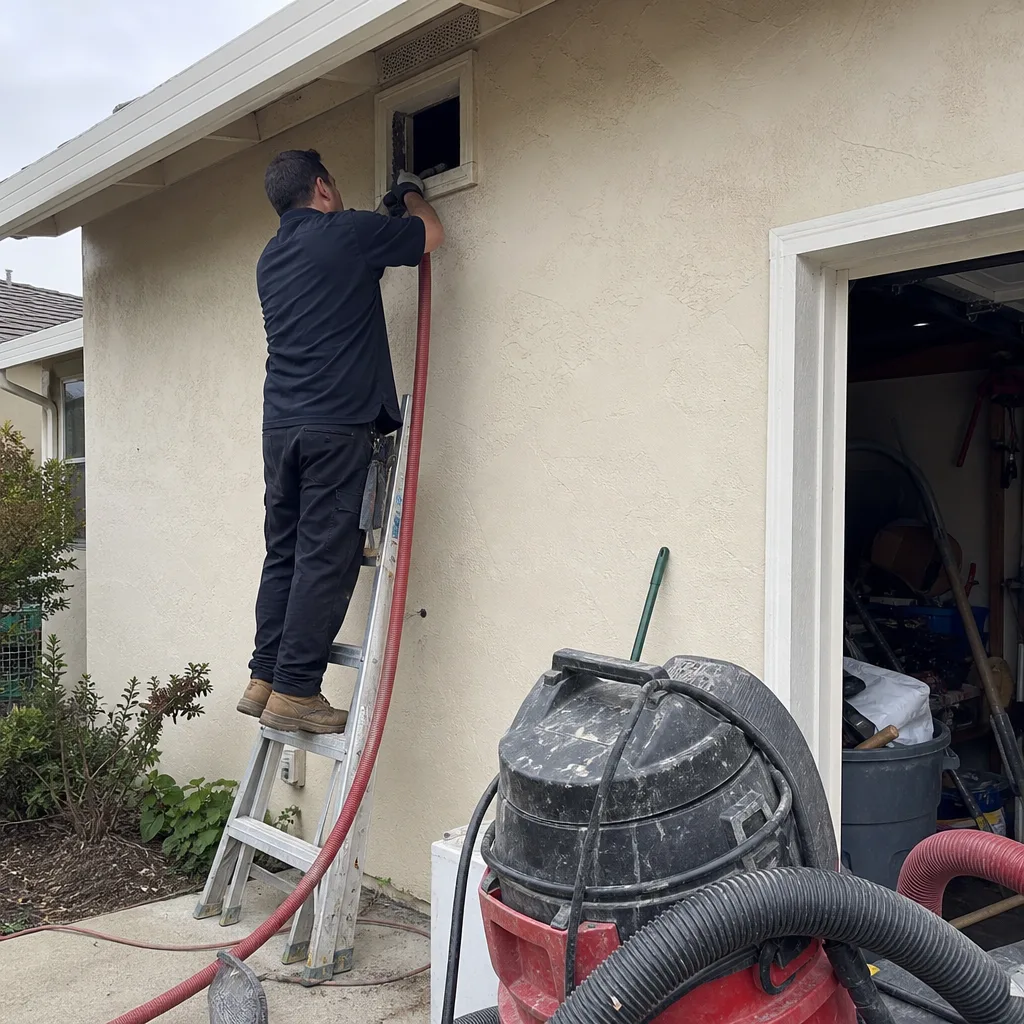 Before
 After
 Before
 After
 Before
 After