
Last updated November 2, 2026
 Whole-home duct cleaning
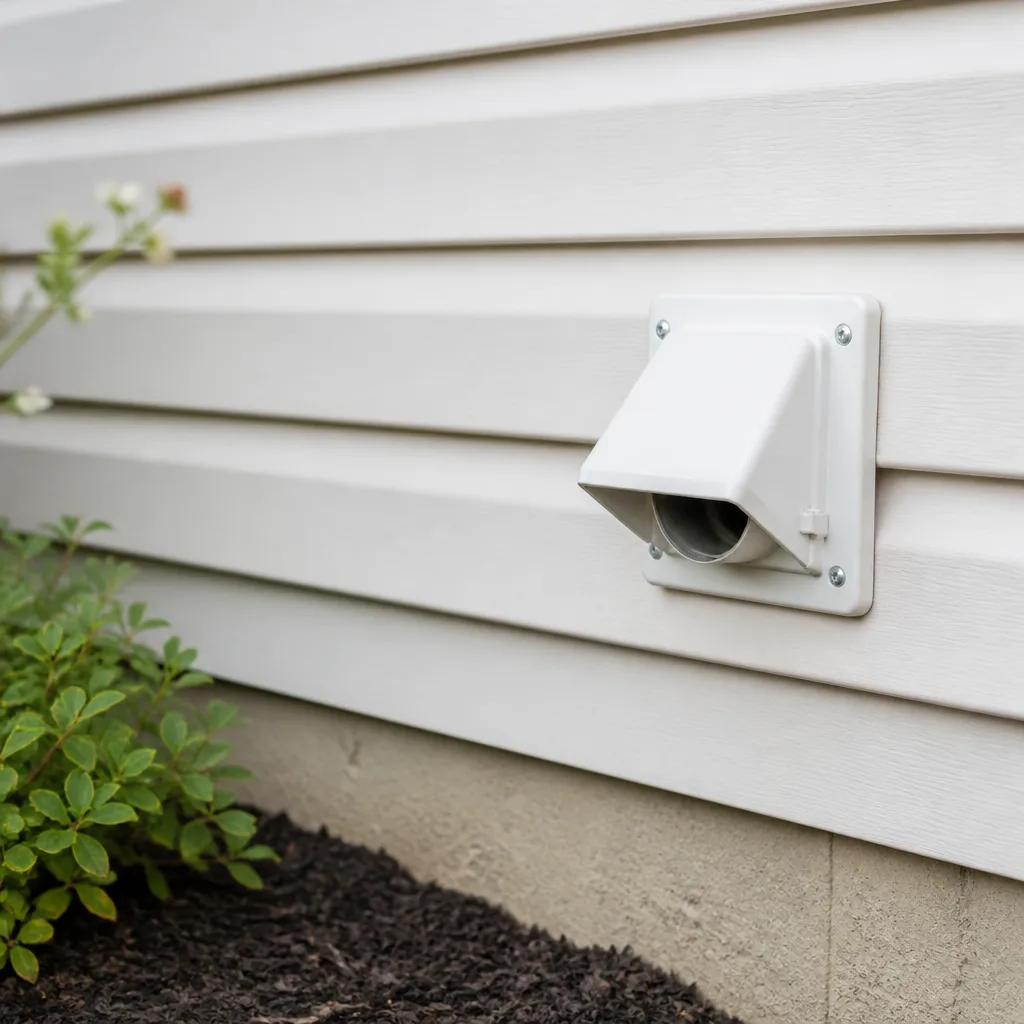 Dryer vent cleaning
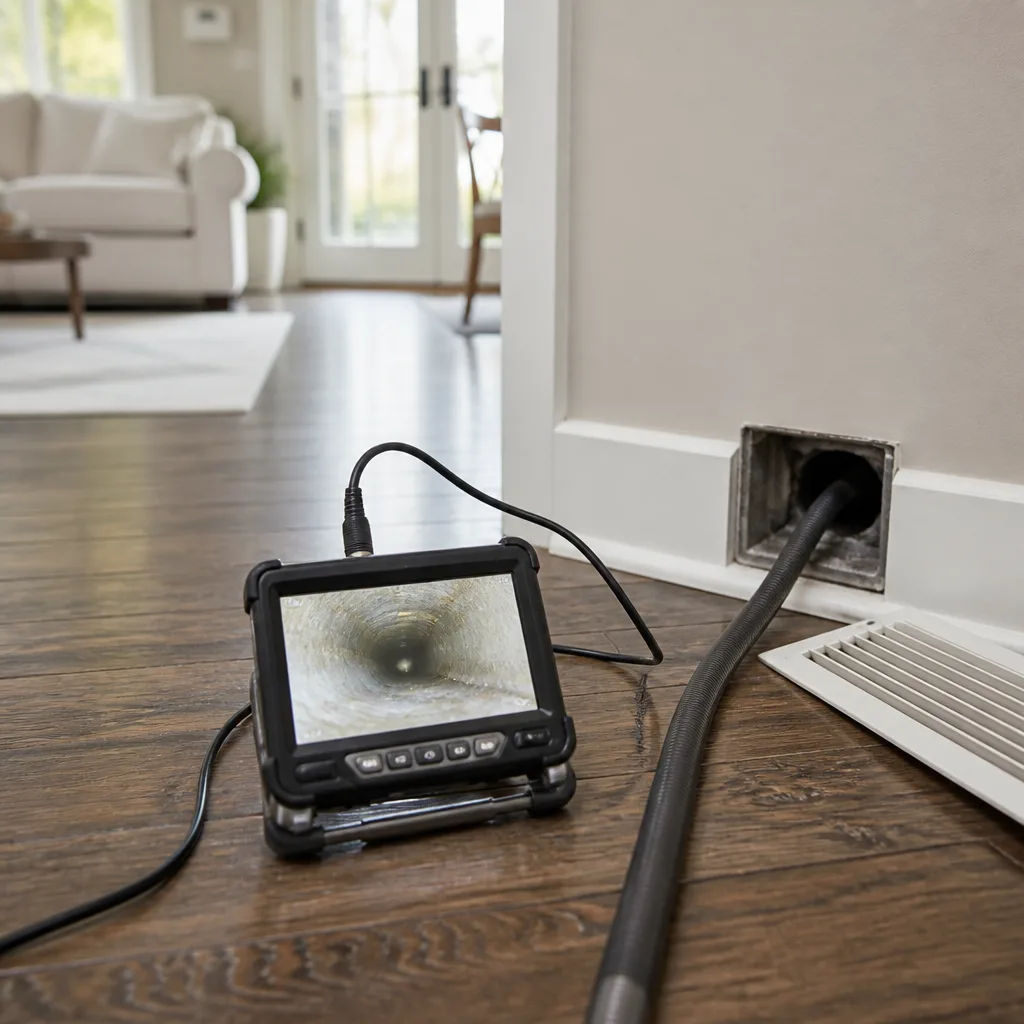 Camera inspection
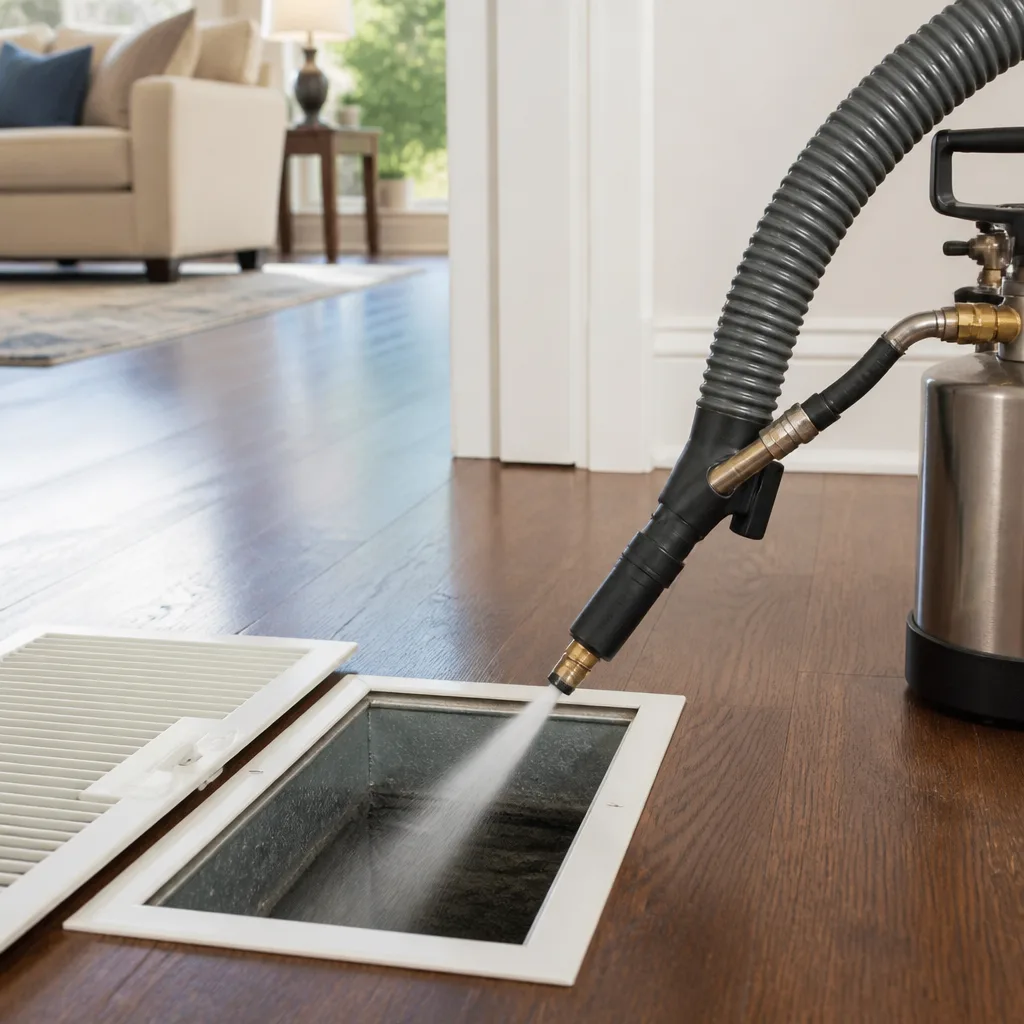 Sanitizing & deodorizing
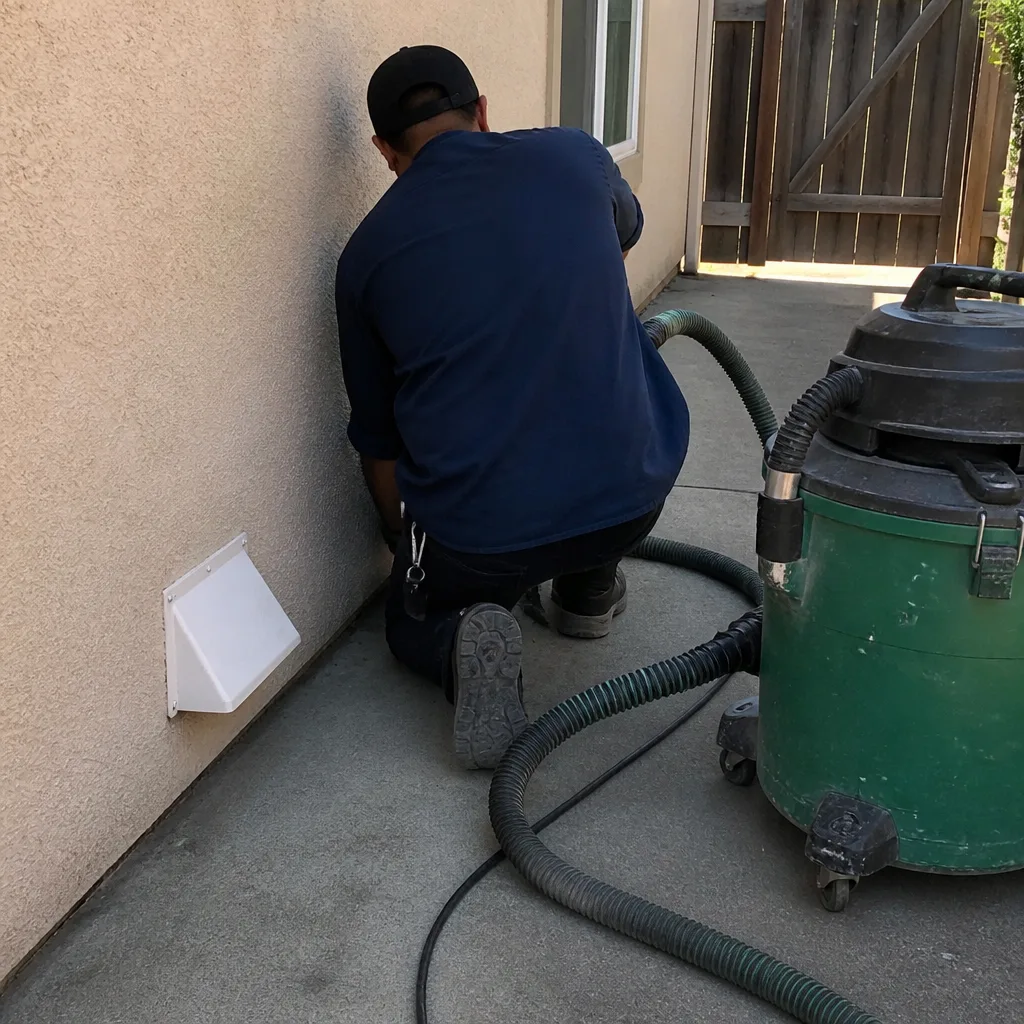
Whole-system duct and dryer vent check with before-and-after photos - you see exactly what came out of your vents
That "$99 whole-house special" is a bait ad - the real number appears once they are in your hallway, or the "clean" is a shop-vac at the register. We photograph the inside of your ducts before and after instead.
Seasonal Air Duct Cleaning Care for Elk Grove: Year-Round Homeowner’s Guide
Sacramento County weather doesn’t ask your ductwork for permission. Elk Grove’s summer heat pushes your AC through 90-plus degree days for four months straight, and wildfire season can blanket the region in smoke for weeks at a time. By the time you notice dust settling on furniture two days after you wipe it down, your duct system has already been cycling that particulate through every room. This guide maps duct care to Elk Grove’s actual climate calendar, not a generic national schedule. You’ll learn when your system is most vulnerable, what to check each season, and how to build an inspection log that matches what your HVAC actually runs through.
Styles & brands we work with
- Whole-home duct cleaning
- Dryer vent cleaning
- Camera inspection
- Sanitizing & deodorizing
Quick Answer
The most effective seasonal duct cleaning schedule for Elk Grove revolves around two windows: after wildfire smoke season (typically October through November) and before the first sustained AC run of spring (March through April). Your ducts don’t need attention on a fixed date – they need attention after specific climate events that load them with particulate or create moisture conditions. Between these two windows, seasonal inspections and filter monitoring handle the rest of the year.
Table of Contents
- Fall: The Post-Wildfire-Smoke Contamination Window
- Winter: What Your Furnace Mobilizes During Heating Season
- Spring: The Highest-Risk Microbial Period Near the Evaporator Coil
- Summer: Filter Loading Rates and What They Reveal About Duct Leakage
- Building a 12-Month Elk Grove Inspection Log
- Safe DIY Checks You Can Do Without Equipment
- Common Mistakes to Avoid
- When to Call a Professional
- Frequently Asked Questions
- The Bottom Line
Fall: The Post-Wildfire-Smoke Contamination Window
Elk Grove sits far enough from active wildfire zones that most homeowners assume their ductwork escapes smoke damage. That assumption doesn’t hold up. During the 2020 and 2021 fire seasons, Sacramento County recorded air quality index readings above 300 – hazardous territory – for multiple consecutive days. Even with windows closed and a fresh filter installed, sub-micron smoke particles penetrate the building envelope through small gaps around doors, vents, and makeup air intakes. Your HVAC system pulls outdoor air through these pathways every time the blower runs.
What most people miss is what happens after the smoke clears. Those fine particles settle inside the duct system and the filter media traps only what reaches the filter. The rest coats duct walls, return plenums, and the underside of the evaporator coil. Then the first winter heating cycle bakes that residue onto surfaces, making it harder to remove the following spring.
How to Assess Post-Smoke-Season Contamination
- Remove one return vent cover and wipe the inside duct wall with a clean white cloth. Dark gray or black residue that smears rather than wipes clean is combustion particulate, not typical household dust.
- Check the filter you installed during fire season. If it’s heavily darkened after four to six weeks of normal operation, the system was processing significant outdoor particulate.
- Smell the air the first time the heater runs after smoke season. A burning-dust odor is normal for a day. An acrid or campfire-like smell that persists past two heating cycles indicates smoke residue in the ductwork.
- Inspect the coil area if accessible. Heavy soot on the coil fins reduces heat transfer efficiency and gives microbial growth a foothold when condensation returns in spring.
If you see evidence of smoke contamination, the Fall window between October and November is the right time for a professional air duct cleaning in Elk Grove. Waiting until spring gives the residue a full heating season to bond with duct surfaces and mix with winter dust loads. In our experience cleaning Elk Grove homes after recent fire seasons, we’ve pulled smoke-darkened debris from systems in neighborhoods across every zip code – including newer builds in East Elk Grove where homeowners assumed tight construction protected them. It didn’t.
A note for homes with whole-home air-quality systems: Honeywell and Aprilaire filtration units do an excellent job at the filter level, but they cannot capture what has already settled inside the duct runs upstream or downstream of the unit. Post-smoke-season cleaning protects those investments by clearing the system they were designed to serve.
Winter: What Your Furnace Mobilizes During Heating Season
Elk Grove winters are mild by national standards, but your furnace still runs enough cycles between November and February to move a substantial volume of air. What the heating season does differently is thermal cycling. The heat exchanger warms, ducts expand, and as the system cools between cycles, everything contracts. This repeated expansion and contraction loosens debris that has adhered to duct walls during the humid months.
That loosened particulate doesn’t necessarily stay put. The next blower cycle pushes it through the system. Some of it lands on the filter. Some of it coats the heat exchanger. Some of it exits through supply registers into living spaces. If you notice more dust on surfaces during winter months despite running the heater less than you run the AC in summer, the furnace is mobilizing settled debris that accumulated over months of previous use.
The Inspection Point Most Homeowners Miss
When we clean ducts in Elk Grove during the winter months, the area that consistently shows the heaviest debris accumulation is the supply plenum directly above the heat exchanger. Homeowners checking their systems tend to look at return grilles and forget that this transition point – where the furnace meets the main trunk line – is where hot air bakes loose particulate into a hard layer that resists normal airflow removal.
Here’s what to check during a winter inspection:
- Register output temperature consistency. If rooms farthest from the furnace run noticeably cooler than rooms nearest, debris-loaded trunk lines are restricting airflow before it reaches those distant registers.
- Listen for popping or ticking sounds from the duct system during the first few minutes of a heating cycle. This is metal expanding against accumulated debris, and it indicates buildup on duct walls.
- Check the filter after one month of winter operation. If it’s significantly more loaded than you’d expect for mild Sacramento Valley winter use, the system is circulating legacy debris, not just filtering fresh air.
Winter is also when gas furnace operation introduces combustion byproducts into the system if the heat exchanger has any cracks or if return air pathways pull from areas near the furnace itself. We’re not alarmists – properly functioning furnaces don’t leak combustion gases. But a duct system that’s never been inspected can mask airflow problems that force the furnace to work harder than it should. A clean duct system is one your HVAC equipment was designed to run with, not fight against.
One more winter-specific note for Elk Grove: the Delta breeze that moderates our summer evenings doesn’t do much in December and January. Homes stay closed up, and whatever particulate gets stirred up by the furnace stays inside. It concentrates. Your family breathes the same recirculated air for weeks at a time. That’s not a health claim – it’s a mechanical reality of how tightly modern Sacramento County homes are built.
Spring: The Highest-Risk Microbial Period Near the Evaporator Coil
Spring in Elk Grove brings the first sustained cooling demand of the year, usually by late March or early April. When the AC kicks on for the first time after a wet Sacramento Valley winter, something specific happens at the evaporator coil. The coil has been dormant for months. Winter air is relatively dry, but Elk Grove’s rain season – typically 15 to 20 inches between November and March – has kept indoor humidity elevated. The coil itself, hidden inside the air handler, has been sitting in a dark, humid environment with whatever debris accumulated on it during the previous cooling season still in place.
The first cooling cycle produces condensation. That moisture mixes with the legacy debris on the coil – skin cells, pet dander, dust, pollen tracked in from outdoors – and creates exactly the conditions microbial growth needs. The result is the musty smell many Elk Grove homeowners notice the first week they run the AC. That’s not “old house smell.” That’s a biological process happening at the coil surface, and the particles it produces get distributed through the supply ductwork to every register in the home.
Why Spring Cleaning Matters More Than Fall Cleaning for Allergies
Elk Grove’s spring allergens are aggressive. The city’s urban forest – mature oaks, elms, and the ever-present valley oaks – produces a heavy pollen load starting in February and running through May. When that pollen finds its way into a duct system that already contains the previous season’s accumulated debris, the filter has to work harder, and whatever gets past the filter mixes with everything already in the system. For households with allergy sufferers, spring startup is the moment the indoor air quality shifts.
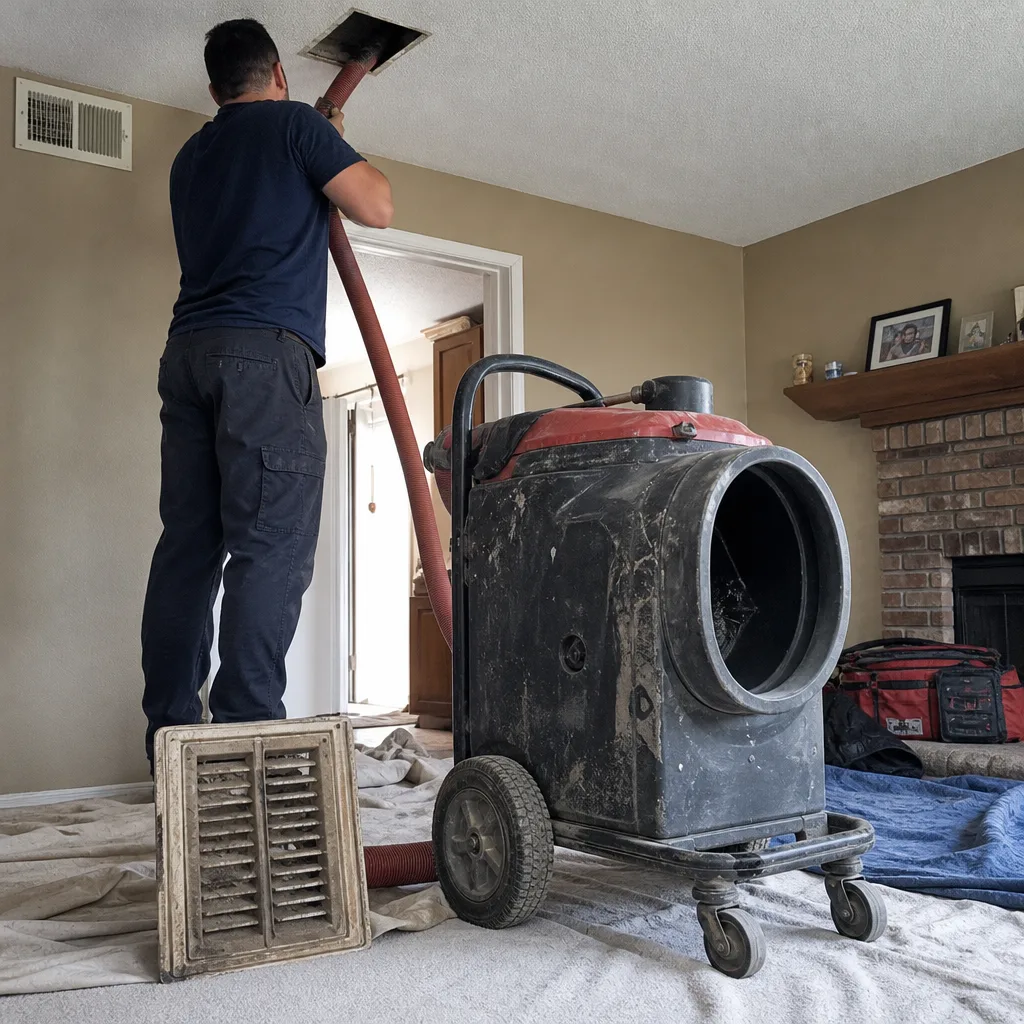
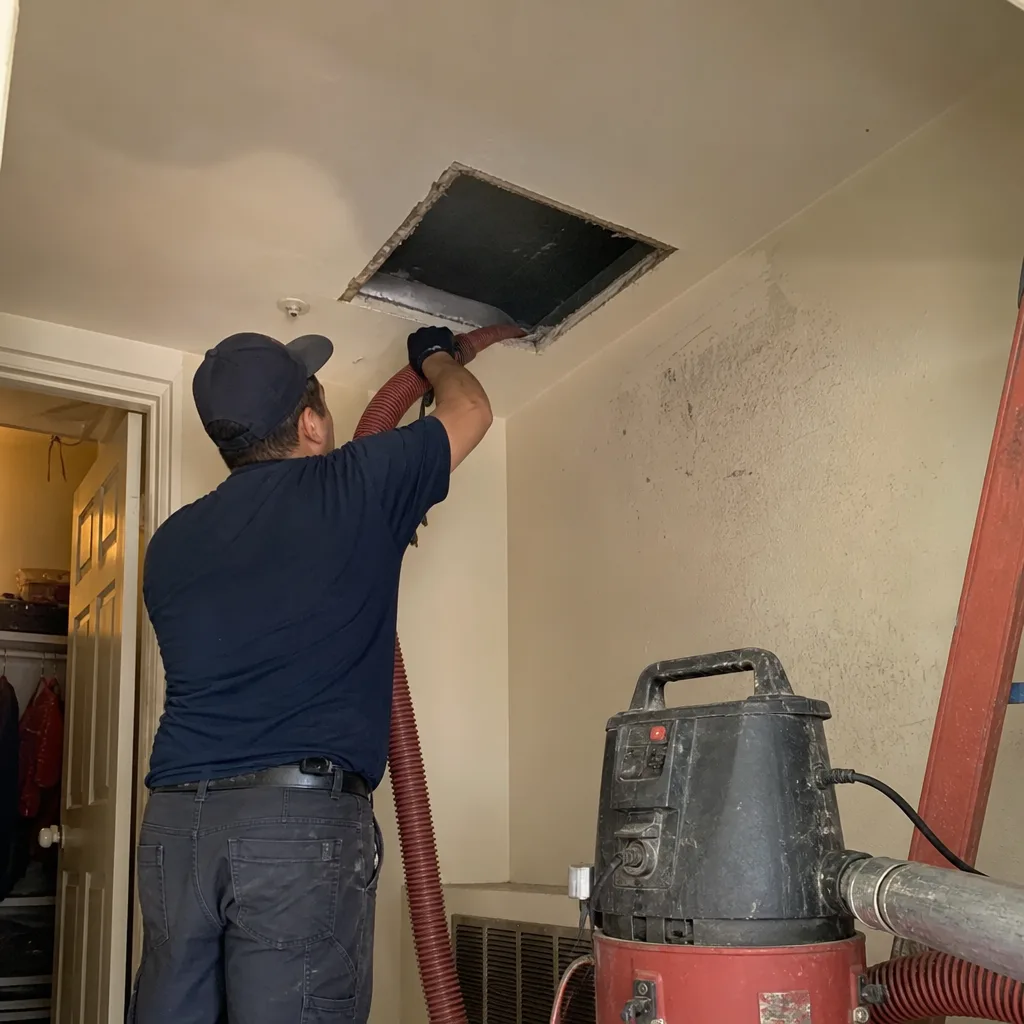
When we clean systems in the spring, we run professional-grade Nikro HEPA-filtration vacuums during the entire cleaning process. The HEPA filter captures particulates at the source – meaning what we extract from your ducts doesn’t get pushed back into your living space during cleaning. This is the standard commercial remediation companies use, and it’s the right standard for residential duct cleaning in a region with our pollen loads.
A spring cleaning before the first sustained cooling run gives your HVAC system what it’s designed to run with: clean coil surfaces, clear trunk lines, and unobstructed airflow. If your system has been running with debris for years, the first sign often isn’t visible dust – it’s rising utility bills as the system works against internal resistance.
Summer: Filter Loading Rates and What They Reveal About Duct Leakage
Elk Grove summers are the stress test. From June through September, your AC runs more hours per day than it does the entire rest of the year combined. Every hour of operation pulls air through the return ducts, across the filter, through the coil, and back out through supply runs. If your duct system is clean and sealed, this is a straightforward process. If it’s leaking, summer will tell you.
The number one summer maintenance task is filter monitoring, but not for the reason most people think. A filter that loads up faster than expected isn’t just doing its job – it’s revealing how much air your system is pulling from places you didn’t intend. Return-side duct leakage pulls unconditioned attic or crawlspace air into the system. That air carries more particulate than indoor air, which loads the filter faster and coats the coil faster.
What Accelerated Filter Loading Reveals
- A 1-inch filter that needs replacement after 30 days in the middle of summer is normal. The same filter needing replacement after two weeks suggests the system is pulling air from an unintended source.
- Uneven filter discoloration across the media surface indicates airflow distribution problems inside the return plenum. That’s often a duct design issue or partial blockage, not just dirty air.
- Filter frames that collapse or bow inward mean the system is starving for air. This is a pressure problem caused by restricted returns or undersized ductwork, and it forces the blower to work harder than it should.
Summer is not typically when we recommend full air duct cleaning in Elk Grove – the system is in heavy use and the cleaning window competes with your need for cooling. But summer is the right time to identify problems. If you document filter loading rates, register output temperatures, and any new sounds from the system during the summer, you’ll have a clear picture of what needs attention before the fall cleaning window opens.
One summer-specific tip: if you see dust accumulating on the same furniture or the same shelf repeatedly within days of cleaning, trace back from that location to the nearest supply register. The register serving that zone is likely pulling from a duct run that has accumulated debris or has a disconnection inside the wall or ceiling. Air is finding its way around the obstruction and carrying the debris with it. That’s often a repair issue, not just a cleaning issue – and it’s one of the reasons we offer air duct repair in Elk Grove alongside cleaning services. Some problems require a structural fix, not a vacuum.
Building a 12-Month Elk Grove Inspection Log
Most duct cleaning advice tells you to schedule service every three to five years and forget about it in between. That’s a national average applied to a local climate, and it leaves out the most useful part: documentation. A homeowner who tracks what their system does between cleanings gives their duct professional a map of the problem areas. A homeowner who doesn’t relies on guesswork.
Elk Grove’s climate makes a 12-month log especially valuable because our conditions are cyclical and predictable. You know when the heat arrives (May), when wildfire smoke appears (July through October, worsening through August and September), when rain returns (November), and when allergens peak (February through April). Build your inspection log around those events, not around an arbitrary cleaning date.
A Practical 12-Month Framework for Elk Grove
- January – February: Check furnace filter monthly. Document any register temperature differences between rooms. Note any musty or burning smells during heat cycles. This is your baseline for winter performance.
- March: Before the first sustained AC run, check the coil area if accessible for visible debris. Replace the filter regardless of appearance – it has been processing winter indoor air for months. Note any condensation or musty smell when the AC first runs.
- April – May: Track pollen accumulation around return grilles. If outdoor pollen is visible on window screens, it’s entering the home and the system. Document filter condition weekly during peak pollen weeks.
- June – August: Track filter replacement dates. A filter lasting 20 days instead of 30 under identical thermostat settings is a data point that matters. Note which registers show the heaviest dust accumulation nearby.
- September – October: Monitor outdoor air quality reports. After any period where the AQI exceeds 150 for more than three consecutive days, perform the post-smoke wipe test described in the Fall section. Document what you find.
- October – November: Schedule professional cleaning if the smoke-season wipe test shows residue, or if the previous spring/summer documentation shows significant buildup. This is the primary cleaning window for Elk Grove.
- December: Check the supply plenum area above the heat exchanger if accessible. Look for darkened debris or hard-baked residue. Document what you see for comparison with the previous year.
This log takes 15 minutes per month and gives you something most homeowners never have: a reliable history of what your specific system does under Elk Grove’s specific conditions. When you do call a professional, that history changes the conversation from “we think it’s dirty” to “here’s what we’ve documented over the past year.” That’s the difference between a guess and a diagnosis.
Our team at Duct Cleaning Elk Grove has cleaned systems throughout Sacramento County, and the homes that maintain this documentation respond measurably better to cleaning. We know where to focus because the homeowner showed us the symptoms. The homes with no log rely on us to find everything from scratch, and we do – but the process takes longer and the homeowner misses the chance to build a long-term record of system behavior.
Safe DIY Checks You Can Do Without Equipment
You don’t need a borescope or professional tools to gather useful information about your duct system. You need a flashlight, a screwdriver, a clean white cloth or tissue, and basic observation skills. These checks won’t clean the system, but they will tell you whether professional cleaning is needed and where to focus attention.
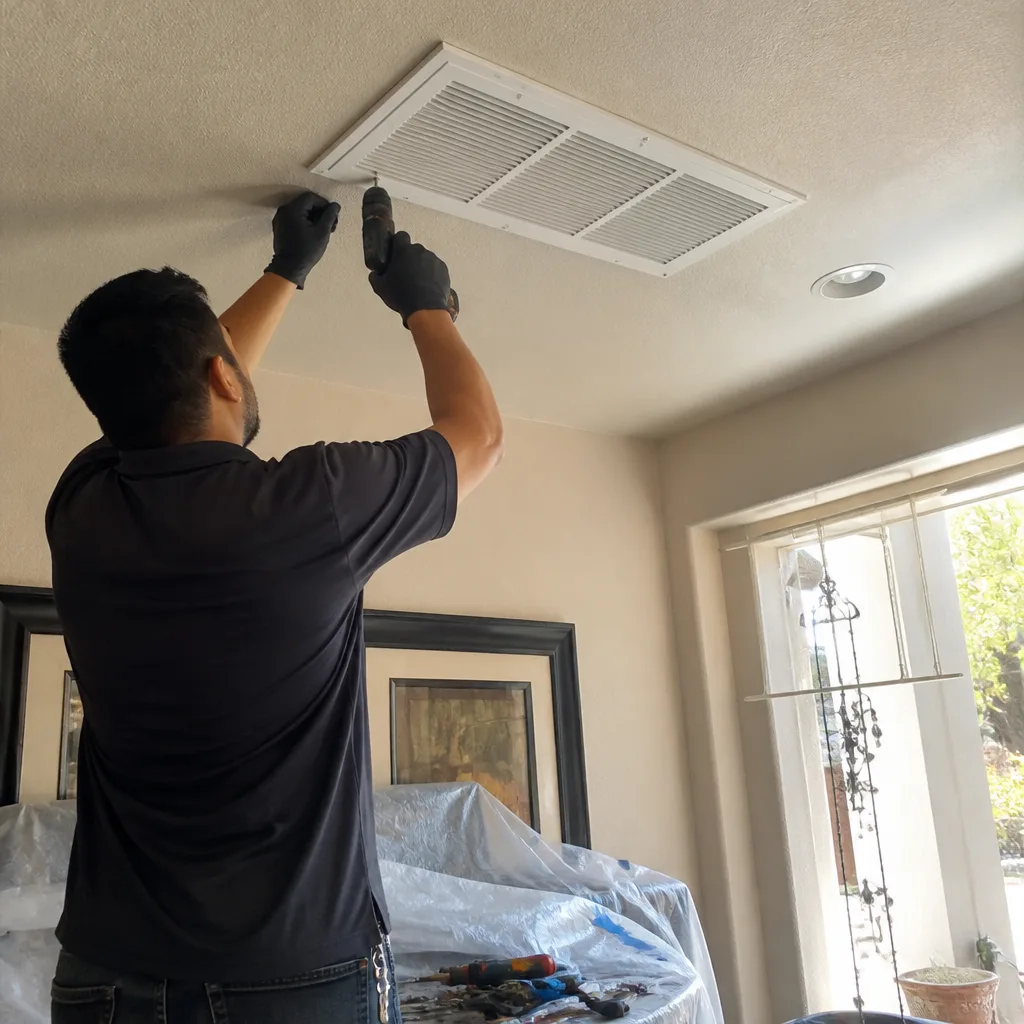
- Register inspection. Remove two or three supply registers and look inside the duct with a flashlight. You’re looking for visible dust accumulation on duct walls, debris resting in the bottom of horizontal runs, or signs of moisture staining. Clean ducts should show bare metal, not a layer of the previous decade.
- Return grille inspection. Remove the return grille and check the inside of the return plenum. This is the first thing air hits on its way into the system. If it’s coated in dust, the filter has been doing more work than it was designed for.
- Coil visual check. If your system has an accessible coil panel, remove it and shine a flashlight on the coil surface. Clean coil fins are shiny and metallic. Coated coil fins are gray, fuzzy, or dark. This check is especially important in spring before cooling season starts.
- Dust pattern mapping. For one month, keep a simple list of where dust accumulates fastest in your home. The rooms with the highest accumulation have the registers serving them doing something wrong, whether that’s pulling from a contaminated duct run or leaking conditioned air into the attic instead of pushing it into the room.
- Smell documentation. Note what the air smells like when the system first starts after being off for several hours. Fresh air should not have a smell. Musty, stale, or burning-dust smells are information – write down when you notice them and how long they persist.
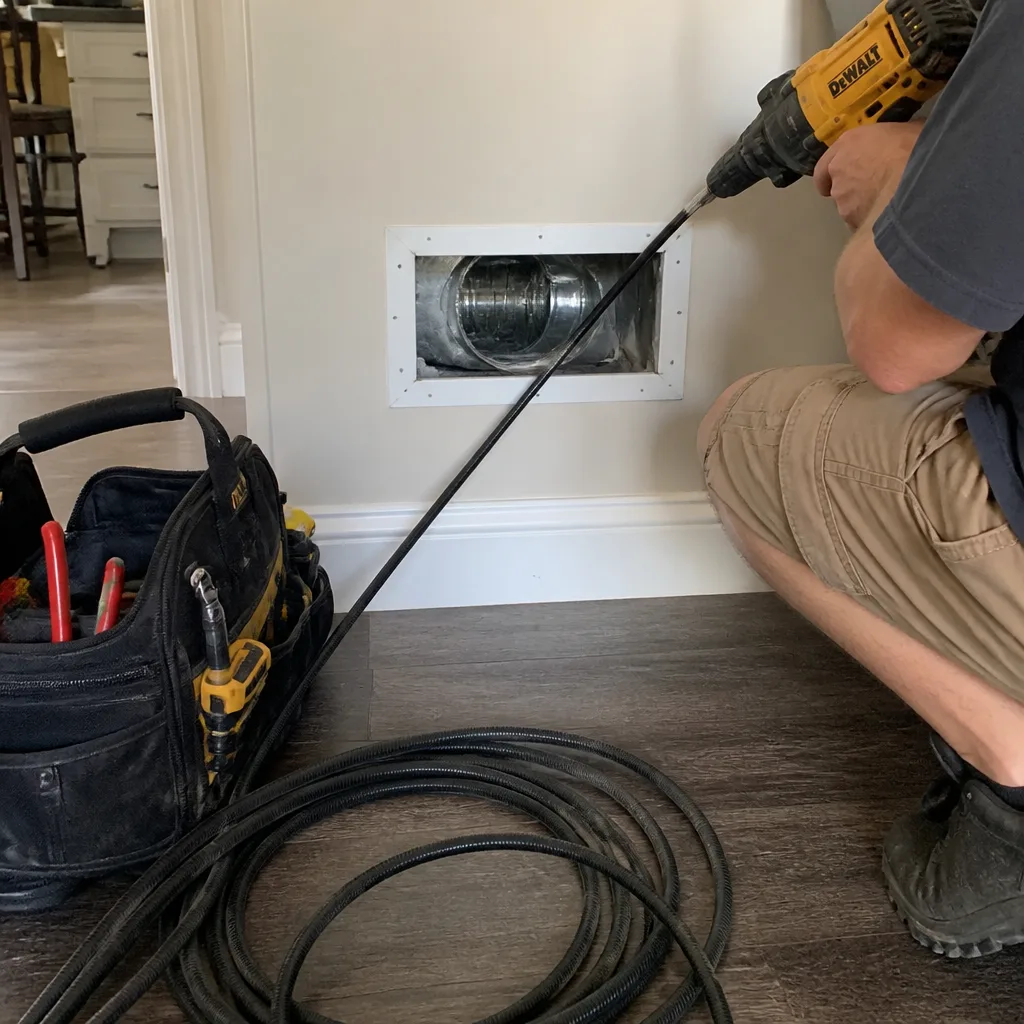
One caution: these checks are visual and observational only. We do not recommend opening sealed duct sections, attempting to clean ducts yourself with household equipment, or reaching into the system further than removing a register cover. Professional duct cleaning involves pushing air and debris through the system in a controlled way, and doing it incorrectly can loosen debris without capturing it – leaving you with worse air quality than before. The equipment matters. A Rotobrush rotary brush system agitates debris that has adhered to duct walls over years; household tools don’t reach that far and don’t extract what they dislodge.
Common Mistakes to Avoid
- Scheduling duct cleaning on a fixed annual date regardless of conditions. Elk Grove’s contamination windows are driven by specific climate events. Cleaning in July because you always clean in July means the system will re-contaminate by September if wildfire smoke arrives.
- Assuming closed windows during fire season protects the duct system. The building envelope in Sacramento County homes leaks enough to pull smoke particles inside whenever the HVAC blower runs. Closed windows reduce infiltration; they don’t eliminate it.
- Ignoring the first cooling cycle of spring. The first sustained AC run after winter is when coil condensation meets accumulated debris. This is the highest-risk moment of the year for microbial growth in the system, and most Elk Grove homeowners don’t think about it until the musty smell arrives.
- Treating filter replacement as a substitute for duct inspection. The filter captures particulates that reach it. Debris that has settled in the duct system stays where it is until the blower pushes it out – and by then it’s in your living space, not trapped in a filter.
- Assuming a new home has clean ducts. Construction debris – drywall dust, sawdust, insulation particles – is common in new Elk Grove builds. The HVAC system runs during construction to protect finishes, and that debris settles into the ductwork before you ever move in.
- Hiring a cleaning-only company when the duct system has structural damage. Disconnected sections, crushed flex runs, or poorly sealed joints won’t be fixed by a vacuum. If you suspect damage, you need a company that can repair air ducts in Elk Grove, not just clean around the problem.
- Neglecting the dryer vent because the HVAC system feels fine. Lint buildup in dryer vents is a separate issue from HVAC performance. It doesn’t affect your home’s air temperature, but it is a documented fire risk and a drain on dryer efficiency. Dryer vent cleaning in Elk Grove addresses a safety problem the HVAC system doesn’t reveal.
When to Call a Professional
Some duct conditions are visible and some are not. You need a professional when the symptoms you’ve documented suggest contamination beyond what observation can confirm: persistent musty smells during AC operation, dust returning to surfaces within days of cleaning, visible debris at multiple registers, or a documented smoke-season contamination event. You also need a professional when filter loading rates suggest return-side leakage – that’s a diagnostic problem, not just a cleaning problem. Duct Cleaning Elk Grove offers free estimates in Elk Grove – call (866) 705-7671 to schedule an assessment. We’ll inspect the system, document what we find, and give you a clear scope of work before anything gets cleaned.
Frequently Asked Questions
Air ducts in Elk Grove typically benefit from professional cleaning every two to four years, but the real answer depends on what your specific system has been through. Homes that experience heavy wildfire smoke exposure, homes with pets, and homes with documented construction debris may need cleaning more frequently. Following the seasonal framework in this guide will help you determine when your system actually needs attention rather than relying on a generic schedule. Call (866) 705-7671 for a free assessment of your specific situation.
Whole-system air duct cleaning in Elk Grove typically ranges from $400 to $700 for an average single-family home, depending on system size, number of registers, and contamination level. Homes with heavy smoke residue or years of accumulated debris may run higher. The key is getting a flat price per system agreed before work starts – not a per-vent price that grows once the technician arrives. Call (866) 705-7671 for an exact quote on your home; estimates are free.
Cheaper duct cleaning quotes typically come from operators using shop-vac-style equipment that captures only loose debris near registers, not the compacted material deeper in the system. Professional-grade equipment – Rotobrush rotary brush systems paired with Nikro HEPA-filtration vacuums – costs more to operate and produces a measurably different result. The duct cleaning industry’s bait-and-switch reputation comes from those low quotes that turn into larger invoices once the technician sees the system. Ask for a fixed price before work starts, and ask what equipment the company uses. Call (866) 705-7671 and we’ll walk through exactly what’s included.
You should be able to see the result. Before-and-after photos of the duct interior, taken with a borescope or inspection camera at the same locations, show what was removed. A professional company documents the work – pressure readings before and after, photos of the coil, and a summary of what was found in each section. If your technician can’t show you what was inside your ducts, you can’t verify what was cleaned. We document every job with photos inside the duct system, not just pictures of the equipment.
Yes, smoke residue can be removed from duct systems with professional agitation and HEPA-filtered extraction. The Rotobrush system mechanically agitates duct walls to break the bond between smoke particulate and the metal surface, while the Nikro HEPA vacuum captures the loosened debris before it can enter living spaces. Homes that wait months or years after a smoke event may need additional pass-throughs, but the contamination is removable. The earlier it’s addressed, the less work it requires.
Yes – during active wildfire smoke periods in Elk Grove, check your filter weekly and replace it as soon as you see significant discoloration. A filter rated MERV 11 or higher captures more smoke particulate, but it also loads faster. Once a filter is saturated, it restricts airflow and sends more smoke particles around the filter media and into the system. Replace the filter aggressively during smoke events, then replace it again after the smoke clears to remove whatever the system captured during the event.
The Bottom Line
Elk Grove’s duct contamination follows a pattern. Wildfire smoke loads the system in fall; winter heating bakes it in place; spring cooling creates the moisture that turns it into a problem; summer stress-testing reveals where the weaknesses are. If you work with that calendar instead of against it – cleaning after smoke season, inspecting at spring startup, documenting during summer, and monitoring all year – your duct system stays cleaner and your HVAC runs the way it was designed to. This is what professional-grade equipment, not repurposed tools, is for. And this is what a seasonal system looks like when it’s built for the place you actually live.
Written by the team at Duct Cleaning Elk Grove, serving Elk Grove since 2013.
See the difference
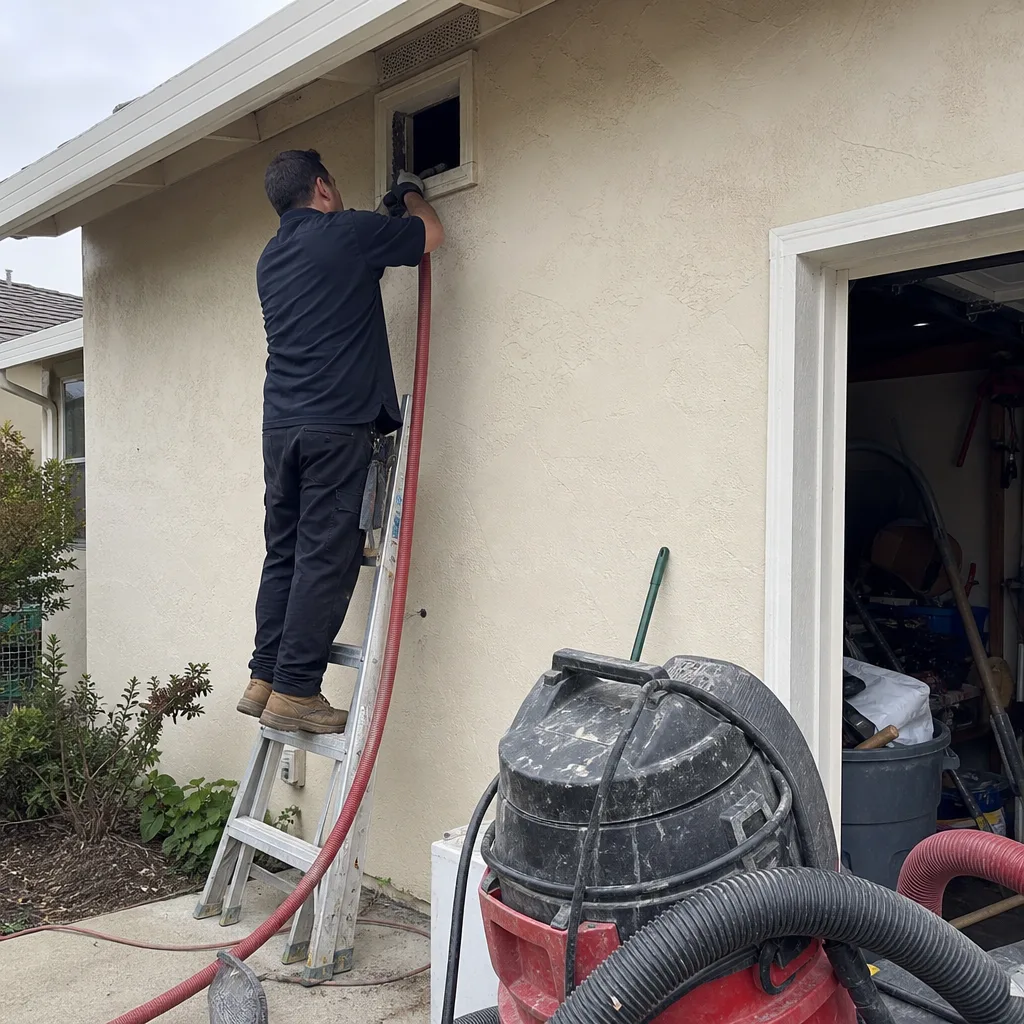 Before
 After
 Before
 After
 Before
 After