
Last updated November 2, 2026
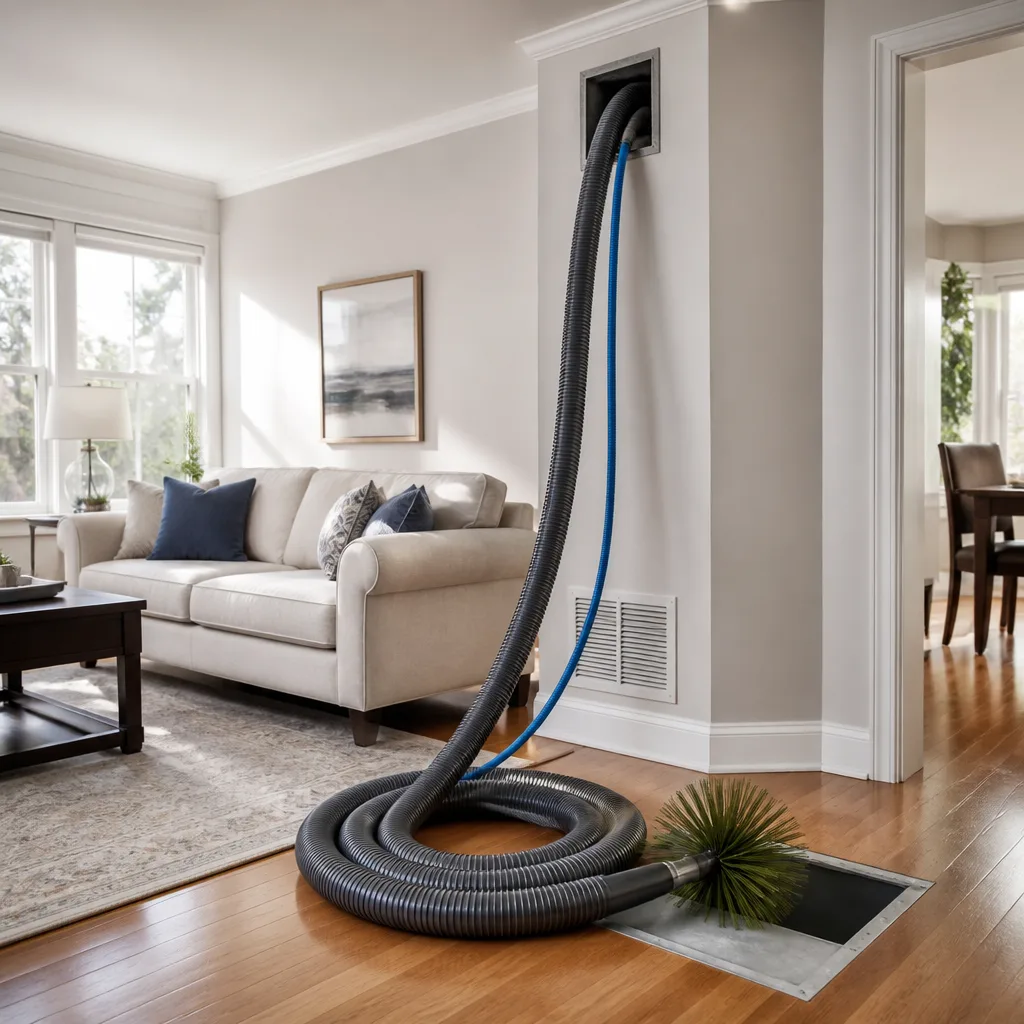 Whole-home duct cleaning
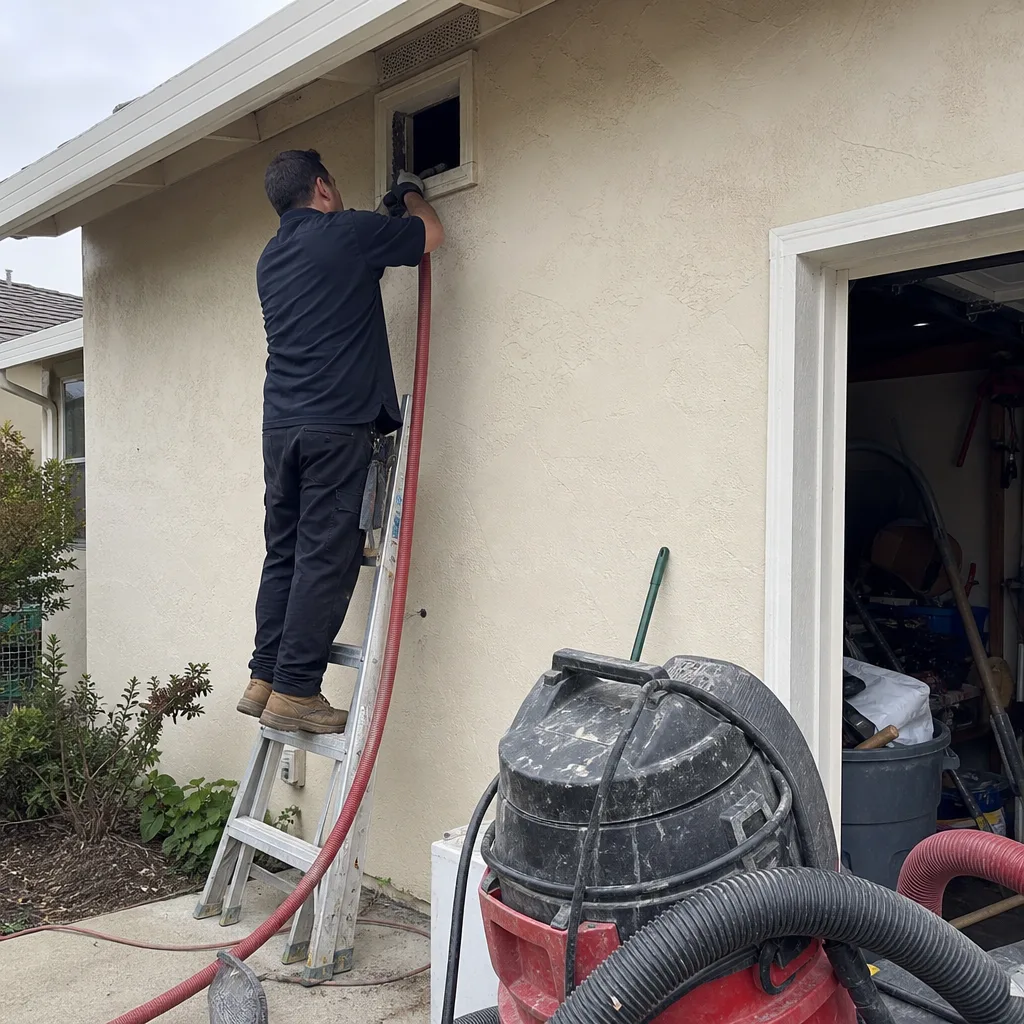
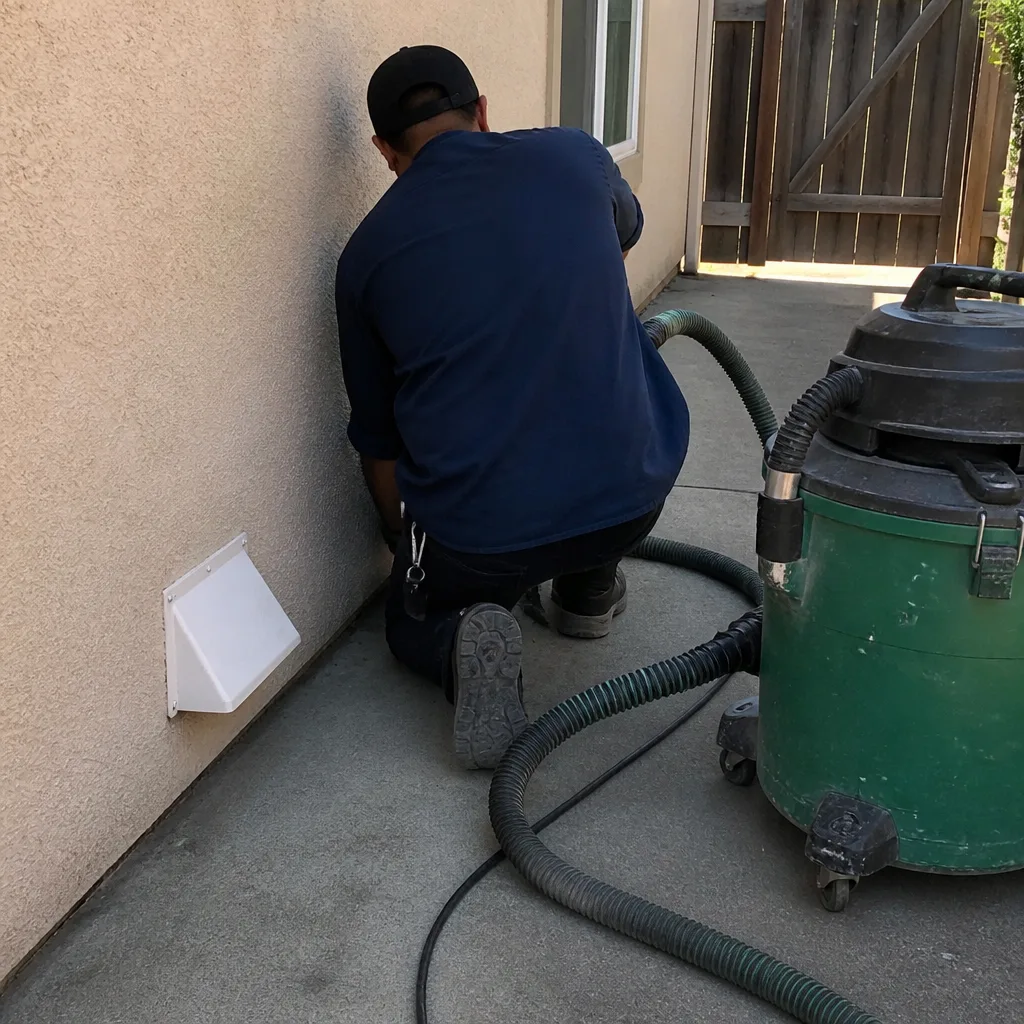
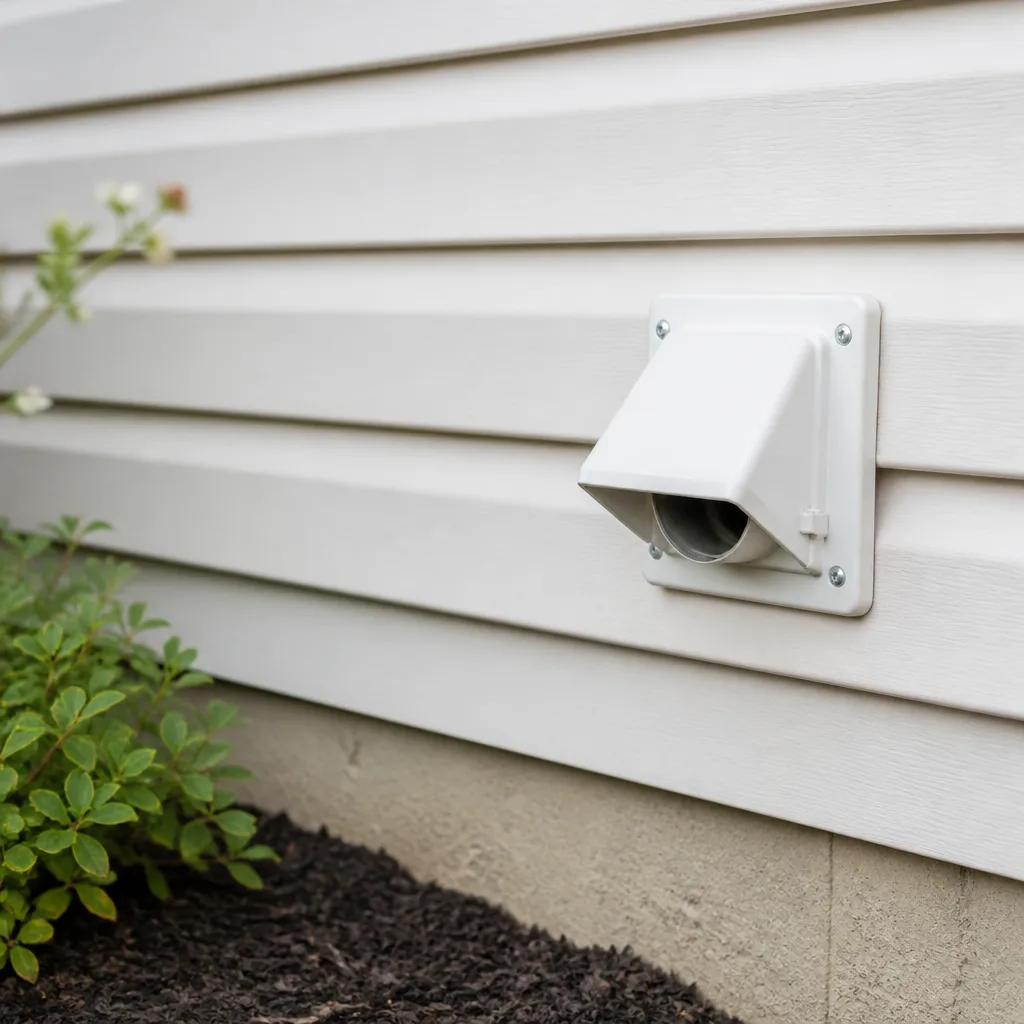 Dryer vent cleaning
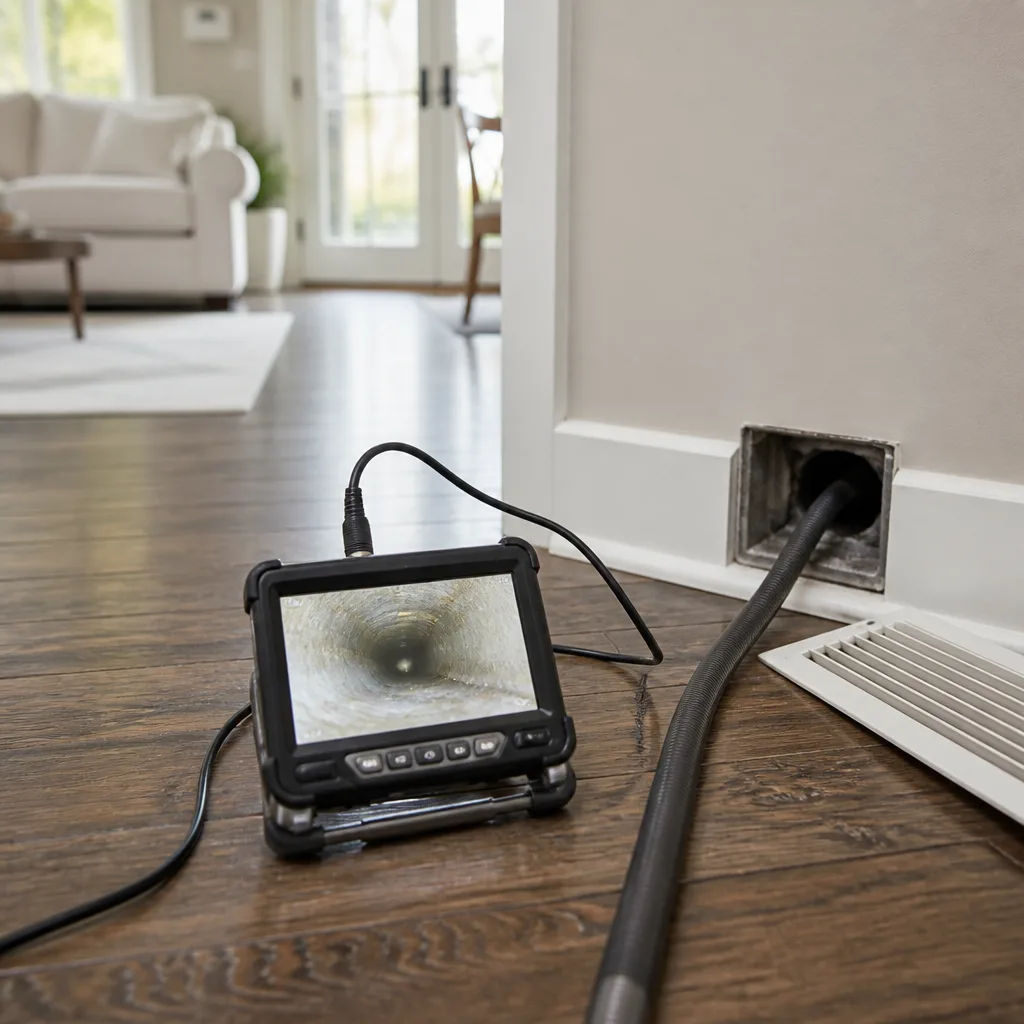 Camera inspection
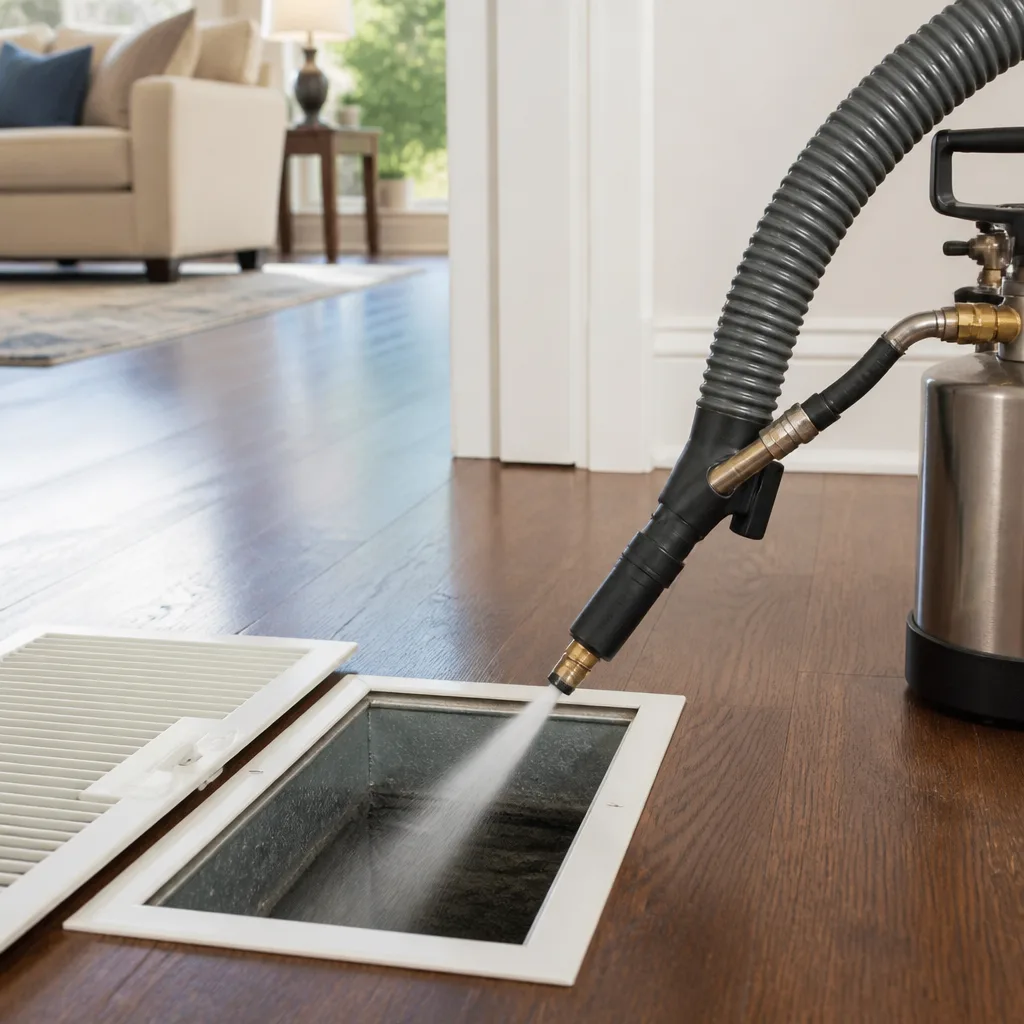 Sanitizing & deodorizing
Whole-system duct and dryer vent check with before-and-after photos - you see exactly what came out of your vents
That "$99 whole-house special" is a bait ad - the real number appears once they are in your hallway, or the "clean" is a shop-vac at the register. We photograph the inside of your ducts before and after instead.
DIY vs Professional Air Duct Cleaning: The Elk Grove Homeowner’s Decision Guide
You can clean your ducts yourself. You can also cut your own hair. Both are limited by what you can see and reach, and in an HVAC system, the debris that actually affects air quality is concentrated exactly where no consumer tool can access it. Elk Grove homeowners face a specific challenge: our hot, dry summers and the Delta breeze pull dust, pollen, and fine particulate into return ducts at a rate that surprises most people who’ve lived in cooler climates. This guide maps precisely what DIY duct cleaning can and cannot accomplish, what our Air Duct Cleaning services do differently with professional equipment, and how to calculate whether hiring a specialist makes sense for your Elk Grove home.
Quick Answer
DIY duct cleaning in Elk Grove is a maintenance step, not a cleaning solution. With basic household tools, you can address visible debris at register boots and grille faces, which represents roughly 15% of the surface area where contamination accumulates in a typical residential system. Professional cleaning with Rotobrush and Nikro equipment reaches the other 85%: trunk lines, the return plenum, the blower wheel, and the evaporator coil. If your goal is removing surface dust you can see at registers, DIY works. If your goal is cleaning the air you breathe, the math points the other way.
Styles & brands we work with
- Whole-home duct cleaning
- Dryer vent cleaning
- Camera inspection
- Sanitizing & deodorizing
Table of Contents
- What DIY Duct Cleaning Can Actually Reach
- What DIY Duct Cleaning Physically Cannot Reach
- The Negative Pressure Problem: Why Vacuuming Without Sealing Makes Things Worse
- When DIY Is the Right Answer
- What Professional Duct Cleaning Actually Does
- The Breakeven Calculation: Professional Cleaning Costs vs. 3 – 5 Year Savings in Elk Grove
- Common Mistakes to Avoid
- When to Call a Professional
What DIY Duct Cleaning Can Actually Reach
Let’s be precise about what a homeowner with a standard wet/dry vacuum, a flashlight, and some patience can physically access. The HVAC system in a typical Elk Grove home, whether it’s a 1990s build in Laguna West or a newer construction in Madeira, consists of a supply side and a return side. The supply side pushes conditioned air through branch ducts to registers in each room. The return side pulls air back to the furnace or air handler through larger return grilles, often in a hallway or ceiling.
What you can reach as a homeowner:
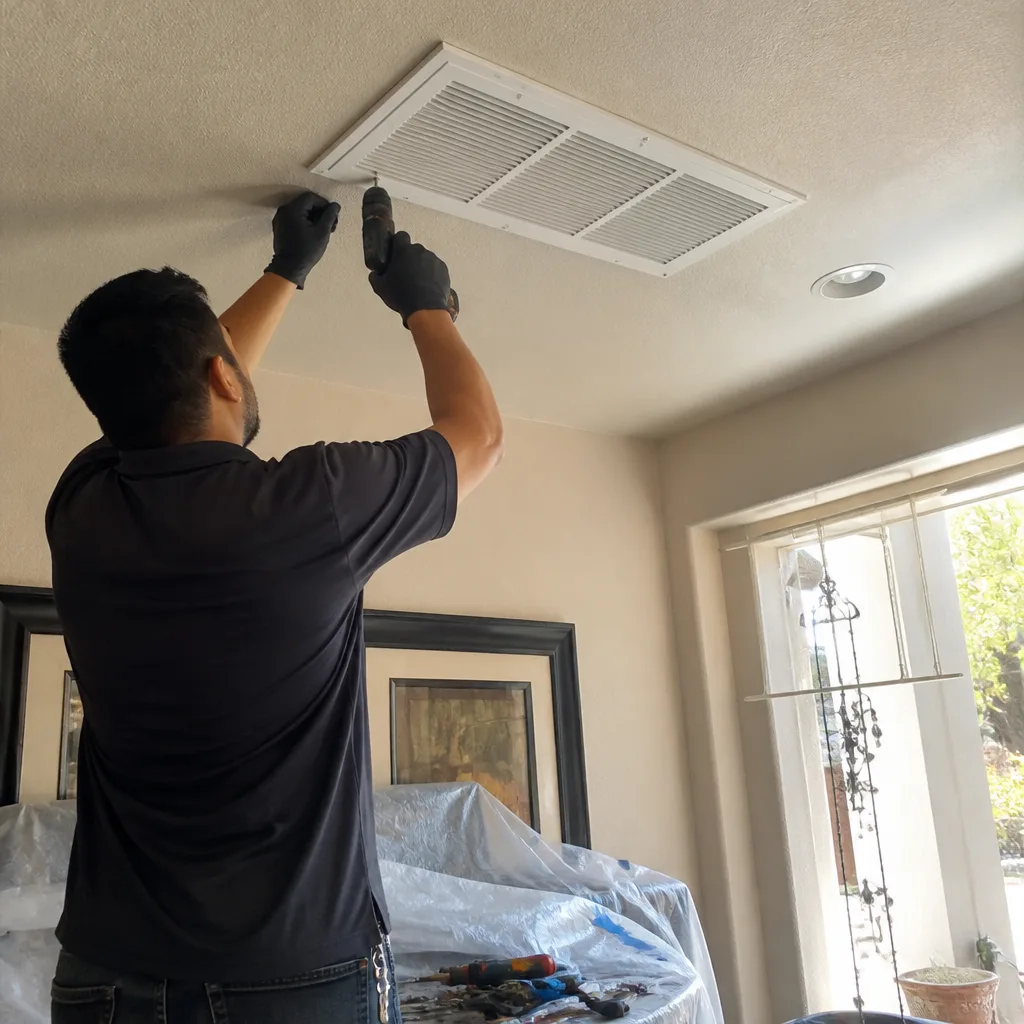
- Register boots: The metal or plastic box directly behind each supply register. You can remove the register cover with a screwdriver and access roughly 12 – 18 inches into the boot with a vacuum hose. This is where visible dust, pet hair, and the occasional child’s toy end up.
- Grille faces: The visible metal or plastic register covers themselves. These collect film and dust on their leading edges and can be wiped or washed.
- Accessible flex duct near registers: In some homes, particularly those with crawlspace ducting common in Elk Grove’s older neighborhoods like Old Town and Sheldon, you can reach a few feet into the flex duct before it bends or connects to the trunk line. This is the exception, not the rule.
That’s the complete list. Everything else sits beyond the reach of a consumer vacuum hose, behind bends, past dampers, or deep in the trunk line. We’ve walked hundreds of Elk Grove duct systems over the years, and the accessible portion from inside the living space is consistently small. The debris that actually affects indoor air quality is rarely in the last 18 inches before the register. It’s deep in the system, where the air moves slowest and particulate settles out.
What DIY Duct Cleaning Physically Cannot Reach
Here’s where the 15% figure comes from. In a typical Elk Grove single-family home with 10 – 14 supply registers, the accessible boot interiors represent a small fraction of total system surface area. The high-accumulation zones, the places where years of dust, construction debris, and sometimes biological growth actually collect, require tools that physically contact the metal deep inside the system.
Non-accessible zones include:
- Duct trunk lines: The main rectangular or round ducts running through attics, crawlspaces, or between floors. In Elk Grove’s hot attic spaces, which routinely exceed 130°F in summer, fine particulate bakes onto interior duct surfaces. A vacuum hose from a register cannot reach these lines, which can run 30 – 60 feet.
- Return plenum: The large metal box where return air collects before entering the air handler. This is typically the highest-velocity air stream in the system and a primary collection point for household dust, skin cells, and pet dander.
- Blower wheel: The fan that moves air through the system. When it accumulates caked-on particulate, the system moves less air per rotation, which drops efficiency and shortens equipment life. The blower assembly is behind the air handler cabinet and requires specialty brushes and compressed air to clean properly.
- Evaporator coil: The A-shaped coil where refrigerant exchanges heat with passing air. In humid conditions, the coil is wet, and dust sticks to it like mud. A fouled coil reduces heat exchange efficiency and can freeze over in severe cases. It sits inside the air handler cabinet, completely inaccessible to any consumer tool.
These zones are not obscure corners. They’re where most of the system’s interior surface area lives, and where airflow patterns deposit the most particulate. When someone tells you DIY duct cleaning will clear them, they’re describing a different mechanical system than what’s actually installed in an Elk Grove home.
The Negative Pressure Problem: Why Vacuuming Without Sealing Makes Things Worse
Here’s a detail that rarely appears in DIY tutorials: vacuuming one part of an open duct system creates negative pressure that pulls air from every other part of that system toward the vacuum. The ductwork in your home is connected. When you stick a shop-vac hose into a supply register and turn it on, air rushes in from the other registers, the return grilles, and any small gaps in the duct connections themselves.
What this means in practice: you’re not just pulling debris toward the vacuum. You’re pulling air from deep in the trunk line toward the register you’re working on, which can redistribute loose particulate from one section of the system to another. Particles that were settled in the return plenum can get pulled into branch ducts they were never in before. The agitation you create by brushing a register boot, combined with the airflow you create with the vacuum, can suspend particulate that then resettles downstream when you turn the vacuum off.
Professional equipment solves this with containment. Abatement Technologies negative-air equipment seals the system during cleaning, creating controlled airflow that carries loosened debris toward a capture point rather than letting it follow the path of least resistance through your living space. The difference isn’t just suction power. It’s the direction and control of suction. A Rotobrush system agitates debris from the duct walls mechanically, while the connected vacuum captures the loosened material at the source, before it has a chance to become airborne in the system or your home.
This is why the DIY approach often leaves a home dustier than it started. You’ve disturbed particulate that was harmlessly stuck to duct walls, suspended it in the air stream, and then turned everything back on. Give it two weeks, and that particulate settles on your furniture, floors, and horizontal surfaces. We’ve heard this exact story from more Elk Grove homeowners than we can count: cleaned the registers, sneezed for a month, then called us anyway.
When DIY Is the Right Answer
We’re not here to tell you DIY duct cleaning has no place. It does, in specific, limited scenarios. The key is matching the method to the problem. When the issue is visible surface debris in accessible locations, a homeowner with basic tools can absolutely do the job.
Scenarios where DIY makes sense:
- Post-renovation debris at specific registers: If you’ve just had flooring installed, drywall repaired, or trim painted, construction dust settles in the nearest register boots. This debris is typically coarse, visible, and within the 12 – 18 inches you can reach. Vacuum it out. It’s the same maintenance you’d do on any surface after construction.
- Visible surface accumulation in accessible boots: If you remove a register cover and see a dust bunny the size of a golf ball sitting in the boot, you don’t need a professional to handle that. Remove it. It will take you two minutes and a vacuum hose.
- Grille face cleaning: Register covers and return grilles collect a film of dust and hair on their visible surfaces. Washing them with warm water and mild soap is a legitimate maintenance step, and it’s something we recommend homeowners do between professional cleanings.
- Immediate symptom relief while scheduling: If you’ve booked a professional air duct cleaning in Elk Grove but the appointment is a week out, vacuuming accessible register boots can reduce visible dust in the interim. Just understand it’s triage, not treatment.
The common thread: these are all surface-level, visible, accessible problems. They’re what you’d notice if you looked down into a register. They are not what’s circulating through your system. If the goal is removing what you can see, DIY handles it. If the goal is cleaning what you’re breathing, that’s a different project.
What Professional Duct Cleaning Actually Does
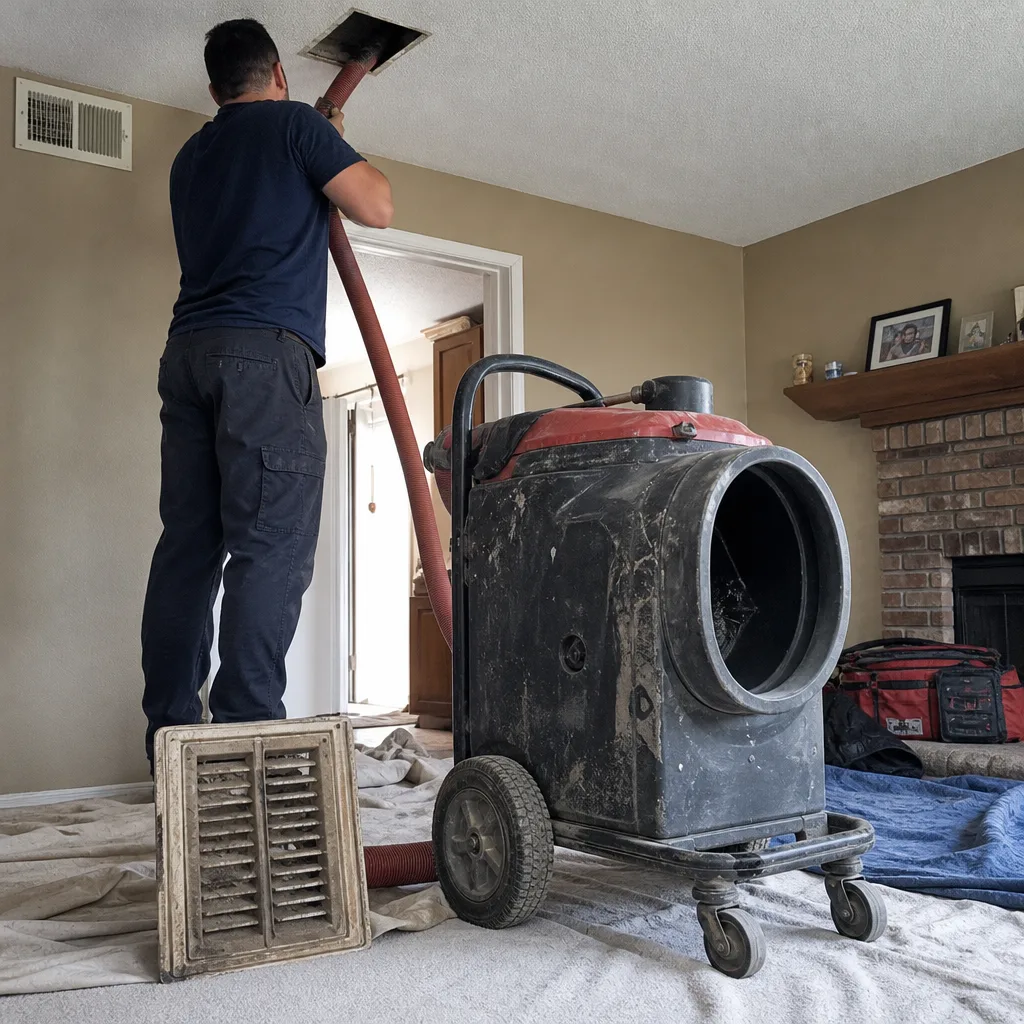
Professional duct cleaning in Elk Grove is a mechanical process, not a suction process. The equipment matters because the problem is adhesion, not loose dust. Years of conditioned air moving through metal ducts deposits a film that compacts under heat and moisture. Elk Grove’s climate accelerates this: our dry summers bake attic ductwork, and our cool, damp winters can introduce moisture into crawlspace systems. The result is particulate that has essentially glued itself to the duct walls.
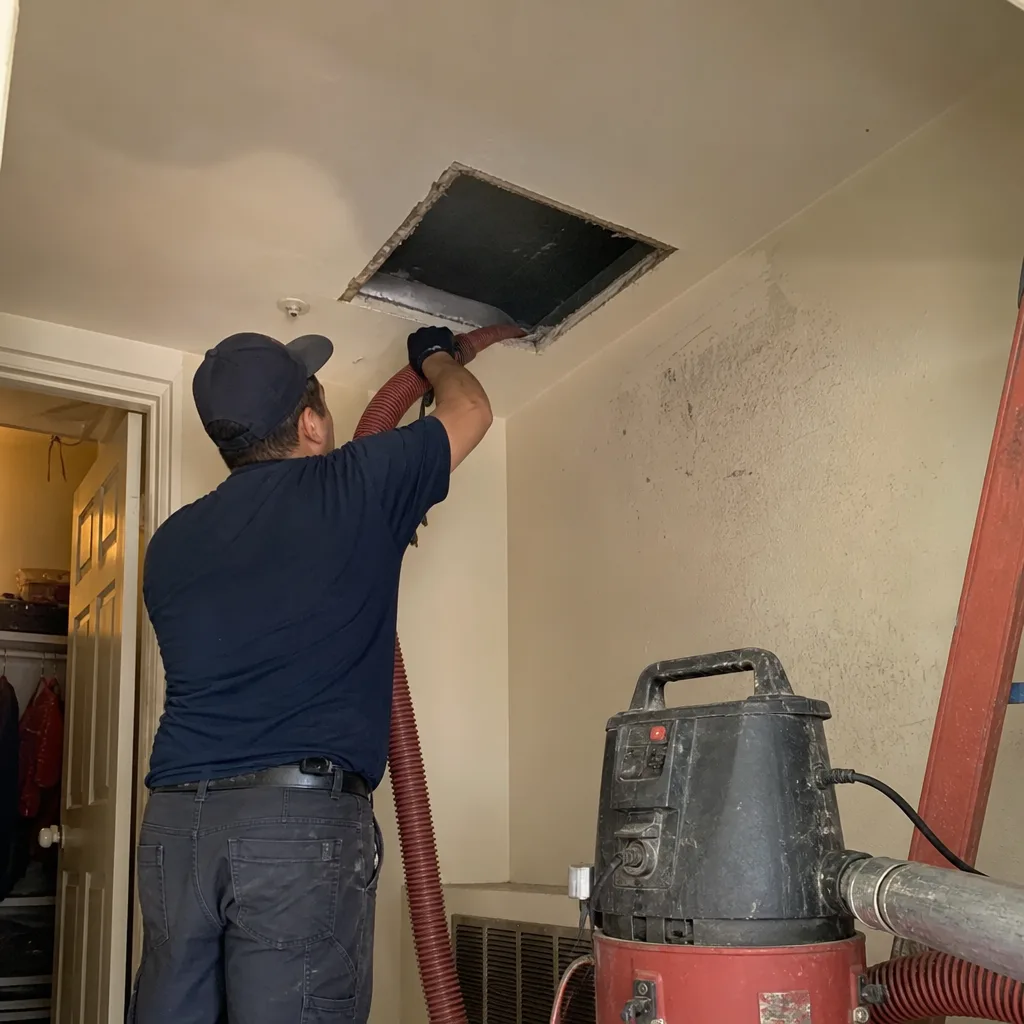
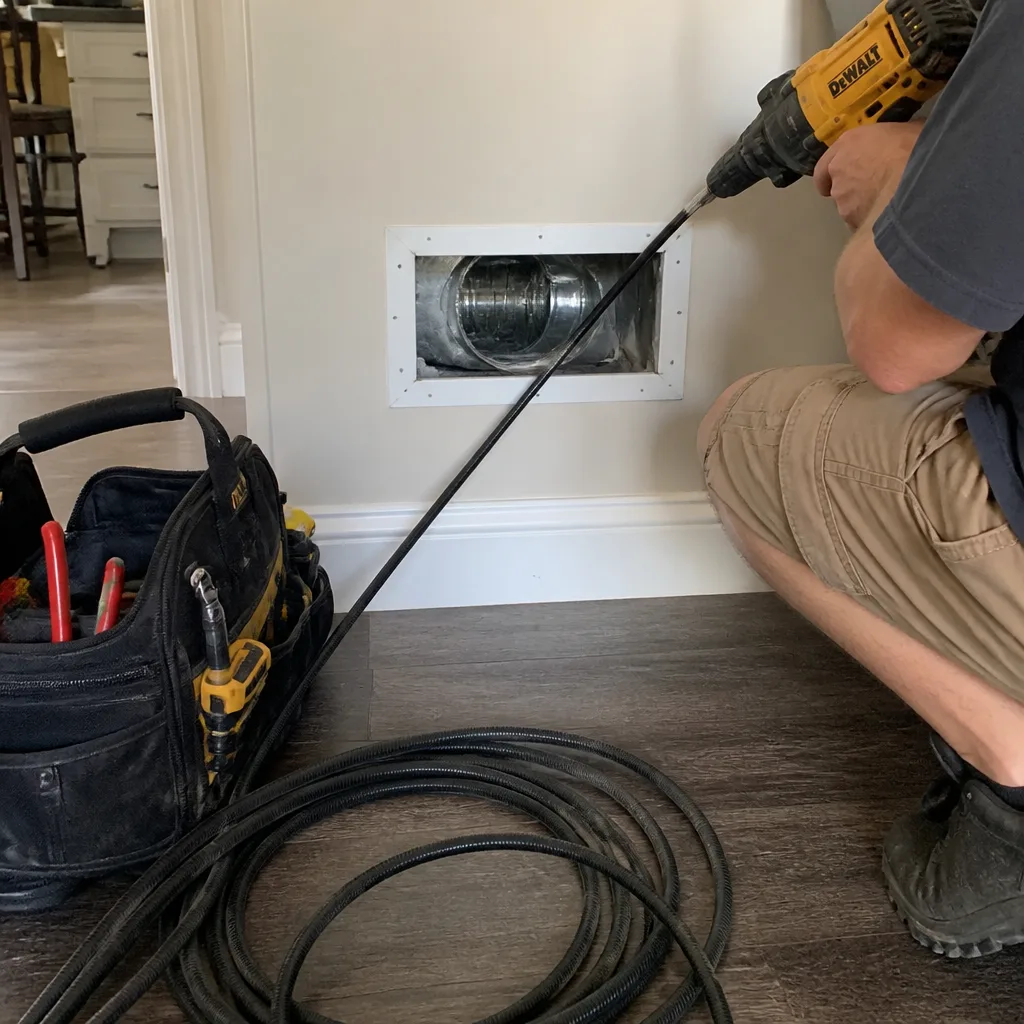
Getting that particulate off requires mechanical agitation, meaning physical contact with the interior duct surface. A vacuum alone won’t do it, no matter how powerful. This is where the equipment distinction becomes real. A Rotobrush rotary brush system extends into the duct system and physically scrubs the interior walls, dislodging debris that’s adhered over years. The attached vacuum, filtered through Nikro HEPA filtration, captures that loosened material at the point of agitation. The particulate never gets a chance to enter your living space.
The process for a typical Elk Grove home follows a specific sequence:
- System isolation and containment: The duct system is sealed at each register with containment covers. The cleaning equipment connects to the system through a controlled access point, typically at the furnace or air handler. This creates a closed loop so that any air movement during cleaning is directed toward the capture system, not the living space.
- Mechanical agitation: The rotary brush system travels through trunk lines and branch ducts, scrubbing interior surfaces. This is the step with no DIY equivalent: it physically contacts the full length of the duct, not just the first foot.
- Source capture: The HEPA-filtered vacuum runs continuously during agitation, pulling loosened debris into a sealed containment unit. Abatement Technologies negative-air equipment maintains directional airflow through the system, ensuring the debris only moves toward the capture point.
- Component addressing: The blower wheel and evaporator coil, where accessible, are addressed with targeted tools. In many Elk Grove homes, these components sit behind the air handler cabinet and require a professional to access safely without damaging the unit.
- System verification: After cleaning, the system is reconnected and run briefly to verify proper airflow. In homes with Honeywell or Aprilaire whole-home air-quality systems, the cleaning process is designed to be compatible with that equipment, meaning it won’t introduce residue that clogs expensive filtration media.
We mention those brand names deliberately. Elk Grove homes with upgraded IAQ equipment, whether a whole-home HEPA, a media cabinet, or an advanced smart thermostat with air-quality monitoring, represent an investment in indoor air quality. A duct cleaning process that redistributes particulate through the home undermines that investment. Our equipment and process are designed to work with those systems, not against them. If you’ve spent thousands on IAQ upgrades, the duct cleaning should protect that spend, not compromise it.
The Breakeven Calculation: Professional Cleaning Costs vs. 3 – 5 Year Savings in Elk Grove
Let’s talk about what professional duct cleaning costs in Elk Grove and what it saves, because this is the actual decision most homeowners are making. For How to Hire an Air Duct Cleaning Contractor in Elk Grove: A Step-by-Step Guide, see our detailed breakdown. The national averages quoted by Angi and HomeAdvisor fluctuate, but in the Sacramento County market, including Elk Grove, a standard single-family home cleaning typically runs between $350 and $700 depending on system size, number of registers, and accessibility. That’s a real expense. The question is what you get back.
Here’s the calculation that matters:
- Filter consumption: A system with years of accumulated particulate in the return plenum and trunk lines sheds that particulate continuously. It ends up in your return air filter. Elk Grove homeowners with dirty duct systems typically replace 1-inch filters every 30 – 45 days instead of every 90. At $12 – $20 per filter, that’s $80 – $160 per year in extra filter cost. Over 3 years: $240 – $480.
- HVAC efficiency: The blower wheel fouled with caked particulate moves less air per rotation, meaning the system runs longer to condition the same volume of air. The evaporator coil with a dust layer transfers heat less effectively. The combined efficiency penalty is typically 5 – 15%, according to DOE efficiency research on coil fouling. On an Elk Grove summer cooling bill, which can run $250 – $400 per month from June through September, that’s $37 – $180 per season. Over 3 years: $110 – $540.
- Equipment life: A system that runs longer to do the same work cycles more, which means more wear on the blower motor, compressor, and contactors. In Elk Grove, where cooling season runs six months or more, a system with a fouled coil and blower wheel ages faster than one that runs clean. Even a two-year extension on a $12,000 – $18,000 replacement system is worth $1,200 – $1,800 in deferred cost.
Add it up: filter savings of $240 – $480, efficiency savings of $110 – $540, and the deferred replacement value of $1,200 – $1,800 over a 5-year window puts the total value of a clean system at $1,550 – $2,820. Against a one-time professional cleaning cost of $350 – $700, the math is not complicated. And that’s before accounting for the air quality benefit to allergy sufferers, which is hard to price but very easy to feel.
One more detail worth noting: if your duct system has actual damage, a disconnected section, a crushed flex duct in the crawlspace, a separated seam in the trunk line, no amount of cleaning fixes it. Our air duct repair in Elk Grove service addresses structural problems that cleaning alone cannot. The two services often go together: you clean the system that’s intact, and repair the sections that aren’t. A cleaning-only company will clean around the damage and leave the leak, which means the system pulls attic air or crawlspace air into your living space. That’s not a performance issue. That’s an air quality issue.
Common Mistakes to Avoid
- Vacuuming registers without sealing the rest of the system first: As discussed, this redistributes particulate from deep in the system toward your living space. The negative pressure you create pulls air from everywhere, and that air carries debris. If you’re going to vacuum accessible boots, close all other registers and returns in the home first to minimize air movement through the rest of the system.
- Using compressed air or leaf blowers from inside the living space: This is a DIY approach we’ve seen attempted more than once in Elk Grove. It doesn’t clean the system. It blasts debris from one location into every other location that it can find, including your living room. Compressed air has legitimate uses in professional cleaning, but only with containment equipment in place.
- Running the HVAC system with the return grille off to “pull out” debris: The airflow through an open return is too diffuse to remove adhered debris from duct walls. This approach runs your system harder while accomplishing nothing, and it can pull loose insulation or construction debris into the blower assembly.
- Believing DIY cleaning addresses the evaporator coil: The coil is inside the air handler. It requires access to the cabinet, specialized tools, and an understanding of coil chemistry to clean without damaging fins or leaving residue. Any DIY tutorial that claims otherwise is describing a different component.
- Waiting until there’s a visible problem to address the duct system: The operational problems with a dirty duct system, reduced airflow, increased filter consumption, premature equipment wear, are invisible until they become expensive. The Elk Grove homes we see with the worst systems are not the ones cleaned too often. They’re the ones never cleaned at all.
- Choosing a cleaner based on price alone: The difference between a professional Rotobrush/Nikro system and a repurposed shop-vac is not cosmetic. It’s the difference between cleaning the full duct system and cleaning the first 18 inches of each register. A cheap quote often reflects a cheap process. Ask what equipment will be used and whether it’s designed for HVAC ductwork.
When to Call a Professional
Call a professional when the problem is systemic, not visible. If you’ve noticed dust accumulating on surfaces within days of cleaning, if your filters are loading up faster than they used to, if certain rooms never seem to heat or cool properly, or if you suspect construction debris from a renovation made its way into the registers, the issue is likely beyond what a vacuum hose can solve. If anyone in the home has respiratory sensitivities, the calculation matters more, not less.
Duct Cleaning Elk Grove offers free estimates throughout Elk Grove, from Old Town to Franklin to Sheldon. Call (866) 705-7671 and describe your system size, home age, and your specific concern. We’ll give you a straight answer about what’s needed and what isn’t. If DIY makes sense for your situation, we’ll tell you that too.
See the difference
 Before
 After
 Before
 After
 Before
 After
Frequently Asked Questions
Professional air duct cleaning in Elk Grove typically ranges from $350 to $700 for a standard single-family home, depending on system size, register count, and accessibility. Homes with multiple HVAC systems, extensive crawlspace ducting, or systems that haven’t been cleaned in 15+ years often fall on the higher end. The cost reflects the equipment required to clean the full system, not just the register boots. Call (866) 705-7671 for a specific quote for your home, estimates are free.
You can clean the accessible portions of your air ducts yourself, which includes register boots within roughly 12 – 18 inches of each register and visible grille faces. What you cannot reach with household tools includes the trunk lines, return plenum, blower wheel, and evaporator coil, which is where the majority of particulate accumulates. DIY cleaning addresses visible surface debris, not the system-wide contamination that affects air quality.
Cheaper duct cleaning quotes in Elk Grove typically reflect a lighter process. A company charging $99 for a whole-home cleaning is likely vacuuming register boots, not agitating and extracting through trunk lines. The equipment that cleans deep ductwork, Rotobrush rotary brush systems with HEPA-filtered Nikro vacuums and Abatement Technologies containment, represents a significant investment that gets reflected in the price. Ask any company what specific equipment they use and which parts of the system they clean. The answers usually explain the price difference. Call (866) 705-7671 and we’ll describe exactly what’s included in our flat price before any work is scheduled.
The EPA doesn’t mandate a specific cleaning interval, but in Elk Grove’s climate many homeowners benefit from a professional cleaning every 3 – 5 years. For timing tips throughout the year, read our Seasonal Air Duct Cleaning Care for Elk Grove: Year-Round Homeowner’s Guide. Factors that shorten the interval include homes with pets, homes near agricultural areas where the Delta breeze carries field dust, homes with smokers, and homes that have undergone renovation. If you’ve lived in your Elk Grove home for five years and have never cleaned the ducts, they’re due for at least an assessment.
Professional duct cleaning removes accumulated particulate, dust, pet dander, and pollen from the duct system, which can reduce the volume of airborne allergens circulating through an Elk Grove home. The benefit is most pronounced for homeowners who also maintain a good filter, run the system regularly, and keep windows closed during peak pollen season. It’s not a cure for allergies, but removing a significant reservoir of particulate from the airstream your system pushes through every room is not nothing.
These are two separate services with different purposes. Air duct cleaning addresses the HVAC system’s supply and return ductwork, removing particulate that affects indoor air quality and system efficiency. Dryer vent cleaning in Elk Grove addresses the exhaust duct from your clothes dryer to the exterior vent, removing built-up lint that creates a documented fire risk. Most homes need both addressed separately. Our Duct Cleaning Elk Grove home page explains the full scope of services.
The Bottom Line
DIY duct cleaning has a legitimate role in every Elk Grove home, but it’s a maintenance role, not a cleaning role. The register boots you can reach with a vacuum hose are the visible tip of a system that extends 30 – 60 feet into your attic or crawlspace, and the debris that affects air quality settles where no consumer tool can touch it. If you want to clean what you can see, grab a vacuum. If you want to clean what you’re breathing, call a professional with the equipment to do the job properly. For more guides & resources on maintaining your system, visit our blog. The math on cost works out over three to five years, and the air quality difference starts the day the work is done. If you’re in the Elk Grove area and want a real assessment of your system, call (866) 705-7671. We’ll give you the straight answer, even if that answer is that you don’t need us yet.
Written by the team at Duct Cleaning Elk Grove, serving Elk Grove since 2013.