
Last updated November 2, 2026
 Whole-home duct cleaning
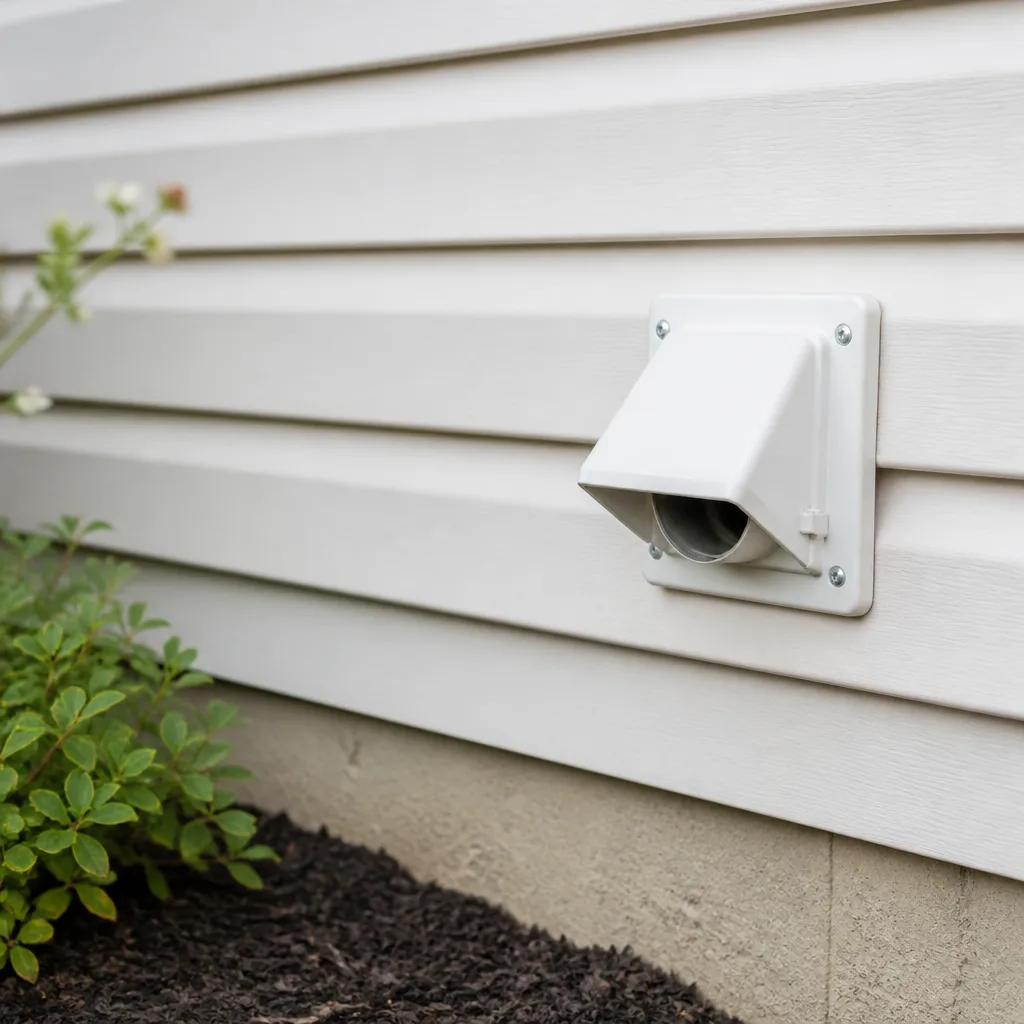 Dryer vent cleaning
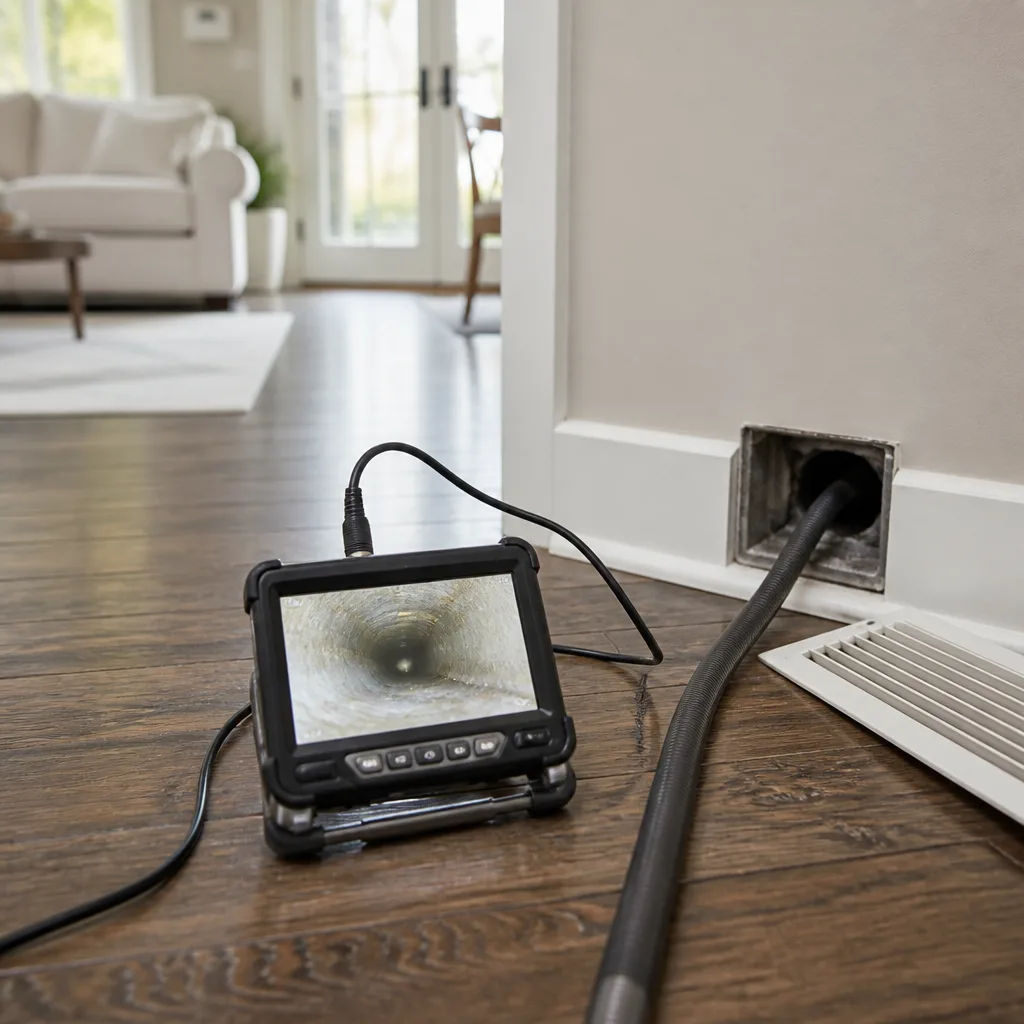 Camera inspection
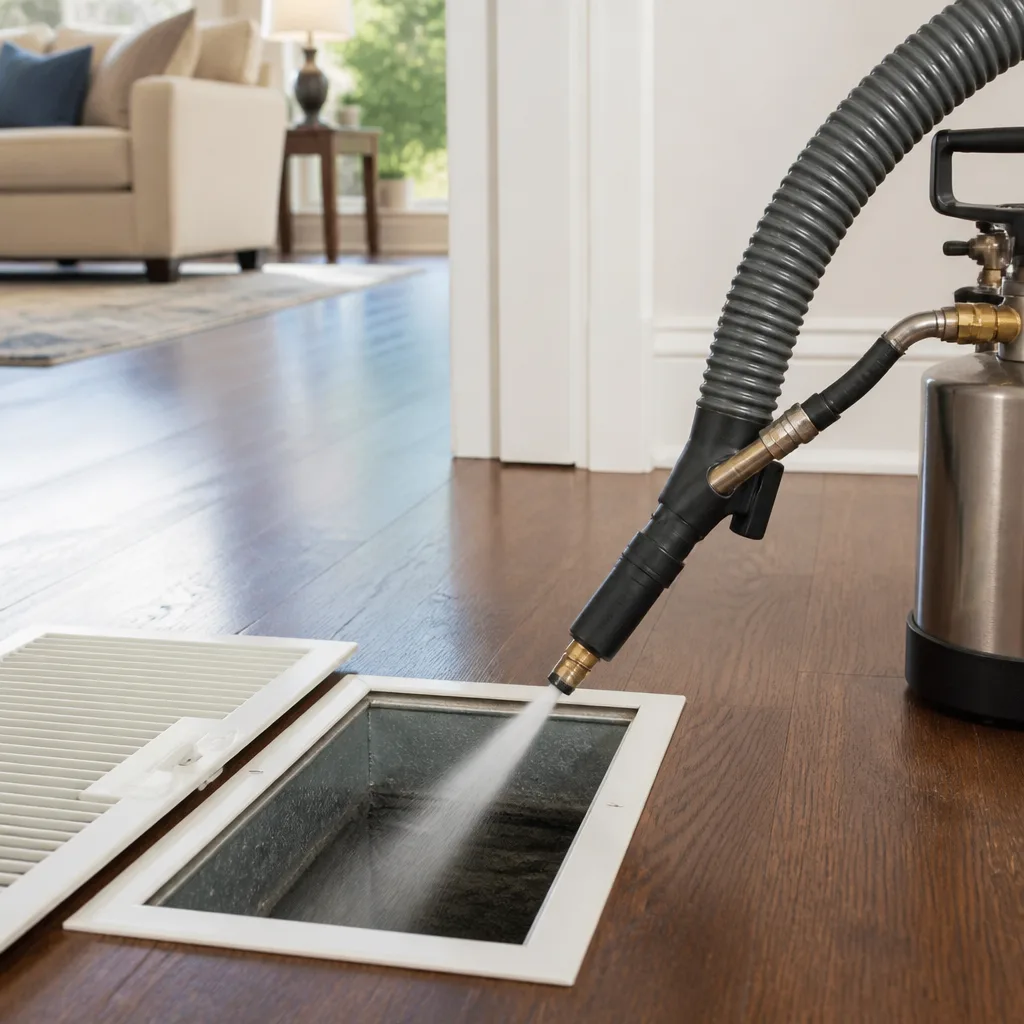 Sanitizing & deodorizing
Whole-system duct and dryer vent check with before-and-after photos - you see exactly what came out of your vents
That "$99 whole-house special" is a bait ad - the real number appears once they are in your hallway, or the "clean" is a shop-vac at the register. We photograph the inside of your ducts before and after instead.
Air Duct Cleaning Maintenance Checklist for Elk Grove Homeowners
Every summer in Elk Grove, the Delta breeze pushes a fine layer of particulate through screens, weather stripping, and return grilles. Most homeowners counter it by changing their 1-inch filter every three months and calling it maintenance. That habit, by itself, misses the surfaces where debris actually settles: the return boot, the supply plenum, the blower wheel, the evaporator coil. This guide is not another generic seasonal list. It is a diagnostic calendar for Elk Grove homes, organized around the specific conditions that move duct cleaning from an optional service to a measurable return. By the end, you will know exactly what to inspect, how to document it, and when the evidence says it is time to stop wiping the grille face and open the system.
Quick Answer
An effective air duct maintenance checklist for Elk Grove homeowners tracks four things: filter loading rate, visible accumulation at the return boot, seasonal residue patterns (post-summer smoke and post-winter condensation), and airflow consistency across rooms. When two or more of those indicators cross the threshold described below, schedule a professional cleaning. A visual inspection of the grille face alone cannot tell you what is in the ductwork.
Styles & brands we work with
- Whole-home duct cleaning
- Dryer vent cleaning
- Camera inspection
- Sanitizing & deodorizing
Table of Contents
- Filter Loading Rate: The Diagnostic You Already Have
- Return Vent Inspection: The Protocol Most Homeowners Skip
- Seasonal Checklist for Elk Grove: Smoke, Condensation, and Pollen
- Documenting Baseline Conditions: Your Phone Is the Tool
- Homeowner Tasks vs. Equipment-Access Tasks
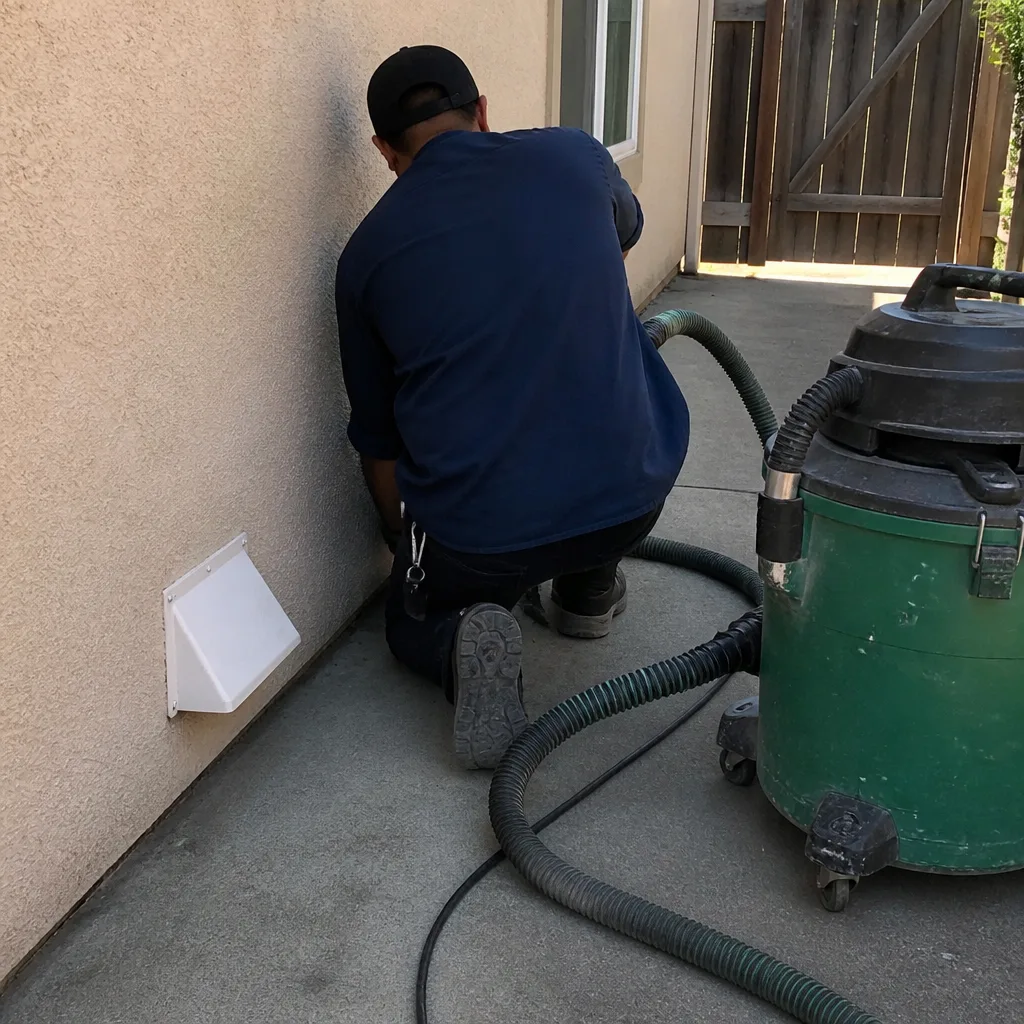
- Dryer Vent Maintenance: A Discrete Safety Item
- The Cleaning Threshold: When the Checklist Says Call
Filter Loading Rate: The Diagnostic You Already Have
The filter in your return grille is not just a barrier. It is a data point. A 1-inch MERV 8 filter in a sealed, intact duct system in Elk Grove will typically load steadily over six to eight weeks during summer, when the AC runs constantly. It will load more slowly during October and November, when the system cycles less. That pattern is the baseline. When it changes, something else changed with it.
Here is what the loading rate actually tells you:
- Filter loads in under 30 days, consistently: The ductwork is pulling air from somewhere other than the conditioned space. Common culprits are disconnected return runs, a cracked return boot in the crawlspace, or a return plenum that was never sealed at the connection. The filter is doing work that leak is creating. This is the earliest and most common sign of duct leakage we see in Elk Grove homes built in the 1990s and early 2000s.
- Filter loads evenly over 90 days, but rooms still get dusty: The return side is probably fine. The supply side is the problem. Debris has accumulated on the blower wheel and is being redistributed through the supply runs. In this situation, the filter is a witness to the problem, not the solution.
- Filter loads unevenly, with one quadrant visibly darker: Air is not moving through the filter face equally. Often this means the filter is undersized for the return opening, or the return grille itself is partially blocked. Check behind the filter too; a collapsed inner liner or debris piled in the boot can force air around the filter edge.
To track this, write the installation date on the filter frame with a permanent marker. Every time you inspect it, note the date and the visual loading pattern. Six data points give you a usable trend. One data point gives you nothing. This single habit replaces half of the guesswork in deciding whether the ductwork itself needs attention. It also gives a professional technician a useful starting point when you call for an Air Duct Cleaning in Elk Grove estimate.
Return Vent Inspection: The Protocol Most Homeowners Skip
The return grille in your hallway or family room is the most accessible diagnostic surface in the entire HVAC system, and it is almost always ignored. The grille face tells you about the air entering the return. The boot behind it tells you about the condition of the return run. These are two different readings, and they mean two different things.
Step 1: Inspect the grille face. Remove the filter and look at the grille itself. You are looking for a uniform dust film across the entire face. That is normal and harmless. What is not normal: visible clumps, pet hair accumulation thicker than the grille louvers, or a sticky, gray residue. The gray residue is often smoke particulate plus cooking oils that have attached to the metal. In Elk Grove, post-wildfire smoke residue shows up on return grilles long before it is visible on furniture, simply because the return grille filters far more air per square inch than any other surface in the home.
Step 2: Look inside the boot. This is the part that changes the decision. Shine a flashlight into the opening behind the filter, angled down toward the floor of the boot. In a clean system, you will see the interior wall of the return drop, and it will be mostly bare metal. In a system that needs attention, you will see one of these:
- Debris piled at the bottom of the boot: construction scraps, drywall dust, pet hair, or a layer of fine gray powder. This means the return run is actively accumulating material that the filter is not catching, or that was pulled in before the filter existed.
- Stained or damp-looking insulation: condensation has been present inside the boot at some point. In Elk Grove, this is most common in homes where the return run passes through an unconditioned attic or crawlspace, and the duct insulation has been compressed or torn.
- Visible gaps where the boot meets the wall or floor: light coming through around the edges means the return is pulling unfiltered air from behind the drywall or from the crawlspace.
If the grille face is lightly dusty but the boot is clean, your maintenance is working. If the boot has visible accumulation, the ductwork itself is the source of the problem, not the filter. Cleaning the grille face at that point is cosmetic. The debris behind it is what reaches the blower wheel and coil.
Seasonal Checklist for Elk Grove: Smoke, Condensation, and Pollen
Elk Grove has four distinct maintenance conditions, and they do not line up with the calendar. They line up with what is actually in the air and on the coil.
Post-Summer Smoke and Ash Assessment (Late September to October)
Elk Grove sits downwind of multiple wildfire zones during late summer and early fall. Smoke particulate is fine enough to pass through a MERV 8 filter. It deposits on the evaporator coil, the blower wheel, and the inside of the supply plenum. The residue is greasy, and it captures dust that would otherwise blow through. Here is the post-summer checklist:
- Remove the filter and check the return boot for a gray or brown film on the metal.
- Check supply vent registers in high-use rooms for a dark ring forming around the louvers. That is smoke particulate coming off the supply side, not dust from the room.
- If you have a whole-home Honeywell or Aprilaire air-quality system, check its sensor or indicator lights for unusually short filter service intervals. Smoke events load IAQ filters far faster than manufacturer baselines, and your existing equipment is doing extra work.
Post-Winter Condensation Check (January to February)
Elk Grove winters are damp, and homes that run heat intermittently create conditions for condensation inside duct runs located in unconditioned spaces. The checklist is visual:
- Check grille faces near floor registers for rust spots, particularly in rooms that are rarely used.
- Look for a musty odor when the system first starts after several days of non-use. That is not “old house smell.” It is microbial growth on dust that got wet.
- Inspect the insulation visible at the furnace cabinet or air handler where ductwork connects. Damp-stained duct insulation means condensation is reaching fiberglass, which collapses its thermal value and creates a surface for growth.
Spring Pollen Load (March to May)
Elk Grove’s spring pollen season is heavy, and it is one of the few times a visible filter change schedule actually matters for comfort, not just equipment. Oak, grass, and ornamental tree pollen load returns in a predictable wave. If your filter shows heavy yellow-green loading within two weeks during March, your return side is doing its job. The question is what the supply side looks like. Pollen passing through the filter seals itself to the evaporator coil fins, and that is a place you cannot see or clean without equipment access. This is covered in the DIY vs. professional section below.
Documenting Baseline Conditions: Your Phone Is the Tool
The single most useful maintenance habit an Elk Grove homeowner can adopt costs nothing and takes ninety seconds. Photograph the inside of your return boot, the filter face, and one supply register once every six months. Same angles, same lighting. This creates a visual record that removes memory and guessing from the maintenance conversation.
Here is the protocol:
- Photograph the return boot with the filter removed. Hold the phone at the same angle each time, flashlight on. The shot should show the floor of the boot and the side walls.
- Photograph the filter face against a white background before discarding it. Write the install date and removal date on the frame first so the photo captures the data.
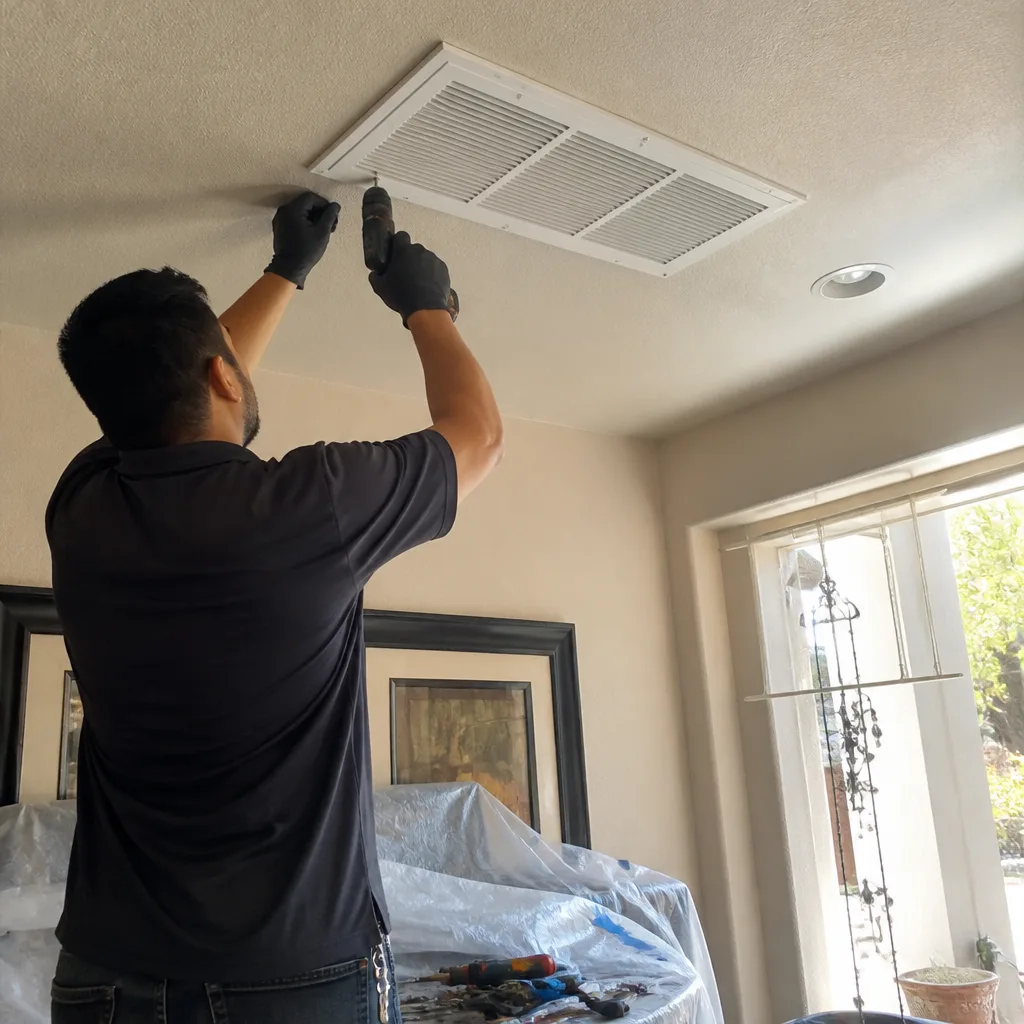
- Photograph one supply register in the room farthest from the air handler. Remove the register from the wall or floor and shoot into the opening at a 45-degree angle. This captures what is present in the supply run itself, not just what is visible on the grille.
- Store the photos in a folder labeled by date. Cloud storage albums work well because they timestamp automatically.
Six months later, compare the new photos to the old ones. The difference between a light dust film and a measurable accumulation layer is obvious side by side, and it is far more reliable than trying to remember what the boot looked like last spring. When you call for a professional assessment, these photos let a technician understand the progression of the problem before equipment ever enters the home. This is the same baseline documentation approach we use on larger commercial remediation projects.
Homeowner Tasks vs. Equipment-Access Tasks
There is a clean dividing line between what a homeowner can safely and usefully do, and what requires professional equipment and access equipment. Crossing that line without the right tools does not help the system; it just moves debris from one place to another, or worse, damages the ductwork.
Tasks a homeowner can perform:
- Replace return filters on schedule and log the loading rate.
- Vacuum the return grille face with a HEPA-filtered household vacuum.
- Wipe supply register louvers with a damp microfiber cloth (no chemicals, no water down the duct).
- Inspect and photograph the return boot and supply runs as described above.
- Clear furniture, boxes, and rugs away from return and supply openings so air moves at design rate.
Tasks that require equipment access and professional tools:
- Evaporator coil inspection and cleaning. The coil sits above or beside the furnace in most Elk Grove homes. Access requires removing cabinet panels, and cleaning demands coil-specific tools and chemicals. A plugged coil is the single biggest efficiency loss in a residential HVAC system.
- Blower wheel inspection. The blower wheel is behind the coil or in the furnace cabinet. A fouled blower wheel is a major source of airborne dust in homes with otherwise clean ducts. Inspection requires disassembly; cleaning requires a wheel puller or a long-reach agitation system.
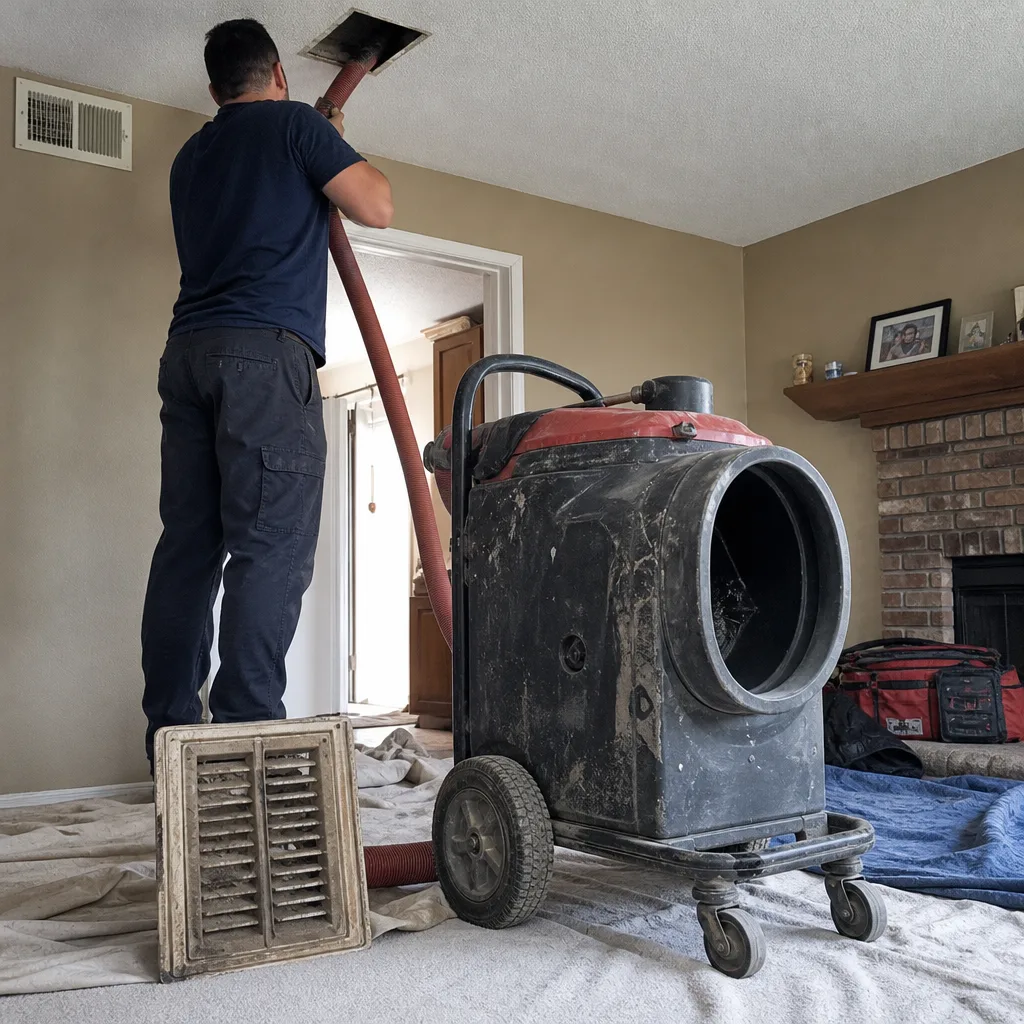
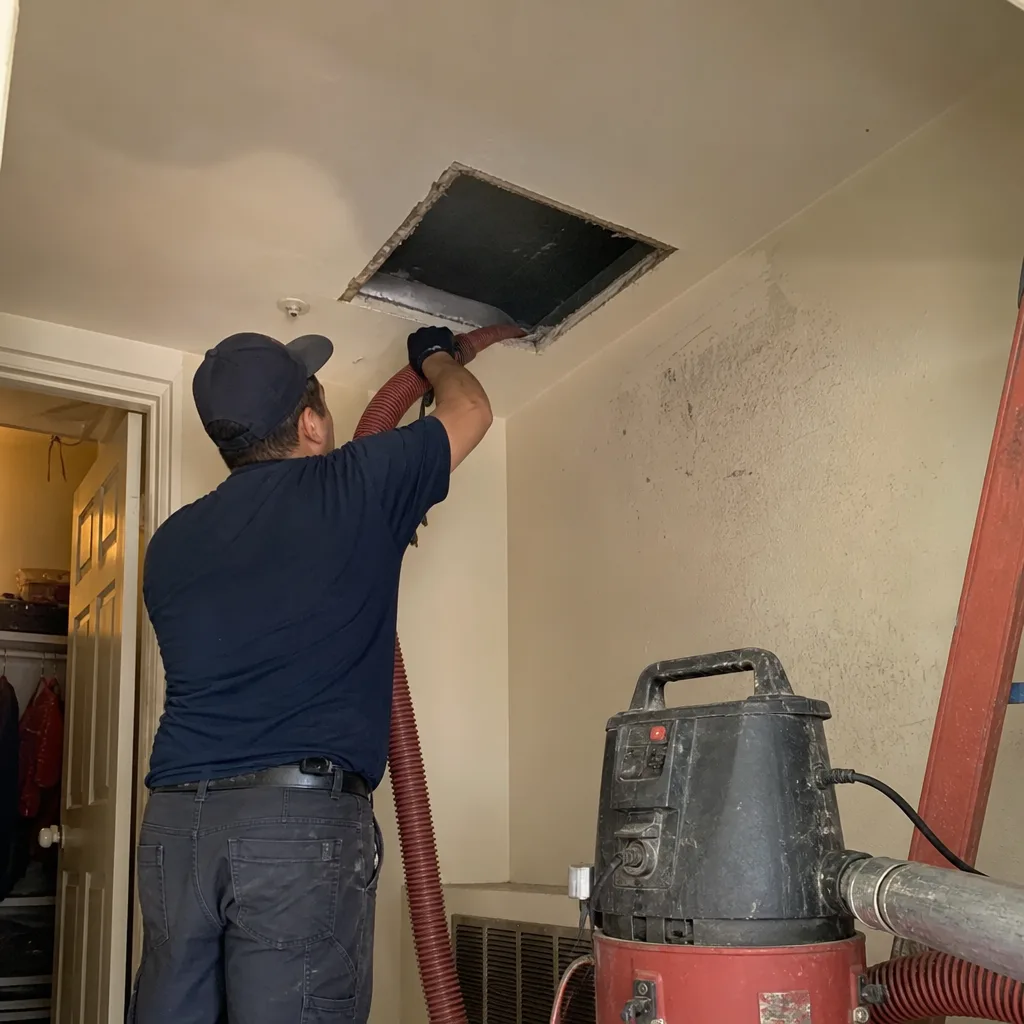
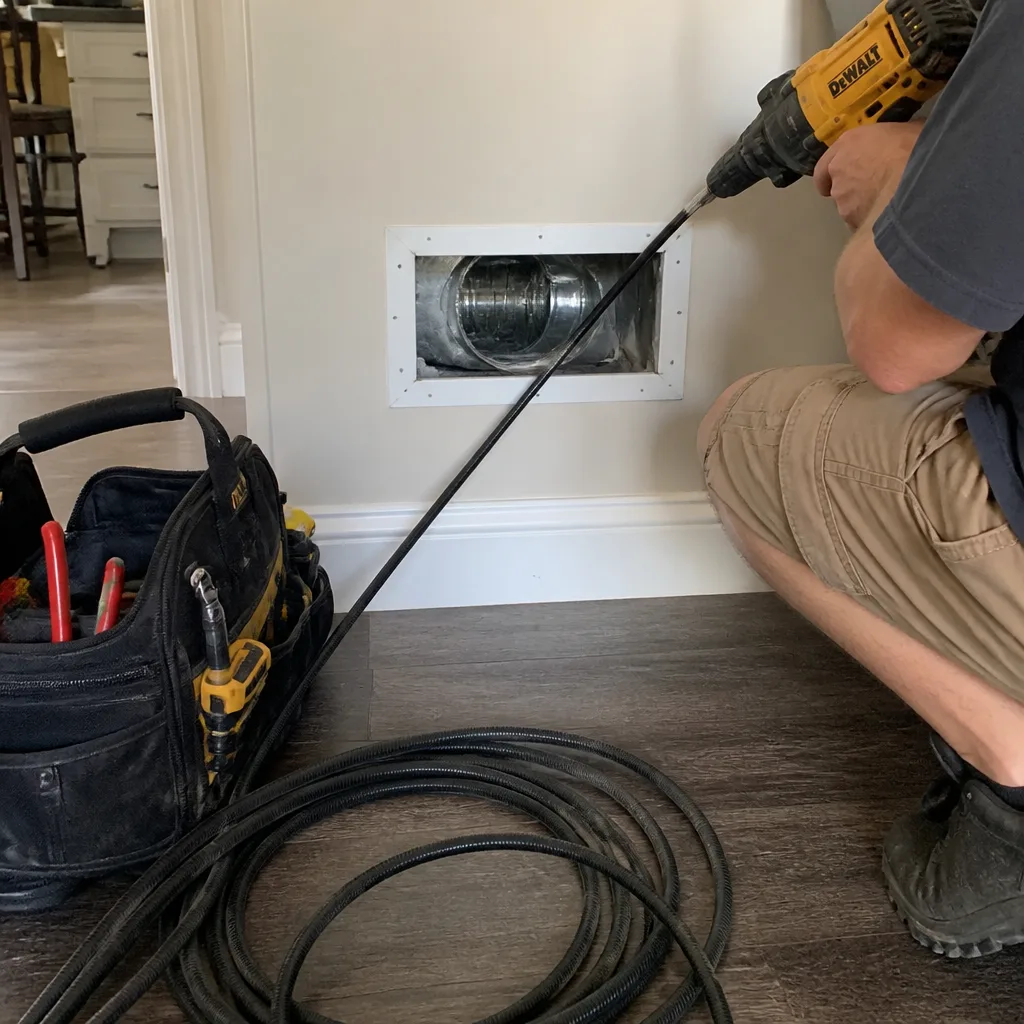
- Supply and return run cleaning. The actual ductwork requires rotary agitation and negative-air extraction. A household vacuum cannot reach beyond the first few feet of a run. We use Rotobrush rotary brush systems and Nikro HEPA vacuum units; this is a different category of tool from anything that plugs into a wall outlet at a hardware store.
- Duct repair. If your inspection reveals a disconnected return run, a collapsed inner liner, or a cracked plenum, vacuuming around the problem does not address it. The section needs to be sealed, reconnected, or replaced. That is structural work, not cleaning.
The principle is simple: if you have to disassemble a cabinet, cut access, or work in a crawlspace to reach the issue, that is a professional call. If the surface is exposed and the task is log-and-monitor, it is yours.
Dryer Vent Maintenance: A Discrete Safety Item
Dryer vent cleaning is not part of the HVAC maintenance checklist, and it should not be lumped in with it. The two systems are separate, and the maintenance triggers are different. A dryer vent is a single exhaust run from the appliance to the exterior wall cap, and its failure mode is fire risk, not air quality. The distinction matters because a homeowner who treats the dryer vent as an afterthought to the duct system is likely to schedule neither.
The maintenance interval for a dryer vent in Elk Grove depends on two variables: dryer usage frequency and the length of the run. A home where a family dries seven or eight loads per week, with a vent run longer than fifteen feet or with multiple elbows, will load lint fast. The practical checklist is:
- Check the exterior wall cap flap each month. If the flap does not fully open when the dryer runs, the run is restricted.
- Check drying time. If a standard load takes longer than one full cycle, the vent is the most likely cause. It is rarely the heating element.
- Check the lint screen cavity. If lint accumulates visibly inside the trap housing, that is the same material building up inside the vent run.
Dryer vent cleaning is a discrete, safety-focused service. It uses different tools from HVAC duct cleaning, and its value proposition is simple: a clean vent run dries clothes faster and eliminates the documented fire hazard of accumulated lint. For Elk Grove homeowners, we treat Dryer Vent Cleaning in Elk Grove as a standalone inspection item, not an add-on that gets pitched during an HVAC estimate.
The Cleaning Threshold: When the Checklist Says Call
Every maintenance checklist needs an exit condition. The goal is not to clean ductwork on a ritual schedule. The goal is to know when the evidence says the system has crossed the line where cleaning actually changes something. In our experience across Elk Grove homes, the threshold is usually reached when two or more of these conditions exist at the same time:
- Return boot shows visible accumulation that was not present in the previous documentation photo.
- Filter loading rate has changed meaningfully: under 30 days during mild weather, or a sharp shift from the prior season.
- Post-summer supply register inspection reveals a dark, greasy ring on the louvers, not just light dust.
- One or more rooms consistently underperform on airflow, despite an open damper and a clean filter.
- Musty odor on startup persists for more than the first minute of operation.
When two of these align, the evidence is consistent. The debris has reached the equipment components, and continued operation is redistributing it through the home. At that point, the most useful maintenance action is a professional air duct cleaning for your Duct Cleaning Elk Grove home, performed with contractor-grade extraction equipment, not repurposed shop tools.
Common Mistakes to Avoid
- Cleaning the grille face but never opening the boot. The grille face is the cosmetic layer. The boot behind it is where accumulation actually occurs. Wiping the face and calling it maintenance is like washing a car’s exterior and ignoring the air filter cavity.
- Using a filter with too low a MERV rating because it is cheaper. In Elk Grove’s pollen and smoke seasons, a low-MERV filter passes nearly everything to the coil. The money saved on filters is paid back in coil fouling and reduced airflow.
- Running the system without a filter during renovations. Drywall dust and construction debris in a residential duct system is one of the most common sources of supply-side contamination we see in Elk Grove homes that were renovated. The cost to clean the system afterward far exceeds the cost of a temporary filter during the work.
- Treating the dryer vent as part of the HVAC schedule. The two systems have different maintenance triggers and different failure modes. Bundling them into one mental category leads to both being neglected.
- Accessing the coil with household tools. The evaporator coil fins are fragile. Bending them reduces airflow and efficiency. The right cleaning approach uses coil-specific chemical and rinsing equipment, not a wire brush and a shop vacuum.
- Assuming a clean filter means a clean system. The filter catches particles on the return side. It does not touch the supply side. A clean filter tells you nothing about the blower wheel, the coil, or the supply runs.
- Setting a cleaning schedule in the calendar instead of against evidence. Cleaning every three years by default, or every five years by default, ignores the actual condition of the system. Use the documentation protocol above and let the evidence set the schedule.
See the difference
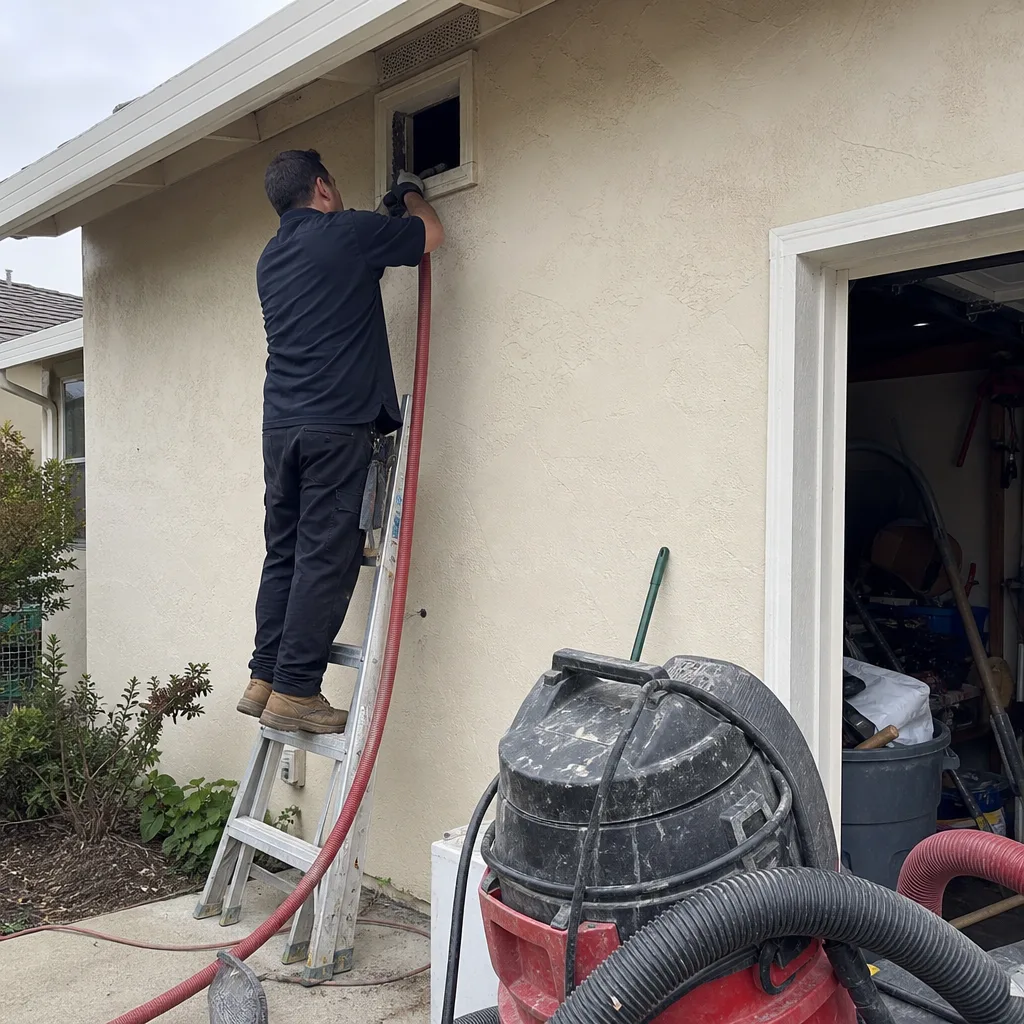 Before
 After
 Before
 After
 Before
 After
When to Call a Professional
Call when the checklist says you are past monitoring and into intervention: a loaded return boot, a filter that loads in under 30 days during mild weather, a dark supply-register ring after smoke season, or musty startup odor that persists. These conditions are not resolved by a different filter or a household vacuum. They require rotary agitation, negative-air extraction, and equipment access. If your documentation photos show clear progression, that is the call trigger. Duct Cleaning Elk Grove offers free estimates in Elk Grove – call (866) 705-7671 to schedule an assessment. Bring your photo record to the conversation; it makes the diagnostic faster and more precise.
Frequently Asked Questions
There is no fixed interval that fits every home. The evidence-based approach is to inspect and document the return boot, filter loading rate, and supply registers seasonally, and to schedule cleaning when two or more threshold indicators appear. In practice, Elk Grove homes with pets, smokers, or post-renovation dust often need a first professional cleaning sooner than the generic five-to-seven-year guidance, while a meticulously maintained home with a sealed system may go longer. The condition of the system, not the calendar, sets the schedule.
Ask for photographic evidence. A professional duct cleaning company should be able to show you before-and-after images of the return boot, the supply plenum, the coil, and the blower wheel. We use camera inspection before and after every cleaning so the homeowner can see the specific surfaces that were addressed. If a company cannot show you the inside of the ducts before and after, the work cannot be verified. That applies to any Air Duct Cleaning in Elk Grove you hire.
The price difference is almost always equipment. A company using a portable vacuum and a basic brush cannot reach the full length of a supply run or agitate debris adhered to the coil and blower wheel. They are cleaning the first few feet of accessible duct, which is why the price is lower. A professional system using rotary brush agitation (we run Rotobrush) and negative-air extraction (Nikro HEPA units) reaches the full run and captures material at the source. If a quote is dramatically below the market range for Elk Grove, ask what equipment will be used and whether the coil and blower are included. That answer usually explains the number.
They are two separate systems with separate tools and separate goals. Air duct cleaning addresses the HVAC supply and return network, the coil, and the blower wheel, and its goal is indoor air quality, airflow, and equipment efficiency. Dryer vent cleaning addresses the single exhaust run from the dryer to the exterior wall cap, and its goal is fire prevention and drying efficiency. A lint-loaded dryer vent and a debris-loaded supply plenum are unrelated conditions that happen to share a house. We perform Dryer Vent Cleaning in Elk Grove as a discrete safety service, not as a bundle item.
You can vacuum the return grille face and the first visible inches of the boot, and that is genuinely useful maintenance. You cannot clean the supply runs, the coil, or the blower wheel with a household vacuum. Those components are beyond the reach of consumer equipment, and the coil in particular requires access disassembly and chemical cleaning that risks damage if done without the right tools. What a homeowner can do is document conditions and keep the system loading at its normal rate. What requires professional equipment is the rest.
Cleaning cannot fix a disconnected return run, a collapsed inner liner, or an unsealed plenum. Those are structural conditions that will continue to pull debris, lose conditioned air, and undermine the entire system regardless of how often it is cleaned. If your inspection reveals a gap, a tear, or a visible disconnection, the first call should be about repair, not cleaning. We perform Air Duct Repair in Elk Grove, including sealing, reconnecting, and patching damaged sections. A repaired, sealed system is the only kind that stays clean.
The Bottom Line
The maintenance checklist that actually matters for an Elk Grove home is not a list of chores. It is a diagnostic routine: track filter loading, inspect the return boot, document supply registers, and watch for seasonal residues from smoke and condensation. When the evidence shows accumulation progressing, call a professional. We perform air duct cleaning with contractor-grade Abatement Technologies containment, Rotobrush agitation, and Nikro extraction equipment; that is the difference between a cosmetic pass and a measurable improvement. Keep the checklist, keep the photos, and call (866) 705-7671 when the threshold is crossed. A free estimate in Elk Grove is the only cost of finding out.
Written by the team at Duct Cleaning Elk Grove, serving Elk Grove since 2013.