
Last updated November 2, 2026
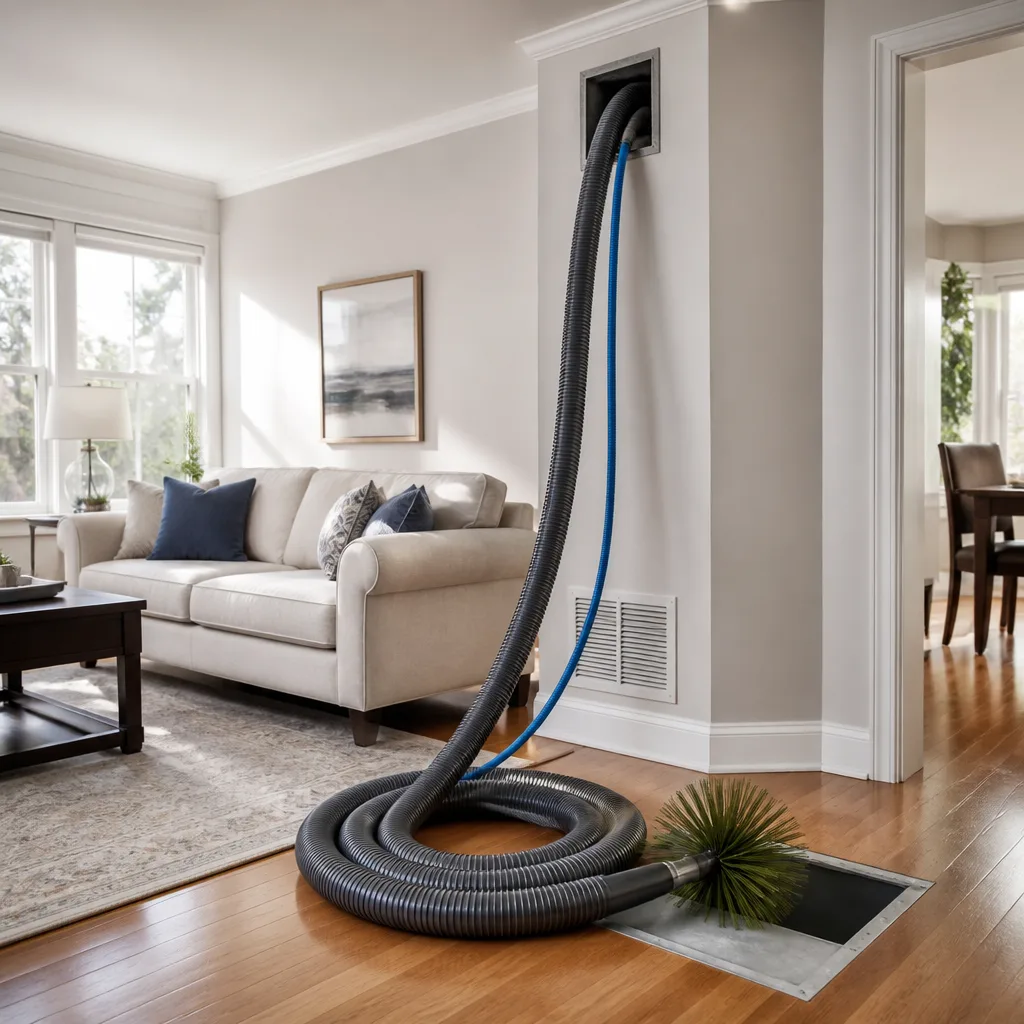 Whole-home duct cleaning
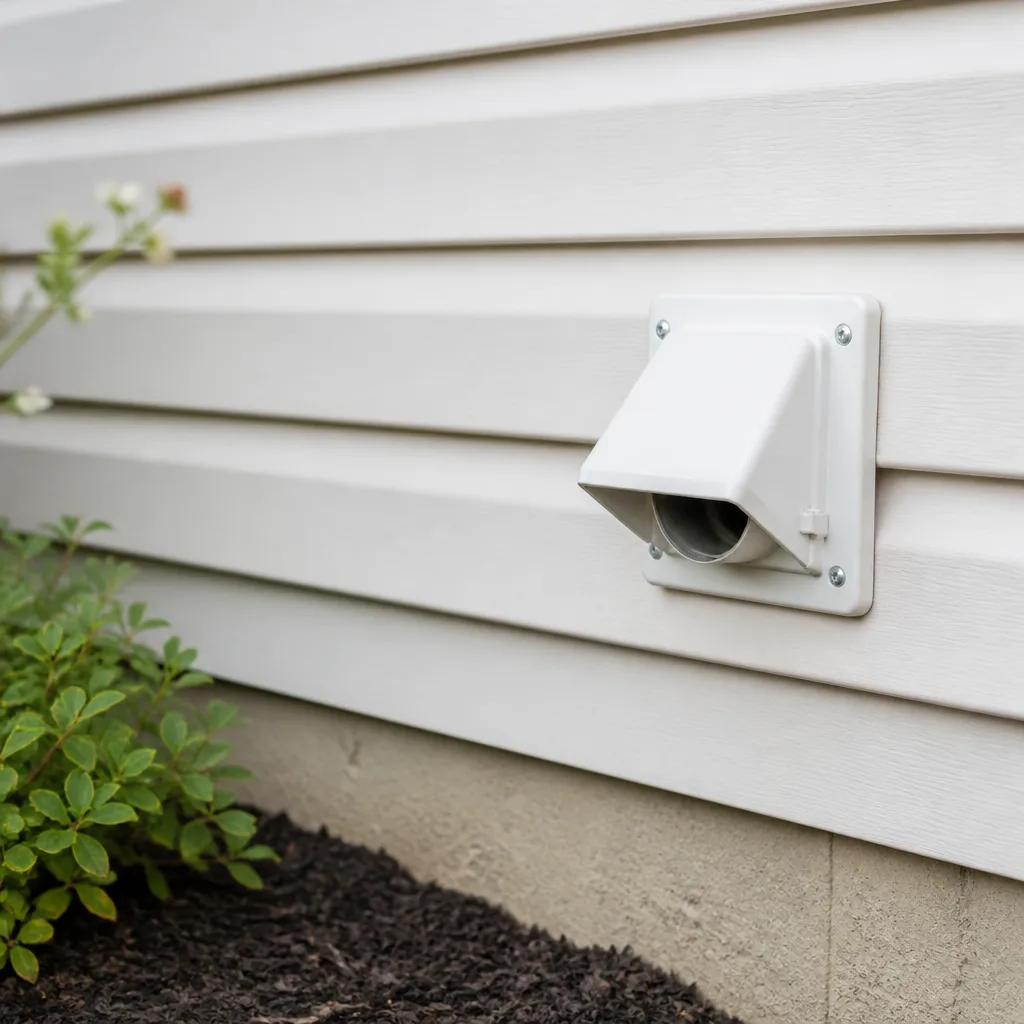 Dryer vent cleaning
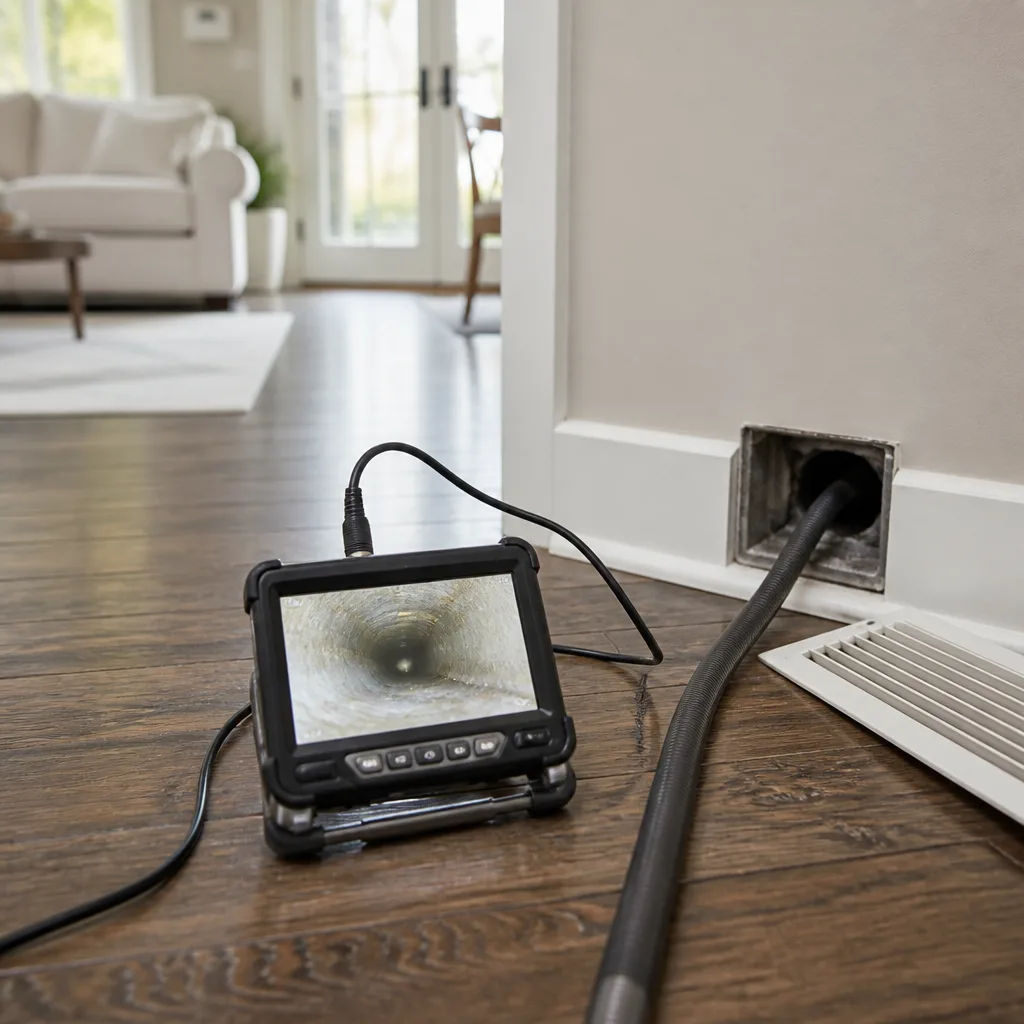 Camera inspection
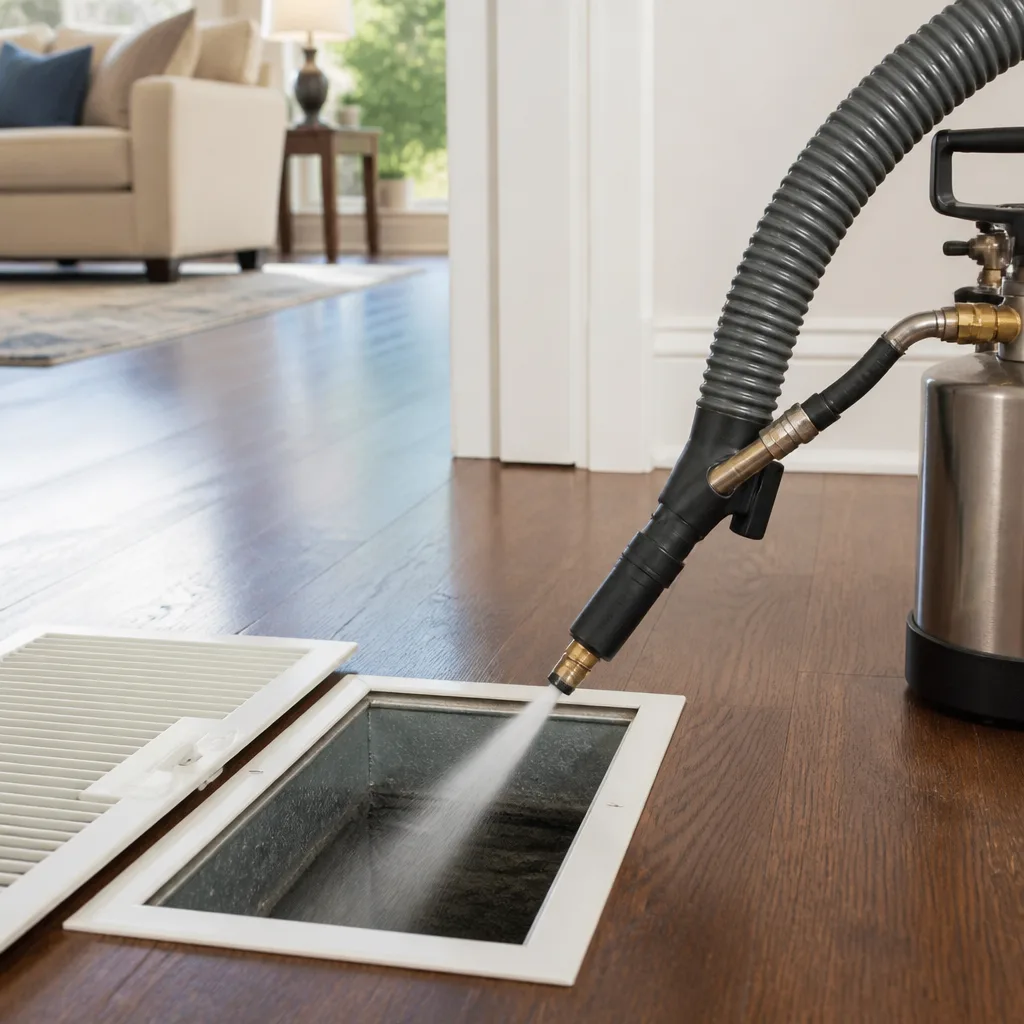 Sanitizing & deodorizing
Whole-system duct and dryer vent check with before-and-after photos - you see exactly what came out of your vents
That "$99 whole-house special" is a bait ad - the real number appears once they are in your hallway, or the "clean" is a shop-vac at the register. We photograph the inside of your ducts before and after instead.
How to Hire an Air Duct Cleaning Contractor in Elk Grove: A Step-by-Step Guide
California does not require a license to clean air ducts. No state exam, no mandated apprenticeship, no proof of equipment. Anyone with a van and a vacuum can print business cards today and call themselves a duct cleaner in Elk Grove. That single fact explains why this trade has such a wide gap between operators who do the job correctly and operators who simply show up. This guide walks you through exactly how to separate the two before you book, using the same questions a technical inspector would ask.
Styles & brands we work with
- Whole-home duct cleaning
- Dryer vent cleaning
- Camera inspection
- Sanitizing & deodorizing
Quick Answer
To hire an air duct cleaning contractor in Elk Grove, verify their equipment type (rotary brush systems with HEPA filtration, not shop-vacs), ask for a defined scope of work before they arrive, confirm they follow NADCA process standards, and reject any flat-rate quote that was given without a site assessment. Learn more about our Air Duct Cleaning services. A legitimate operator will give you a square-footage scope, access-point count, and post-job documentation without being pressed.
Table of Contents
- Why No License Means You Are the Screening Process
- The Three Equipment Questions to Ask Before Price
- What NADCA Membership Actually Signals
- How to Request a Pre-Job Scope
- Red Flags in the Quote Itself
- Post-Job Documentation a Legitimate Operator Provides
- What Elk Grove Homes Specifically Require
- Common Mistakes to Avoid
- When to Call a Professional
- Frequently Asked Questions
- The Bottom Line
Why No License Means You Are the Screening Process
Most home service trades in California, from plumbing to electrical, require a contractor’s license through the Contractors State License Board. Air duct cleaning does not. It falls into an unregulated gray zone, which means the burden falls entirely on the homeowner to determine whether the person on the other end of the phone actually knows what a duct system is. In Elk Grove, where homes range from early-90s builds in Laguna Creek to newer construction in Madeira East, duct layouts vary meaningfully. An operator who has never seen a particular floor plan can still do acceptable work, but only if their process accounts for that variance. Most don’t.
What you’re really hiring when you hire a duct cleaner is a process. The good operators have a system that can be described, step by step, before the job starts. The bad ones describe outcomes: “We’ll make your air cleaner.” That’s not a process. That’s an aspiration. When you interview contractors, listen for whether they can tell you how they’ll access each run, what they’ll do at each register, and what equipment they’ll use to capture debris. If they can’t answer those questions on the phone, they won’t answer them better on site.
Our team at Duct Cleaning Elk Grove home has cleaned systems in Elk Grove since 2013, and the homes that need the most corrective work are consistently the ones where a prior “cleaning” was done with equipment never designed for ductwork. The cleaning was cosmetic at best, and in some cases it dislodged debris into the airstream without capturing it.
The Three Equipment Questions to Ask Before Price
These questions do more screening than any online review. Ask them in this order, and don’t let the conversation drift to pricing until you get answers.
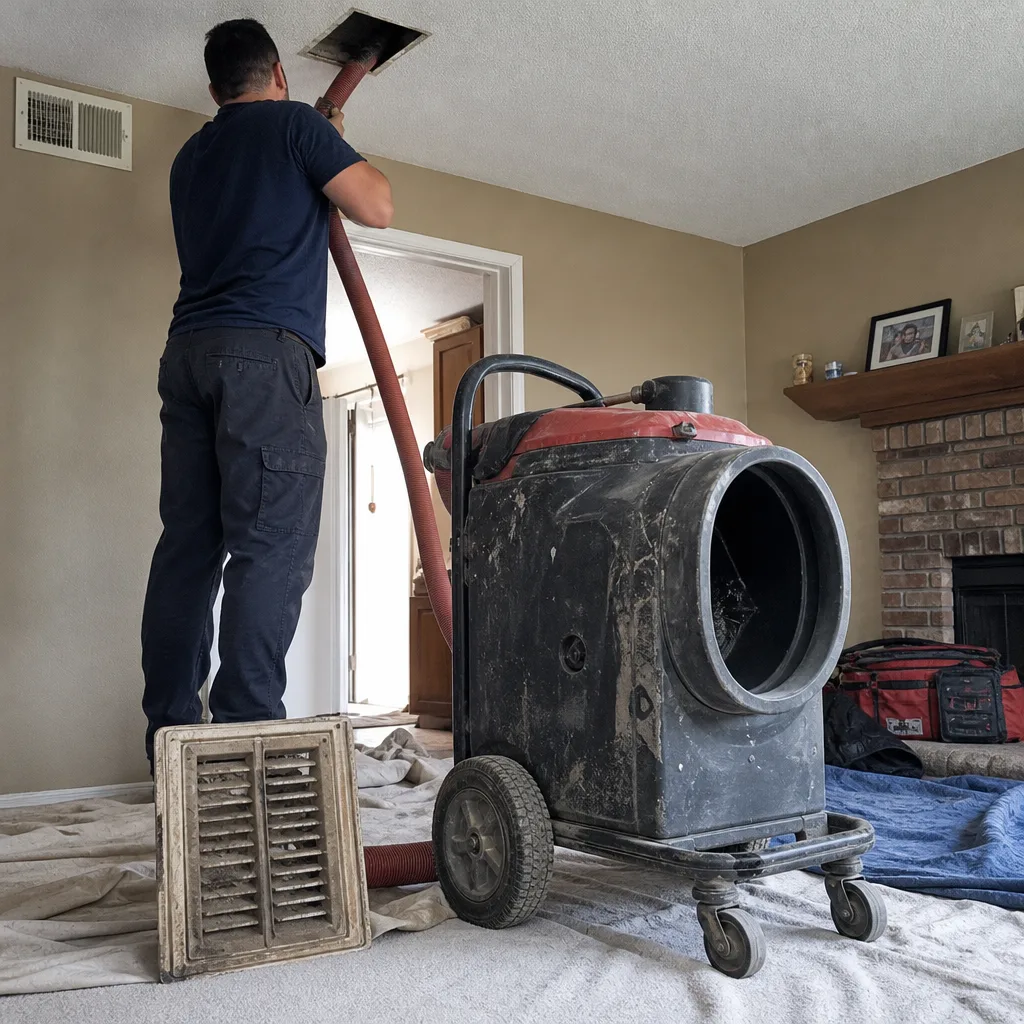
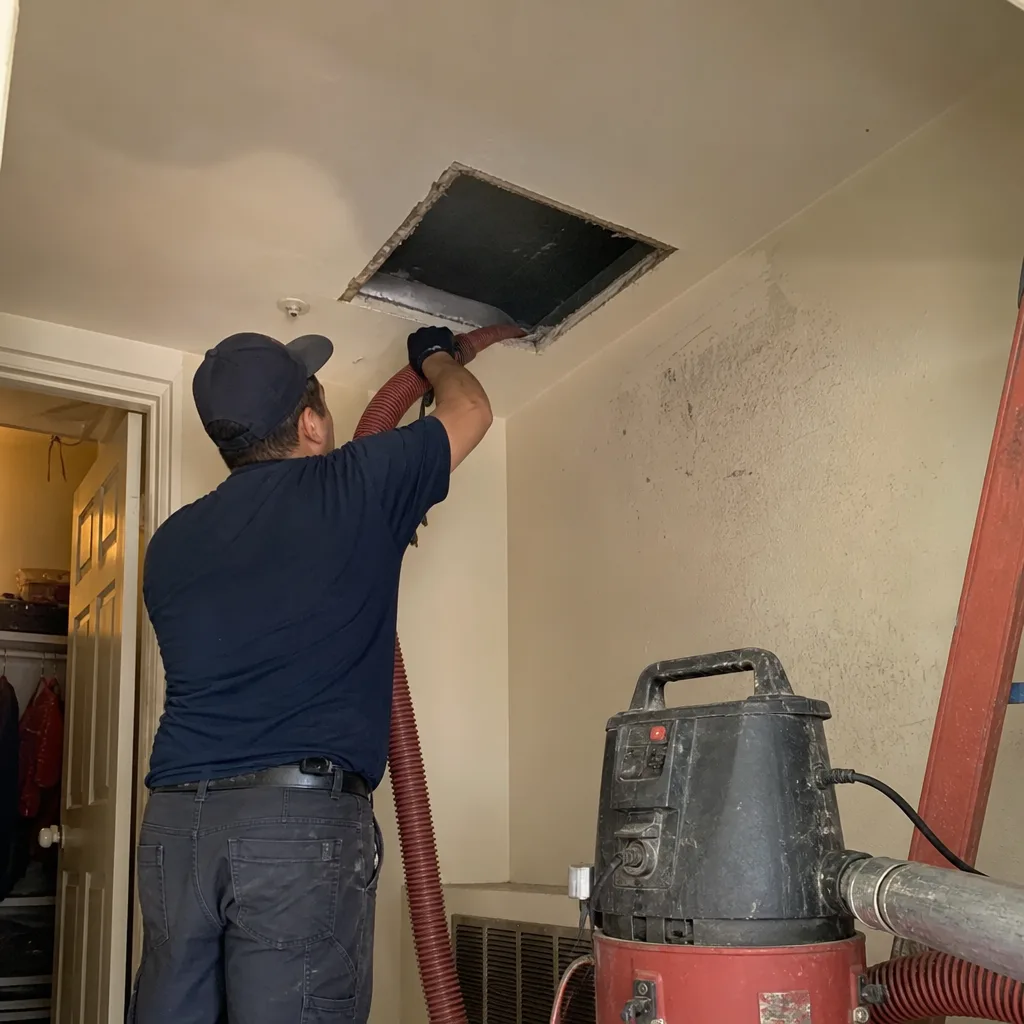
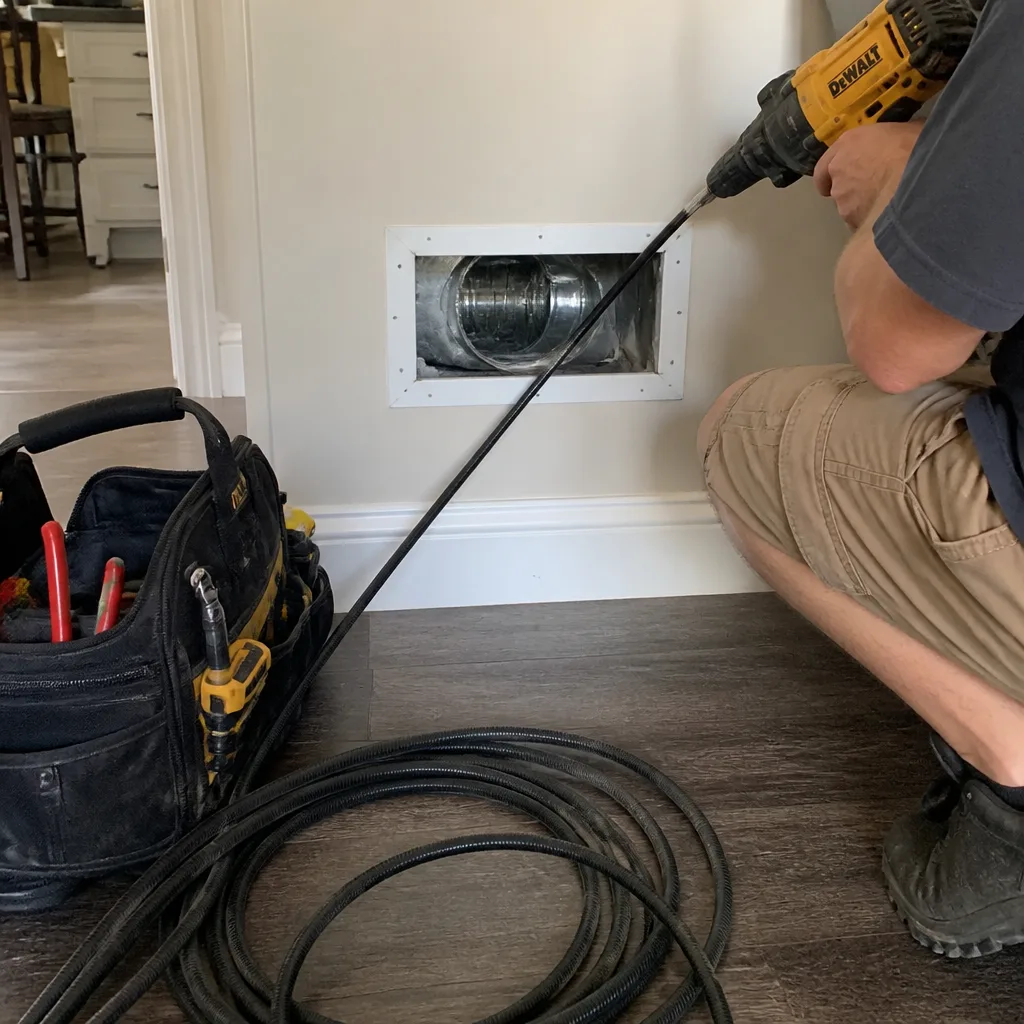
- “What kind of agitation system do you use inside the duct?” The correct answer involves a rotary brush or cable-driven agitation head sized to the duct. A proper rotary brush system, like the Rotobrush units we run, physically contacts the duct walls and mechanically loosens the debris that’s adhered to surfaces. The wrong answer is “a brush on a pole” or any variation of “we use air pressure alone.” Air alone does not remove the film that builds up in return drops in Elk Grove homes where the cooling season runs long. You want mechanical agitation followed by extraction.
- “What captures the debris you dislodge?” The correct answer names a HEPA-filtered negative-air vacuum that connects to the duct and pulls air through the system while the agitation happens. We run Nikro HEPA filtration units because they capture particulates at the point of extraction. The wrong answer is “our truck-mounted vacuum” with no mention of HEPA filtration. A truck vacuum without HEPA filtration pulls and exhausts air back out near your home or into the living space, redistributing fine particulates instead of capturing them. Ask specifically: “Does your vacuum exhaust air through a HEPA filter?”
- “How do you contain the work area while cleaning?” The correct answer mentions negative-air containment or a containment barrier at the access point. In our process, Abatement Technologies negative-air equipment maintains the duct system under negative pressure for the duration of the job, so anything that gets dislodged is drawn back toward the vacuum rather than escaping into your living room. The wrong answer is “we lay down drop cloths.” Drop cloths protect floors. They do nothing for airborne particulates.
If a contractor stumbles on question two or three, that’s your answer. You don’t need to be impolite about it. Just note it and move on. The cost difference between a properly equipped operator and an underprepared one in the Elk Grove market is smaller than most people assume. But the work-product difference is substantial.
What NADCA Membership Actually Signals
NADCA, the National Air Duct Cleaners Association, is the only meaningful credentialing body in this trade. Membership is not a government license, and it doesn’t function like one. What it does is establish a written standard of process, called the ACR (Assessment, Cleaning, and Restoration) standard, that member companies agree to follow. It also requires members to carry general liability insurance and to have at least one certified Air Systems Cleaning Specialist (ASCS) on staff.
Think of NADCA membership as a floor, not a ceiling. It means the operator has committed to a documented process and has someone on the team who passed a technical exam covering duct system design, contamination sources, and proper cleaning methods. It does not mean every NADCA member does exceptional work. It does mean a non-member likely hasn’t been tested on anything at all.
In Elk Grove, where the contractor market is crowded with general cleaning companies that added “air duct” to their menu, NADCA membership filters out a significant percentage of operators immediately. When you ask about it, don’t accept “we follow NADCA guidelines” as an answer. Ask: “Are you a NADCA member, and who on your crew holds the ASCS certification?” A yes to both is what you want to hear. We hold NADCA membership and our cleaning leads carry ASCS certification because the difference between a process-driven cleaning and an improvised one is measurable in the equipment the operator brings and the documentation they leave behind.
How to Request a Pre-Job Scope
A legitimate duct cleaning quote is a scope of work, not a dollar figure. If the quote arrives as a single number with no breakdown, the contractor hasn’t done the assessment required to do the job correctly. When you call to request service, ask the contractor to provide the following before anyone schedules a truck:
- Square footage of duct runs: They should be able to estimate the linear footage of supply and return ductwork from your home’s conditioned square footage and design type. An estimate is fine, but they need to articulate the basis for it.
- Number of supply and return boots: Every register in your home corresponds to a boot, and each boot is an access point or a connection point. An operator who can’t tell you how many registers you have, or who doesn’t ask, is not doing a real scope.
- Access point locations: They should identify where they’ll cut access into the plenum or trunk line, or where they’ll connect through an existing opening. Every cleaning requires either an existing access or a created one, and you should know where that cut will happen and how it will be sealed afterward.
- Containment method: The scope should state the negative-air or containment approach in writing. If it’s not in the scope, it may not be in the job.
- Duration estimate: A correctly cleaned system, done to NADCA standards, takes time. A typical 2,000-square-foot Elk Grove home with 10 to 14 registers is a 3-to-5-hour job, not a 45-minute breeze-through. A scope that implies the job will be done in under an hour should tell you the operator is not doing the full process.
This is the stage where the difference between a $99 coupon operator and a specialist becomes obvious. The coupon operator won’t ask how many returns you have because they don’t plan to clean all of them. They’ll set a timer instead.
Red Flags in the Quote Itself
Quotes reveal more about a contractor than any marketing material. Here’s what to look for when the number arrives.
Flat-rate pricing with no site assessment. If a contractor quotes you $299 over the phone without asking about the size of your home, the configuration of your system, or the accessibility of your furnace, the quote is a marketing number, not a work estimate. Elk Grove homes vary from 1,100-square-foot condos off Elk Grove Boulevard to 4,500-square-foot estates in Stone Lake. A single price can’t serve all of them honestly.
Add-on fees for “mold treatment” before any testing. This is the most common upsell in the duct cleaning trade. The operator quotes a low cleaning price, then “discovers” mold during the job and offers to treat it for an additional large fee. Mold treatment falls outside the scope of standard duct cleaning, and no legitimate operator will recommend treatment without lab testing identifying what the substance actually is. If the contractor is offering a mold treatment add-on as if it’s routine, you’re looking at a business model built on fear. Our scope is limited to cleaning, dryer vent service, and structural repair, so testing and remediation of biological material falls outside what we perform, and we’ll tell you that directly rather than invent a treatment for you.
Pricing per vent. Per-vent pricing encourages corner-cutting. The operator profits most when fewer vents are actually cleaned, and they’re incentivized to rush each one. Per-system pricing is more transparent and better aligned with thorough work. If a contractor prices by the vent, ask for a system total for every vent in the home, not a subset.
Teaser pricing with no equipment specifics. If the low price can’t be explained in terms of agitation method, filtration, and containment, it exists to get the van into your driveway. Once the van is there, the invoice will grow. Legitimate operators in Elk Grove know what their equipment costs to run and price accordingly. They’re not ashamed of the number because they can explain the process behind it.
Post-Job Documentation a Legitimate Operator Provides
You shouldn’t have to ask for proof that the work was done. A contractor who does the job correctly documents it as a matter of process. After we finish an air duct cleaning in Elk Grove, our clients receive a job report. But here’s what any legitimate operator should provide without being asked:
- Before and after photos of the duct interior. Every access point provides a camera opportunity. A contractor with a flexible inspection camera can show you the trunk line before cleaning and the same section after. No photos means either the operator didn’t have a camera or didn’t want you to see the interior.
- A register-by-register service record. A simple list of the number of supply registers, return grilles, and access points cleaned, with notations for any anomalies found.
- Notes on duct condition. A legitimate cleaning will expose structural issues: disconnected sections, crushed flex runs, gaps in the plenum. The report should note these with recommendations. We regularly find duct separations in Elk Grove attics where summer heat has degraded tape and mastic, and when we do, the customer gets a written note on it. That’s where our air duct repair in Elk Grove capability matters: the same crew that found the problem can fix it before reconnecting the system.
- Filter condition documentation. A photo or note on the state of the air filter at the time of service, with a recommendation for replacement interval based on what was found.
What Elk Grove Homes Specifically Require
Elk Grove’s climate and housing stock create specific conditions that affect how duct systems should be cleaned here. The Central Valley heat means the cooling season runs from roughly May through October, and the system cycles constantly during that period. That constant cycling moves more air, and more air means more particulate matter deposited on duct surfaces. A duct system in Elk Grove accumulates more airborne material during a single summer than a coastal California system accumulates in two full years.
The region’s agricultural surroundings contribute as well. Pollen from the surrounding farmland, dust from the Delta breeze, and particulate matter that settles in the region create a heavier loading profile than suburban areas more removed from agriculture. These fine particulates are exactly what a HEPA-filtered extraction system is designed to capture, and exactly what a shop-vac setup will blow back into your living space.
Housing age adds another variable. The older neighborhoods along Elk Grove-Florin Road were built in the 80s and 90s and often still have original flex duct. That duct degrades over time, particularly in attic spaces that reach extreme temperatures every summer. The newer developments in the Laguna Ridge area and east toward Grant Line Road generally have more modern systems, but higher-performance insulation means these homes hold more of what gets into the air inside them.
None of this means every home needs the same cleaning approach. But it does mean the operator you hire should understand these factors. A company that works primarily in Sacramento or Roseville may not be familiar with the specific micro-climate conditions of the Elk Grove area, and their process may not account for the heavier particulate loading our systems carry. Asking “how many homes have you cleaned in Elk Grove?” is a perfectly reasonable screening question.
Common Mistakes to Avoid
- Assuming a coupon means savings. A $99 whole-house special isn’t a deal; it’s a business model built on either upselling you later or underdelivering now. In Elk Grove’s market, a legitimate whole-system cleaning on a 2,000-square-foot home costs more than a dinner at a steakhouse, and for good reason: real equipment, real time, real documentation.
- Hiring without asking about filtration. The most important component of a duct cleaning is not the agitation. It’s the capture. If the vacuum system doesn’t have HEPA filtration, the cleaning process itself becomes a distribution event for fine particulates.
- Letting the contractor skip the return side. Returns are the negative-pressure side of your system, the side where air is being pulled in from your living space. That means returns collect more loose dust than supply runs do. A contractor who doesn’t clean the return side thoroughly isn’t doing the job. Ask specifically how they’ll access the return trunk and drops.
- Assuming a clean filter means clean ducts. The air filter protects the HVAC equipment, not the duct surfaces. The filter sits at the equipment and captures particles passing through it; the duct walls accumulate material that settles out of the airstream before it reaches the filter. You can have a brand-new filter and heavily contaminated duct interiors.
- Accepting a quote without a site visit or a detailed phone scope. If the contractor hasn’t asked about your home’s specifics, they haven’t created a scope. A number without a scope is a guess, and in Elk Grove, guesses cost money.
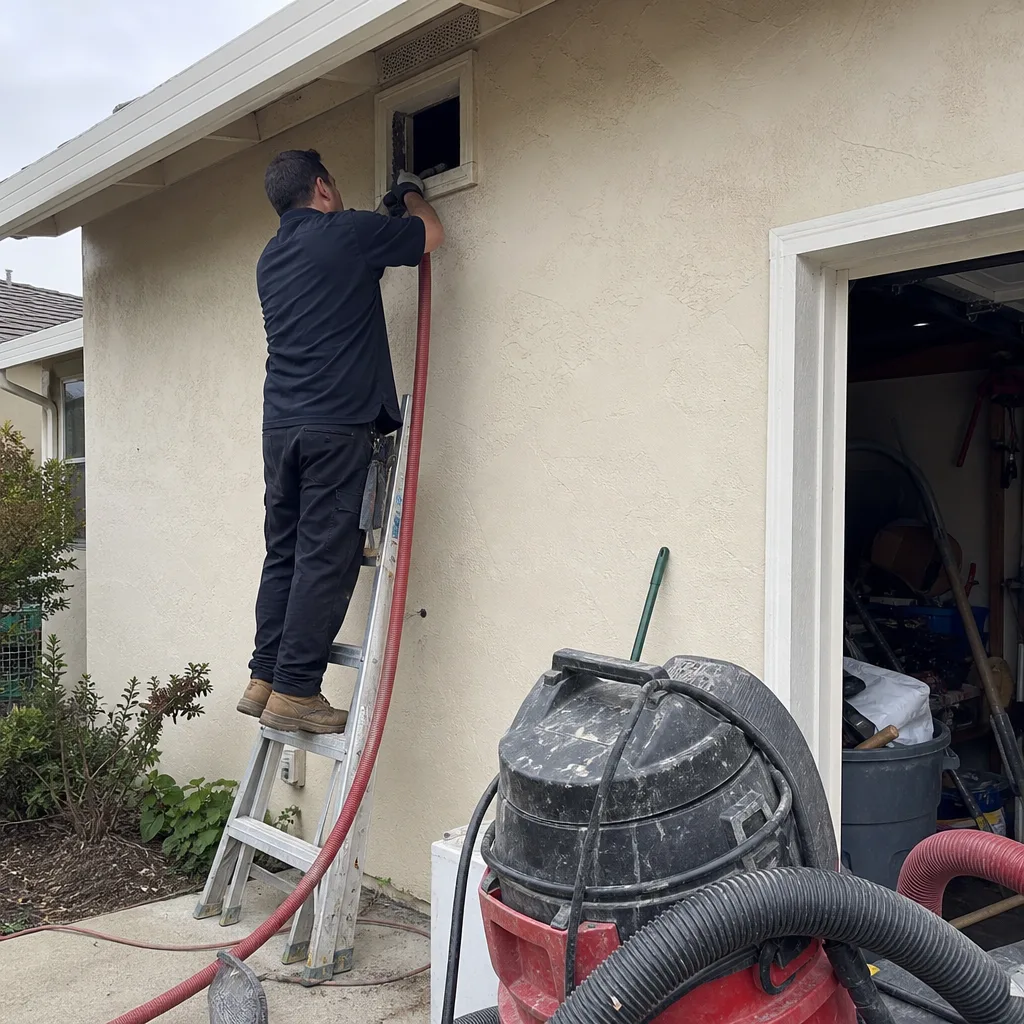
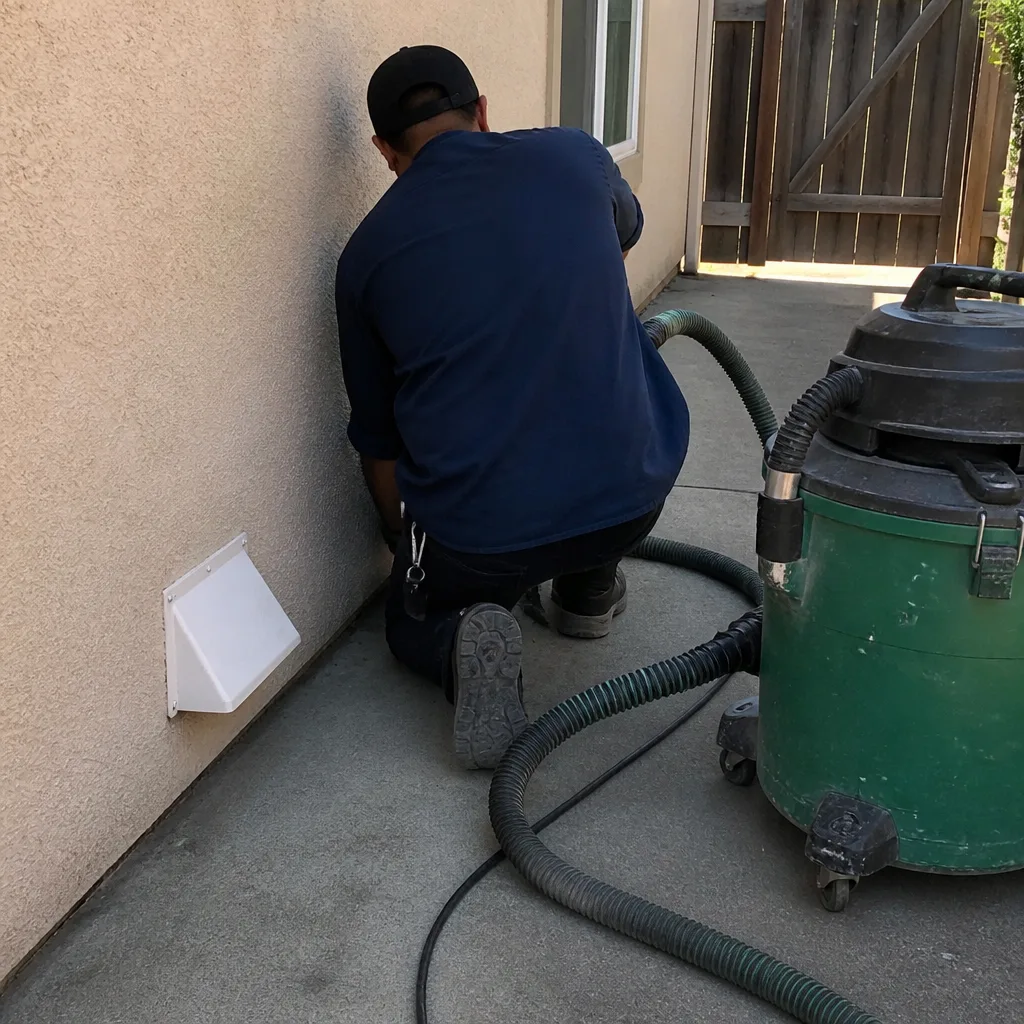
- Treating dryer vent cleaning as optional. Many homeowners bundle dryer vent cleaning with duct cleaning as an afterthought. It’s actually a separate, safety-focused service with its own importance. Lint accumulation in dryer vents is a documented fire risk, and Elk Grove’s dry, warm air makes lint flammable. We perform dryer vent cleaning in Elk Grove as a discrete service because the hazard profile is distinct from HVAC air quality.
- Choosing a contractor who can’t clean around your IAQ investment. If you’ve invested in a Honeywell or Aprilaire whole-home air quality system, you need a cleaning contractor who’s certified to work around that equipment without damaging it. Not every company is. Ask directly.
When to Call a Professional
Visible dust accumulating on registers within days of cleaning, a musty odor when the system cycles on, uneven airflow between rooms, or a resident with allergies that worsen at home are all signals that the duct system needs assessment. These symptoms point to accumulation inside the ducts, not just dusty surfaces elsewhere in your home. If you’ve never had the system cleaned and your home in Elk Grove is more than five years old, an assessment is reasonable even without dramatic symptoms, particularly given the Valley’s particulate loads. Duct Cleaning Elk Grove offers free estimates in Elk Grove. Call (866) 705-7671 to talk through what you’re seeing and get an honest read on whether a cleaning is warranted.
Frequently Asked Questions
For a standard single-system home in Elk Grove, typically 1,500 to 2,800 square feet, expect a legitimate whole-system cleaning to run between $350 and $650 depending on the number of registers, the accessibility of the furnace, and the degree of contamination. Homes with multiple HVAC systems, extensive return runs, or significant duct repair needs can exceed that. The low-end $99 to $149 offers you see advertised are not performing the same work as a NADCA-standard cleaning. They’re not cleaning the full system, they’re not containing debris, and they’re not leaving you documentation. For an exact quote on your system, call (866) 705-7671. Estimates are free.
The price difference is equipment, time, and process. Some operators run a crew through a home in 45 minutes with a portable vacuum and a basic brush. Others spend three to five hours running a rotary brush system through every run, extracting with HEPA filtration, and containing the work area under negative pressure. The cheaper quote is cheaper because less work is being done. The business model typically relies on knocking out as many jobs per day as possible rather than cleaning thoroughly. When the cheap quote comes from a coupon, there’s usually an upsell conversation waiting on the other end of it. Our Air Duct Cleaning Cost Breakdown: The Elk Grove Homeowner’s Reference for 2026 explains what drives honest pricing.
Request before-and-after photos of the duct interior at the access points. A legitimate operator uses an inspection camera and includes those photos in the job report without being asked. Also ask for a register-by-register service list. If the contractor can’t show you the interior of your ducts before and after the cleaning, you have no way to verify anything happened. Our process includes documentation as a default, not a request.
For most Elk Grove homes, every 3 to 5 years is a reasonable interval. Factors that shorten that window include pets that shed heavily, recent remodeling (drywall dust gets everywhere), smokers in the home, and the agricultural particulates that load the air in this part of the Valley. If you run your HVAC system heavily through the long cooling season, that interval moves toward the shorter end. Ask your technician what they found and let that data, not a calendar, drive the next scheduling. See our Seasonal Air Duct Cleaning Care for Elk Grove: Year-Round Homeowner’s Guide for timing strategies.
That depends on what’s actually in your ducts. At minimum, a cleaning removes accumulated debris that degrades HVAC airflow and forces your system to work harder than it needs to. Over time, that debris also contributes to wear on the blower components. You may not notice a dramatic air quality difference if no one in your household has respiratory sensitivities, but the mechanical benefit of a clean duct system is real. What we would caution against is paying for a cheap cleaning that doesn’t actually remove anything. That is not worth it at any price.
Yes. Our crews are certified to work with and around Honeywell and Aprilaire whole-home air quality equipment, including electronic air cleaners and media cabinets. That certification matters because cleaning a duct system connected to this equipment requires specific containment steps to avoid pulling dislodged debris into the IAQ system itself. We run containment equipment from Abatement Technologies and Guardsman filtration at the connection points to protect this investment. If another contractor can’t name the air quality system in your home or explain how they’ll protect it during cleaning, that’s a screening red flag.
The Bottom Line
Hiring a duct cleaner in Elk Grove is an exercise in process verification, not price comparison. The state won’t screen contractors for you, the coupon mailer won’t tell you what’s being skipped, and the 45-minute job won’t clean what a full-scope cleaning will. Ask about rotary brush agitation, HEPA filtration, and negative-air containment. Get a written scope before scheduling. Require documentation after the job. In our experience cleaning Elk Grove homes since 2013, the homeowners who ask these questions get dramatically better outcomes than the ones who simply call the first number on a flyer. The questions take five minutes. The difference is measurable in the ductwork itself. Browse more guides & resources to keep your system maintained.
Written by the team at Duct Cleaning Elk Grove, serving Elk Grove since 2013.
See the difference
 Before
 After
 Before
 After
 Before
 After