
Last updated November 2, 2026
 Whole-home duct cleaning
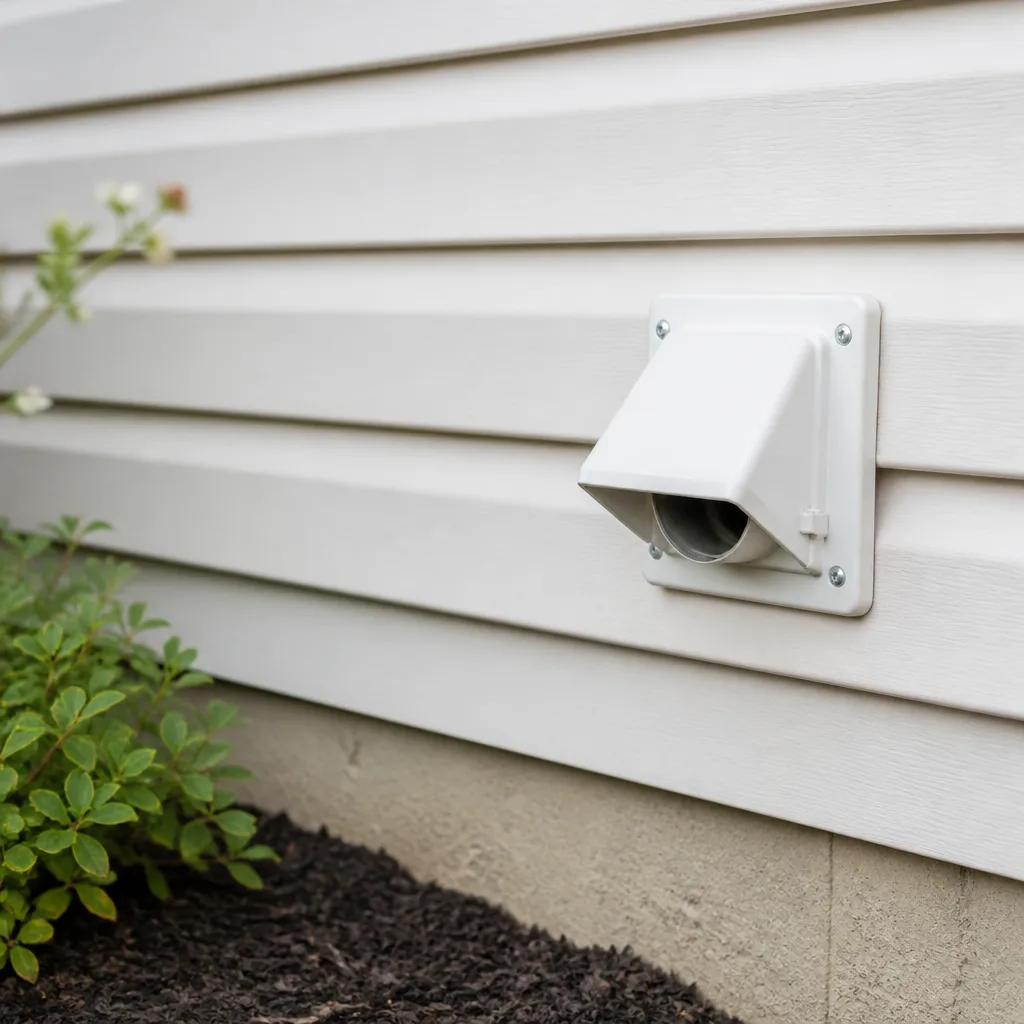 Dryer vent cleaning
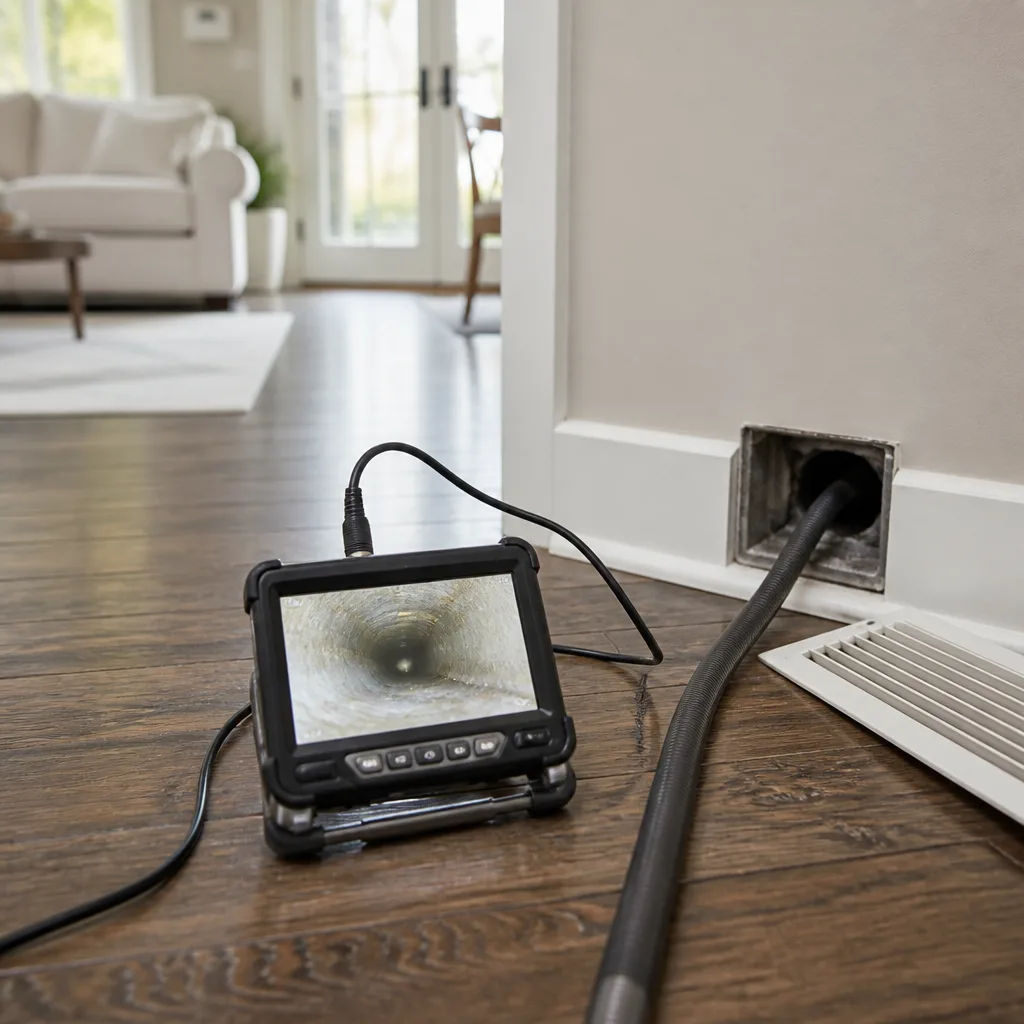 Camera inspection
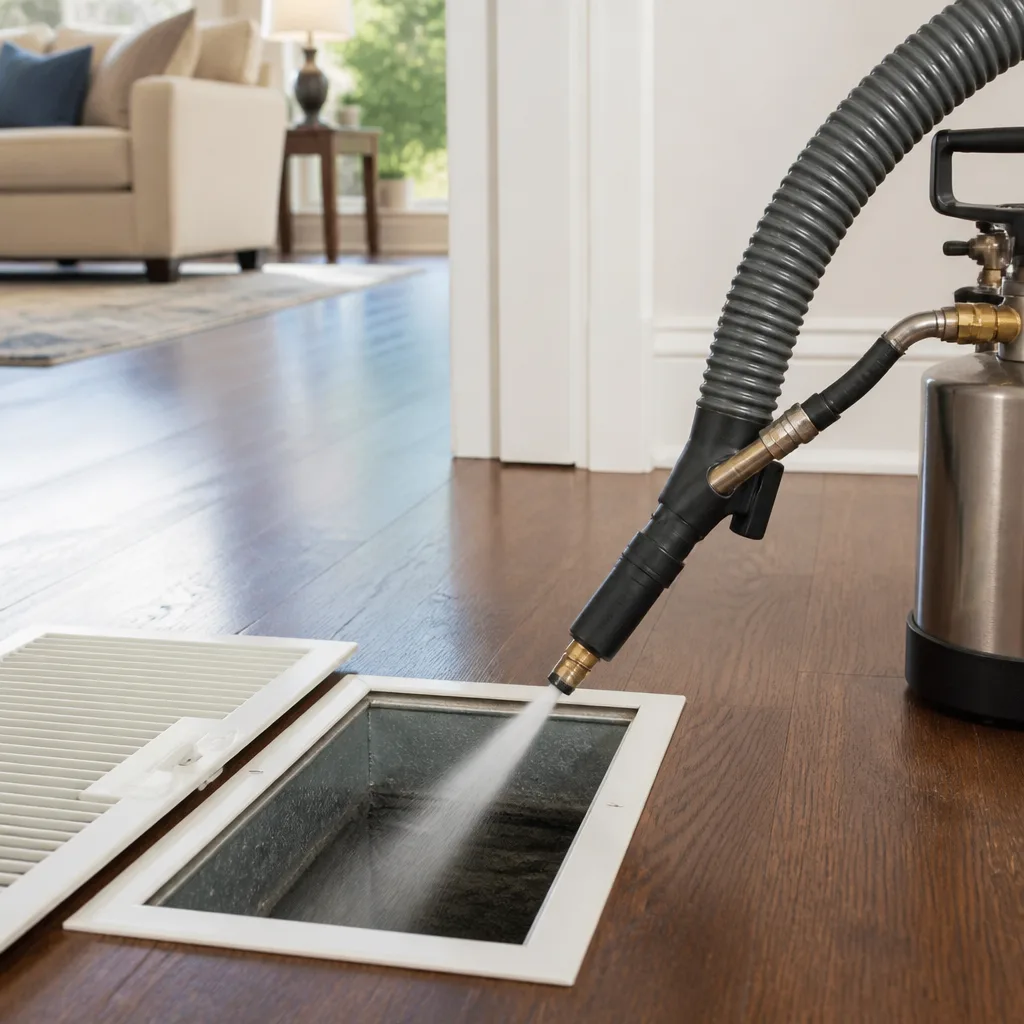 Sanitizing & deodorizing
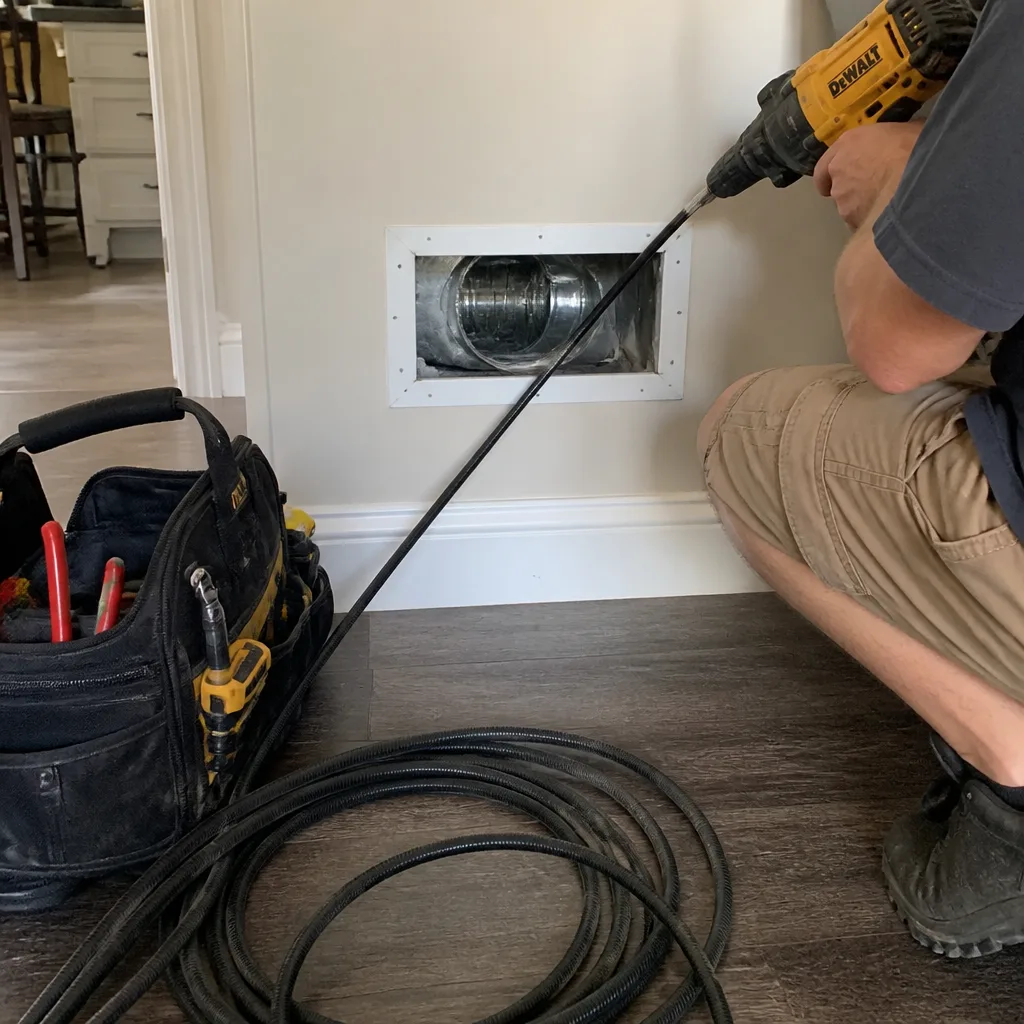
Whole-system duct and dryer vent check with before-and-after photos - you see exactly what came out of your vents
That "$99 whole-house special" is a bait ad - the real number appears once they are in your hallway, or the "clean" is a shop-vac at the register. We photograph the inside of your ducts before and after instead.
Air Duct Cleaning Permits, Codes & Inspections in CA: What You Need to Know
Here’s a fact that surprises nearly every homeowner we talk to in Elk Grove: the act of cleaning your air ducts is, by itself, entirely unregulated in California (our Air Duct Cleaning services fall under this maintenance classification). No permit required. No inspection. No state license specific to duct cleaning. But the moment a technician takes a pair of tin snips to your ductwork, applies mastic sealant across a joint, or replaces a section of damaged plenum, that same job can slide squarely under California Energy Code Title 24, the state’s HERS verification program, and a web of local building department requirements. The line between “maintenance” and “construction” is where homeowners get misled, overcharged, or handed unpermitted work that bites them at resale.
This guide maps that line precisely. You’ll learn what actually requires a permit in Elk Grove and Sacramento County, what triggers HERS testing, how California Health & Safety Code treats mold inside ducts versus simple dust accumulation, and how to verify a contractor is scoping the work honestly. If you’re a homeowner weighing a duct cleaning quote that suddenly mentions sealing, repair, or replacement, this is the information you need before anyone touches your system. For related reading, see our guide on Air Duct Cleaning Warning Signs: An Elk Grove Homeowner’s Reference Guide.
Styles & brands we work with
- Whole-home duct cleaning
- Dryer vent cleaning
- Camera inspection
- Sanitizing & deodorizing
Quick Answer
Air duct cleaning in California requires no permit, no inspection, and no state-issued contractor license because it is classified as maintenance, not construction. However, duct repair, sealing, or replacement that alters more than a threshold percentage of duct surface area (typically 40% under California Energy Code Title 24) can require a building permit, HERS verification, and a licensed C-20 contractor. The key for homeowners is understanding where cleaning ends and alteration begins, and ensuring any contractor proposing these additional services is properly scoping the work with the local authority having jurisdiction (AHJ).
Table of Contents
- The Regulatory Line: Cleaning vs. Alteration
- Title 24 and the 40% Duct Surface Area Rule
- HERS Verification: What Triggers It and Who Pays
- Sacramento County and Elk Grove Municipal Overlay
- Mold Remediation in Ducts: Health & Safety Code Triggers
- How to Verify a Contractor Is Scoping Work Correctly
- Common Mistakes to Avoid
- When to Call a Professional
- Frequently Asked Questions
- The Bottom Line
The Regulatory Line: Cleaning vs. Alteration
California draws a hard distinction between maintenance and alteration. Air duct cleaning falls firmly on the maintenance side. The California Contractors State License Board (CSLB) does not issue a specific license category for duct cleaning because the work does not involve structural modification, installation, or system redesign. A technician who runs a rotary brush through your supply and return lines, vacuums out accumulated debris, and sanitizes interior surfaces is performing a service, not a construction activity. No permit, no inspection, no engineering oversight.
Alteration begins the moment material is removed, cut, rejoined, or replaced. If a duct section has separated at a seam and a contractor applies new mechanical fasteners and mastic sealant, that is a repair under the California Mechanical Code. If a crushed return duct under a crawlspace needs a new section spliced in, that is replacement. Both situations can trigger permit requirements depending on scope. This is why our process at Air Duct Repair in Elk Grove starts with a scope assessment: we tell you before work begins whether the job is a cleaning, a repair, or a hybrid that requires AHJ notification. Most homeowners never hear this distinction from a technician who just wants to get the van on the driveway.
The practical takeaway: if a company quotes you “duct cleaning” and then discovers damage during the job and begins cutting into your ducts without discussing permits, stop the work. That is a contractor making a scope decision on your behalf, and it is your name on the deed when the home inspector flags unpermitted alterations at sale.
Title 24 and the 40% Duct Surface Area Rule
California Energy Code Title 24, Part 6, governs energy efficiency requirements for buildings, and Section 150.0 covers duct systems in residential construction and alterations. The code’s trigger for duct system requirements is not intuitive to most homeowners: when an alteration affects 40% or more of the total duct surface area, the entire duct system may need to meet current code standards, including leakage testing and sometimes full replacement.
Think about that threshold for a moment. A typical single-story Elk Grove home built in the mid-1990s has roughly 400 to 600 square feet of duct surface area distributed across the attic and crawlspace. The 40% threshold equates to 160 to 240 square feet. A “simple” reconnection of a fallen trunk line plus replacement of two crushed branch runs can easily cross that line without anyone doing the math. When it does, the project transitions from maintenance to a code-triggered alteration, which means:
- A building permit from the local AHJ (City of Elk Grove Building Department or Sacramento County for unincorporated areas)
- Duct leakage testing performed by a certified HERS rater
- Potential requirement to bring the remaining duct system into compliance, not just the repaired section
- Documentation retained for resale disclosure
This is not a theoretical concern. Elk Grove’s building stock is aging into the 25- to 35-year range where duct systems originally installed with duct tape and insufficient mastic begin failing. Homeowners in neighborhoods like Laguna West, Lakeside, and Sheldon who are experiencing uneven airflow or dusty rooms often discover that the fix requires more than cleaning. The Title 24 threshold is precisely where a contractor with genuine repair capability separates from a cleaning-only operator who simply vacuums around the problem.
HERS Verification: What Triggers It and Who Pays
The Home Energy Rating System (HERS) is California’s standardized method for verifying that building alterations meet energy code performance requirements. When a duct alteration crosses the 40% surface area threshold, or when a building permit is issued for duct replacement, a certified HERS rater must typically perform a duct leakage test and document the results with the California Energy Commission’s registry. The test measures airflow through the duct system under pressure, quantifying leakage in CFM (cubic feet per minute) at a standard pressure differential.
Who pays for HERS verification? In almost every residential scenario we see in Elk Grove, the homeowner pays. HERS testing costs typically range from $200 to $600 depending on system size and location, and it is a separate line item from the contractor’s repair work. Some general contractors bundle it into the project cost. Many do not, and it appears as a surprise on the final invoice.
Here is the sequence a properly-scoped duct alteration should follow:
- Contractor assesses the extent of duct damage during the initial cleaning or inspection
- If alteration scope approaches 40% of duct surface area, contractor informs homeowner of Title 24 implications before work begins
- Homeowner or contractor pulls permit from City of Elk Grove Building Department (or Sacramento County, if unincorporated)
- Repair or replacement work is completed to current code standards, including proper mastic application and mechanical fastening
- Certified HERS rater performs duct leakage test and documents results
- Permit is finalized with AHJ; documentation retained for resale
If a contractor cannot walk you through this sequence, they are not equipped to perform code-compliant duct alterations. Cleaning-only companies often do not know the sequence exists. That is not a knock on their cleaning work; it is a scope boundary you need to understand.
Sacramento County and Elk Grove Municipal Overlay
California state code sets the floor. Local jurisdictions set the ceiling. The City of Elk Grove operates its own building department and enforces the California Building Standards Code (Title 24) with local amendments. Directly across the city line in unincorporated Sacramento County, the Sacramento County Building Permits and Inspection Division applies its own overlay. The practical differences are small but real: Elk Grove’s residential plan review process is generally faster for simple mechanical permits than Sacramento County’s, and the City of Elk Grove publishes specific guidance for mechanical alterations that the county folds into broader code interpretation.
What this means for a homeowner in the Elk Grove Unified School District boundary: if your home sits inside Elk Grove city limits, any permit-triggered duct alteration goes through the City of Elk Grove Building Department on Laguna Springs Drive. If your mailing address says Elk Grove but you are actually in unincorporated Sacramento County (common in Sheldon, Vineyard, and parts of Franklin), your AHJ is Sacramento County. The wrong assumption about which jurisdiction you are in can delay a project by weeks and create confusion about which inspection requirements apply.
Most cities and counties in California, including Elk Grove, do not require a permit for the cleaning itself. No local ordinance adds that requirement. The overlay comes into play only when the work crosses into alteration territory. Our team works with both AHJs regularly, and it is one of the reasons we can give homeowners in Elk Grove a straight answer about whether their specific job needs a permit instead of a vague “maybe.”
Mold Remediation in Ducts: Health & Safety Code Triggers
Here is where duct cleaning and regulation actually intersect in California. Mold growth inside ductwork does not change the cleaning permit requirement; it changes the nature of the work and who can legally perform it. California Health & Safety Code Section 26100 et seq. and the state’s Toxic Mold Protection Act (2001) do not create a mold remediation license category, but they do establish disclosure obligations and work practice standards for contractors who handle mold-affected materials. Combined with CSLB rules, the practical effect is this: if a duct system contains actual mold growth (not just accumulated dust that looks dark), the remediation falls outside standard duct cleaning scope.
We see this regularly in Elk Grove’s older neighborhoods, particularly in homes with evaporative cooler histories or crawlspace moisture intrusion. The sequence that leads to mold in ducts usually starts with compromised insulation or a failed duct jacket allowing condensation to form. By the time a homeowner notices musty odors from the registers, the duct interior may have visible colonization.
What triggers regulatory involvement:
- Mold-affected material removal: Removing and replacing contaminated duct sections is alteration work, not cleaning, and may require a permit under the same Title 24 threshold rules
- Mold remediation claims: A contractor who advertises “mold remediation” without proper training, containment protocols, and testing capacity is operating outside typical duct cleaning scope and may be violating CSLB advertising rules
- Disclosure obligations: Under California civil code, known mold conditions must be disclosed in real estate transactions; undocumented remediation can create liability for the seller
Professional duct cleaning with source-capture equipment, like the Nikro HEPA-filtration systems we use, removes the particulate matter that mold feeds on. But cleaning alone does not remediate established mold colonies in contaminated ductwork. Homeowners who suspect mold need an honest scope conversation before any work begins, not a technician who promises a “mold removal” upgrade for $200.
How to Verify a Contractor Is Scoping Work Correctly
The single most important skill for a homeowner considering duct work is knowing how to test whether the contractor understands the cleaning-versus-alteration boundary. Here is the verification process we recommend:
- Ask if the work is classified as maintenance or alteration. A contractor who cannot answer this question immediately, in plain language, is not the contractor for you. The answer should reference the specific nature of the work proposed, not a generic “we handle everything.”
- Request the CSLB license number. Duct cleaning companies are not required to hold a specific license, but any company performing duct repair or alteration must hold a C-20 Warm-Air Heating, Ventilating and Air-Conditioning Contractor’s license. Verify it on the CSLB website. If the license classification does not include C-20, they cannot legally perform repair work.
- Ask about the 40% threshold. If the contractor proposes repairs or replacement, ask directly: “Does this alteration approach 40% of my duct surface area?” A qualified contractor should be able to explain the threshold and its implications without hesitation.
- Request a written scope document. Before work begins, get a scope summary that clearly states: what will be cleaned, what will be repaired or replaced, whether a permit will be pulled, and who pays for any required testing. Verbal scoping is how homeowners end up in disputes.
- Check HERS rater integration. If the scope includes duct replacement above threshold, ask whether the contractor works with a certified HERS rater and how testing will be documented. A blank look here is a red flag.
We provide this level of scope documentation on every repair and replacement estimate we generate for Elk Grove homeowners. It is not because the law requires the document; it is because a homeowner who understands the scope is a homeowner who doesn’t call back six months later with a resale problem.
Common Mistakes to Avoid
- Accepting “repair” work from a cleaning-only company. A technician who shows up with a rotary brush and no C-20 license has no business cutting into your ductwork. In Elk Grove, we see this most often with handyman services advertising “duct fixes” on community Facebook groups.
- Assuming a clean equals an inspection. Duct cleaning removes debris; it does not assess duct integrity. Homeowners in older Elk Grove neighborhoods, particularly those built before 1995 around the original Sheldon Road corridor, should treat cleaning and inspection as separate functions.
- Ignoring the permit when selling. Unpermitted duct alterations surface during buyer’s inspections. The seller then either corrects the permit retroactively at inflated cost or takes a price reduction. Either outcome is avoidable with proper scoping up front.
- Letting a technician make a scope decision on the spot. “This duct is collapsed, I’ll just replace that section today” is a red flag. Alteration decisions should involve a scope conversation, not a surprise during the cleaning visit.
- Paying for “sealant” that is actually mastic applied without a permit. If duct sealing pushes the job over the alteration threshold, the work needs to be done to code with proper documentation. Some contractors apply quick sealant patches and call it maintenance. That is a shortcut that does not hold up.
- Using price as the primary filter for a repair-hybrid job. A duct alteration that triggers Title 24 compliance costs more than a manual patch-and-go job. If one quote is dramatically lower, ask whether the lower bid includes permit fees, HERS testing, and code-compliant materials. Often it does not.
When to Call a Professional
You should call a professional when you are no longer sure whether the work you need is cleaning or alteration. If you have noticed dust buildup despite regular filter changes, musty odors from the registers, or rooms that never reach the thermostat set point, the problem may be duct integrity, not just debris. If you know your home’s duct system is original to the build, especially in Elk Grove homes constructed between 1990 and 2005, the probability of seam separation, collapsed insulation, or rodent damage in the attic or crawlspace is significant. And if a cleaning company has already told you that your ducts “need some work” without explaining the permit implications, get a second opinion from a contractor who understands Title 24.
Duct Cleaning Elk Grove offers free estimates throughout the Elk Grove area, and you can explore more guides & resources on our blog. We’ll tell you honestly whether your job is a cleaning, a repair, or a combination, and we’ll walk you through the permit path if one is needed. Call (866) 705-7671 to schedule an assessment.
Frequently Asked Questions
No state-issued license category specifically covers air duct cleaning in California. The CSLB does not regulate cleaning as a construction trade, which means cleaning-only companies can legally operate without a C-20 contractor’s license. However, any company performing duct repair, sealing above threshold, or replacement must hold a C-20 Warm-Air Heating, Ventilating and Air-Conditioning license. Verify any company proposing repair work on the CSLB website before signing a contract, and call (866) 705-7671 if you want a straight answer about the scope of your specific job.
California Energy Code Title 24, Part 6, Section 150.0 establishes that when an alteration affects 40% or more of a home’s total duct surface area, the entire duct system may need to be brought into compliance with current code, including leakage testing and potential replacement. The threshold is calculated across all supply and return duct surfaces, not just the section being worked on. In a typical Elk Grove home with 400 to 600 square feet of duct surface, a repair that seems modest can cross the line. Ask your contractor to run the numbers before work begins, and call (866) 705-7671 for a scope assessment if you are unsure.
No building permit is required for air duct cleaning in Elk Grove, whether your home is in the city limits or unincorporated Sacramento County. Cleaning is classified as maintenance without structural alteration. A permit enters the picture only when the work involves cutting, sealing beyond a standard maintenance patch, or replacing duct sections, especially when the 40% surface area threshold is approached. The City of Elk Grove Building Department on Laguna Springs Drive processes these mechanical permits when they are needed.
Look for visible signs of recent modification: new sheet metal sections mixed with original ducting, fresh mastic sealant in concentrated areas rather than across all joints, or repairs that are not documented in your home’s permit history. In Elk Grove, you can pull your property’s permit record from the City of Elk Grove or Sacramento County depending on jurisdiction. If you find unpermitted alterations, the fix is generally straightforward: a mechanical permit, inspection, and potentially HERS ratification. It is far cheaper to document it now than to explain it during a real estate transaction.
A proper scope document for any duct work that involves both cleaning and repair should include: an itemized list of what will be cleaned and with what equipment, a specific description of any repair or replacement work proposed, a written statement of whether a permit is required, who will pull the permit if one is needed, whether HERS testing applies, and the total cost including all fees. The document should be provided before work begins, not after. If a contractor cannot produce one, walk away. Most disputes we see in Elk Grove stem from verbal scoping.
Mold remediation inside ductwork does not automatically trigger a building permit, but it changes the nature of the work under California Health & Safety Code and CSLB practice rules. If mold-affected duct sections are removed and replaced, the replacement is alteration work subject to Title 24 thresholds. If the remediation involves containment, air scrubbing, and disposal of contaminated materials, it falls outside standard duct cleaning scope and may require specialized contractors. Cleaning with HEPA-source capture equipment, like the Nikro systems we operate, addresses the particulate matter that sustains mold but does not remediate established colonies in contaminated ducts. Get an honest scope conversation before work starts, and call (866) 705-7671 to schedule an assessment.
The Bottom Line
Duct cleaning in Elk Grove is unregulated maintenance. Duct repair, sealing, and replacement sit on the other side of a line defined by Title 24, the 40% surface area threshold, HERS verification, and local AHJ requirements. The difference matters at resale, at inspection, and in court if a dispute arises. The homeowners who get misled are the ones who never learn where the line sits. The homeowners who call us at Duct Cleaning Elk Grove get the scope answer before the work starts, whether that means a straightforward cleaning with our Duct Cleaning Elk Grove home service, a Dryer Vent Cleaning in Elk Grove safety service, or a permitted duct repair. Know the line. Ask the question. Get it in writing.
Written by the team at Duct Cleaning Elk Grove, serving Elk Grove since 2013.
See the difference
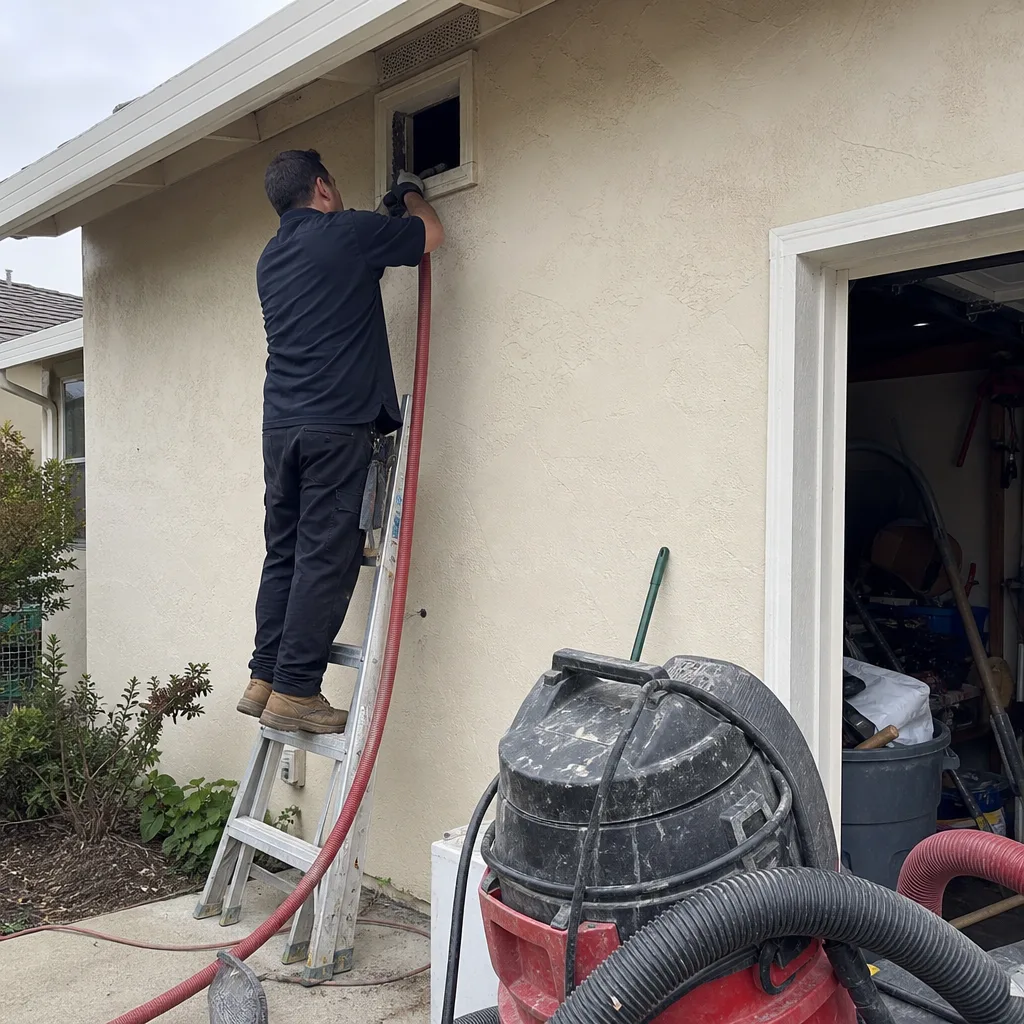 Before
 After
 Before
 After
 Before
 After